 TECH TIMES NEWS
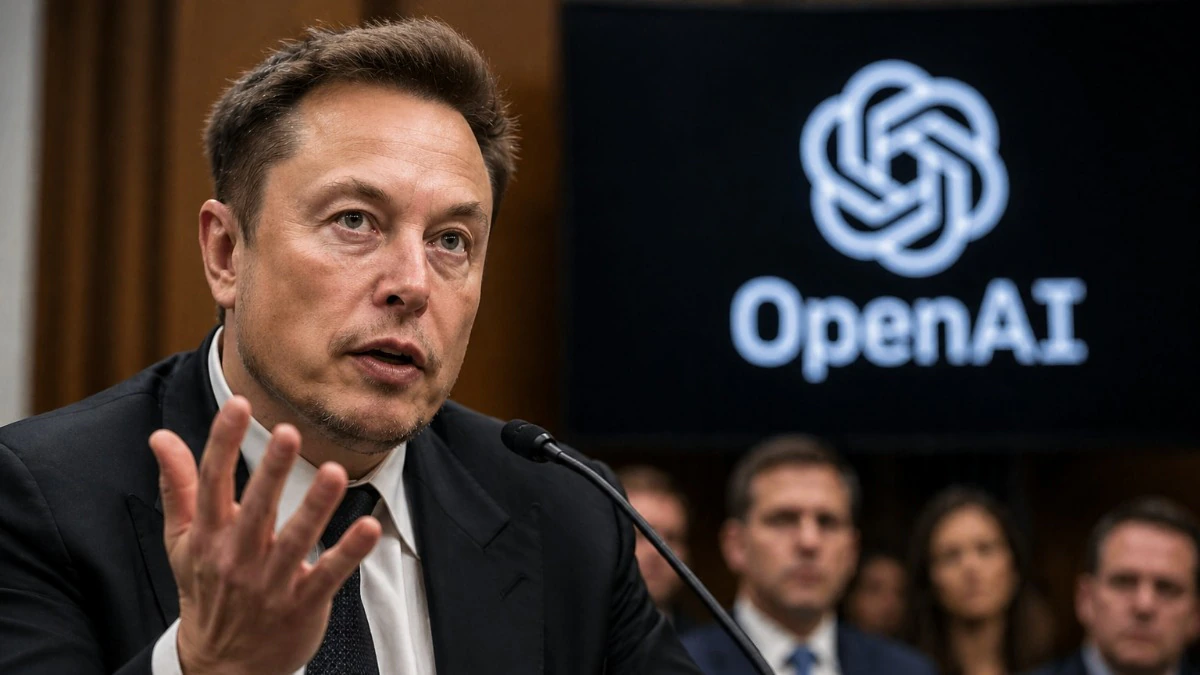
The courtroom exchange involving Elon Musk and OpenAI has quickly become one of the most closely watched legal battles in the technology sector. At its core, the trial is not just about one company—it’s about the future direction of artificial intelligence itself.
Lawyers pressed Musk on OpenAI’s transformation from a nonprofit research lab into a capped-profit entity, raising fundamental questions about whether financial incentives are overtaking public-interest goals in AI development.
From Open Vision to Commercial Reality
OpenAI was originally founded with a mission to ensure artificial general intelligence (AGI) benefits humanity as a whole. Elon Musk, one of its early backers, has repeatedly argued that the organization has strayed from that vision.
During the trial, opposing counsel challenged Musk’s claims, probing whether commercialization was always an inevitable step given the massive costs of AI infrastructure, training data, and compute power.
The exchange underscored a key tension:
- Can cutting-edge AI remain altruistic without massive capital?
- Or does scale inevitably push organizations toward profit-driven models?
Musk’s Position: Accountability Over Profit
Musk maintained that AI development requires strict oversight and transparency, especially when technologies approach human-level reasoning capabilities.
His arguments centered on the risks of concentrated control, suggesting that profit incentives could lead to:
- Reduced transparency
- Prioritization of market dominance over safety
- Accelerated deployment without sufficient safeguards
While Musk has his own AI ventures, his testimony framed the issue as systemic rather than personal—warning that unchecked commercialization could have long-term consequences for society.
The Counterargument: Innovation Needs Capital
OpenAI’s defense leaned heavily on the economic realities of modern AI development. Training advanced models now requires billions of dollars in infrastructure and energy costs.
Legal representatives argued that:
- A purely nonprofit structure may not sustain competitive AI research
- Partnerships and revenue streams enable faster innovation
- Profit caps still maintain a balance between returns and responsibility
This reflects a broader industry trend, where even mission-driven organizations are adopting hybrid structures to remain viable.
Why This Trial Matters Beyond OpenAI
The implications of this case extend far beyond a single company. Experts suggest the outcome could influence:
- AI governance models globally
- Regulatory frameworks for advanced AI systems
- Investor expectations in AI startups
- Public trust in AI organizations
If the court leans toward stricter interpretations of nonprofit intent, other AI labs may face pressure to justify their funding structures and operational models.
Expert Insight: A Turning Point for AI Ethics
Industry analysts see this moment as part of a larger shift. The debate is no longer just about what AI can do—but who controls it and why.
There is growing consensus that future AI governance will need to address three core pillars:
- Transparency in model development
- Clear accountability structures
- Alignment between profit motives and societal benefit
The OpenAI trial brings these issues into sharp focus, forcing both policymakers and companies to confront uncomfortable trade-offs.
What Readers Should Take Away
This case is a signal that AI is entering a new phase—one where legal scrutiny and ethical expectations will shape its trajectory as much as technical breakthroughs.