 TECH TIMES NEWS
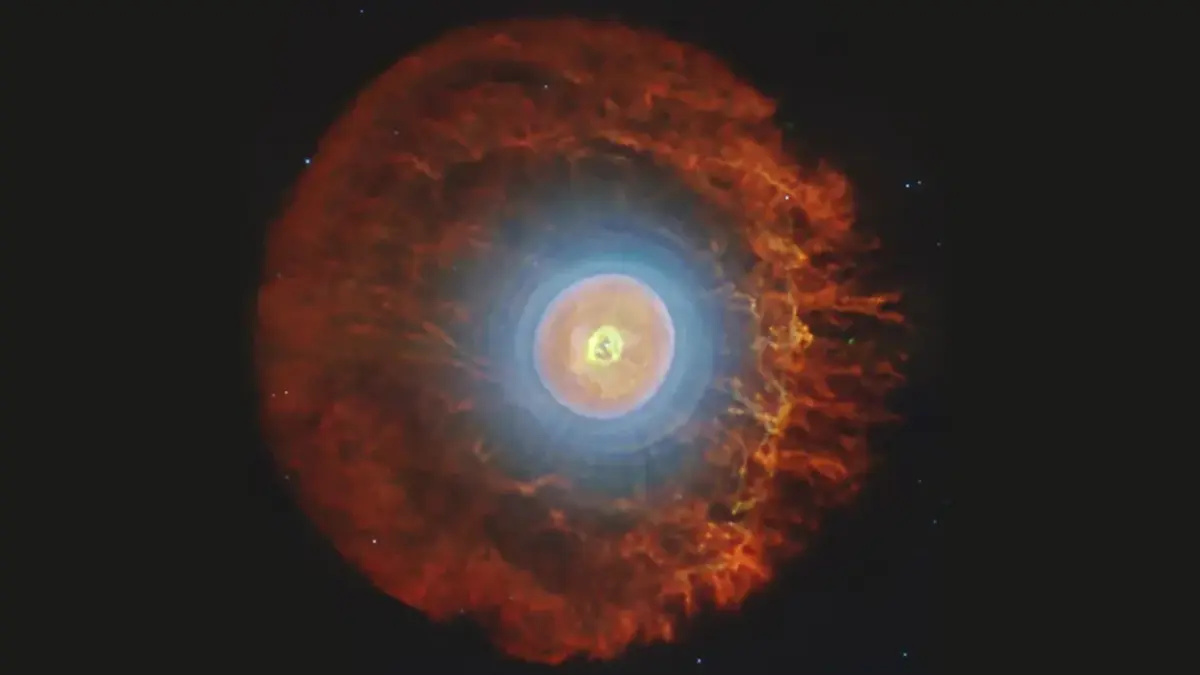
NASA’s James Webb Space Telescope (JWST) has made a striking discovery: the presence of complex carbon molecules known as “buckyballs” in a distant nebula. These molecules, scientifically called buckminsterfullerenes (C60), are spherical structures made up of 60 carbon atoms arranged like a soccer ball. While they have been detected in space before, JWST’s latest observations provide the clearest and most detailed evidence yet of their existence in interstellar environments.
Using its highly sensitive infrared instruments, JWST was able to identify the unique spectral signatures of these molecules embedded within clouds of gas and dust. This level of precision marks a significant leap over previous telescopes, enabling scientists to study molecular compositions in space with unprecedented clarity.
Why Buckyballs Matter in Space Science
Buckyballs are not just a chemical curiosity—they hold major implications for our understanding of cosmic chemistry. These carbon structures are remarkably stable and can survive extreme conditions, including intense radiation and temperature variations found in nebulae.
Their presence suggests that complex carbon-based chemistry can develop even in hostile regions of space. Scientists believe such molecules could act as building blocks for more advanced organic compounds, potentially linking them to the early stages of prebiotic chemistry—the kind that eventually leads to life.
This discovery strengthens the idea that the ingredients for life may be more widespread across the universe than previously thought.
JWST’s Infrared Power Unlocks Hidden Details
The detection was made possible by JWST’s Mid-Infrared Instrument (MIRI), which is specifically designed to capture faint heat signatures from distant cosmic objects. Unlike optical telescopes, JWST can peer through dense dust clouds, revealing chemical fingerprints that would otherwise remain hidden.
By analyzing these infrared emissions, researchers were able to confirm not only the presence of C60 molecules but also gain insights into their distribution and formation conditions within the nebula. Early analysis suggests that these molecules may form around dying stars, where carbon-rich material is expelled into space.
Clues About Stellar Evolution and Chemical Enrichment
The nebula hosting these buckyballs is believed to be shaped by stellar activity, possibly from a dying star shedding its outer layers. Such environments are known to be rich in carbon, making them ideal sites for the formation of complex molecules.
As stars evolve and release material into space, they contribute to the chemical enrichment of galaxies. Discoveries like this help scientists trace how elements like carbon are recycled and transformed over cosmic timescales.
Understanding this process is crucial, as it directly connects stellar life cycles with the emergence of complex chemistry in the universe.
What This Means for Future Research
This finding opens new avenues for astrochemical research. With JWST continuing its mission, scientists expect to uncover more examples of complex molecules across different cosmic environments—from star-forming regions to distant galaxies.
Future studies will focus on how these buckyballs interact with other molecules and whether they play a role in forming larger organic systems. The telescope’s ability to detect subtle chemical signatures could reshape our understanding of molecular evolution in space.
The Bigger Picture
The discovery of cosmic buckyballs underscores JWST’s transformative role in modern astronomy. Beyond capturing stunning images, the telescope is proving to be a powerful tool for decoding the chemical makeup of the universe.
Each new finding adds another piece to the puzzle of how simple elements evolve into complex structures. In that sense, these tiny spherical molecules may hold outsized importance in answering one of humanity’s biggest questions: how life’s building blocks originate and spread across the cosmos.