 TECH TIMES NEWS
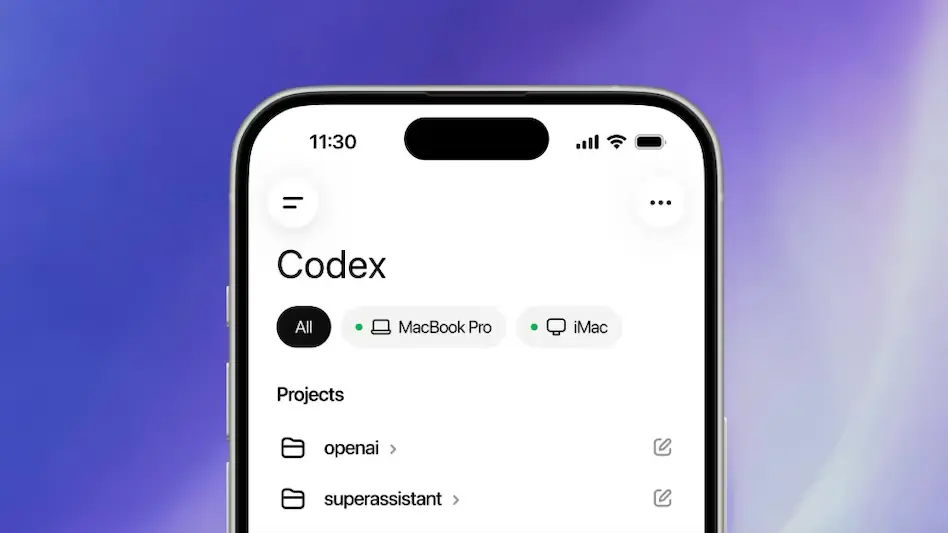
OpenAI has officially rolled out its Codex-powered coding capabilities to the ChatGPT mobile application, marking a major step in bringing professional-grade software development tools to smartphones.
The update allows users to access advanced code generation, debugging, editing, and software assistance directly through the ChatGPT mobile app on both iOS and Android platforms. Previously, many of these capabilities were largely associated with desktop-based development environments and integrations such as GitHub Copilot.
This expansion signals OpenAI’s growing ambition to make AI-assisted programming more accessible and device-independent.
What the Mobile Codex Integration Offers
The Codex integration enables developers to interact with code conversationally through ChatGPT’s mobile interface. Users can now:
- Generate code snippets in multiple programming languages
- Debug existing scripts through natural-language prompts
- Refactor code for performance and readability improvements
- Explain complex programming logic in simplified language
- Receive architecture suggestions for software projects
- Review and optimize algorithm efficiency
The interface is designed to preserve conversational context, allowing developers to iterate on projects over multiple prompts without restarting workflows.
This significantly reduces friction for developers who need quick coding support while away from desktop workstations.
Why This Matters for Developers
Mobile devices have traditionally been limited when it comes to serious software development. While code editors exist for smartphones and tablets, most lack intelligent collaborative assistance.
By integrating Codex into ChatGPT mobile, OpenAI is effectively transforming smartphones into AI-supported development companions.
This is particularly useful for:
Remote Engineers
Developers can troubleshoot production issues while traveling.
Students and Learners
Coding learners gain instant explanations and examples without needing a full IDE setup.
Startup Teams
Rapid prototyping and collaborative brainstorming become easier across devices.
Technical Managers
Non-coding stakeholders can better interpret code logic and project structures.
Industry analysts see this as part of a larger trend toward “ambient software development,” where coding support becomes available anywhere, anytime.
A Strategic Push Beyond Traditional Chatbots
The launch also highlights OpenAI’s broader product strategy.
ChatGPT is no longer positioned solely as a conversational AI assistant. It is increasingly evolving into a productivity operating layer that supports writing, coding, research, planning, and enterprise workflows.
Codex’s mobile integration strengthens OpenAI’s competition against major AI coding rivals including:
- GitHub Copilot (Microsoft)
- Anthropic Claude for coding workflows
- Google Gemini developer integrations
- Amazon CodeWhisperer
By embedding these capabilities directly inside ChatGPT’s main consumer app, OpenAI removes the need for separate developer-focused applications.
This unified experience could accelerate user adoption significantly.
Security and Reliability Remain Critical
As with any AI-powered coding tool, reliability and code safety remain important concerns.
OpenAI says generated code continues to undergo safeguards designed to reduce insecure outputs, vulnerabilities, and misleading implementations. However, the company continues to recommend human review before deploying AI-generated code to production environments.
Security experts note that while AI coding tools dramatically improve productivity, oversight is essential for ensuring secure software architecture.
The mobile rollout does not eliminate the need for experienced engineering judgment.
What This Means for the Future of Mobile Development
The arrival of Codex on ChatGPT mobile reflects a broader shift in software engineering culture.
Coding is increasingly becoming conversational, iterative, and platform-agnostic. Developers are moving away from rigid command-based workflows toward collaborative AI-assisted environments.
If adoption grows as expected, mobile-first AI coding could reshape how developers prototype ideas, solve urgent technical issues, and learn programming concepts on the go.
For OpenAI, this launch is another strong signal that the company sees software development as one of AI’s most commercially transformative use cases.
The Bottom Line
By bringing Codex to the ChatGPT mobile app, OpenAI is extending advanced coding assistance beyond desktop screens and into developers’ pockets.
The update makes AI-assisted programming more accessible, practical, and immediate—potentially changing how software gets built in an increasingly mobile-first world.
For developers, students, and tech professionals alike, the smartphone is becoming more than a communication device. It is quickly evolving into a full-fledged AI-powered development workspace.