 TECH TIMES NEWS
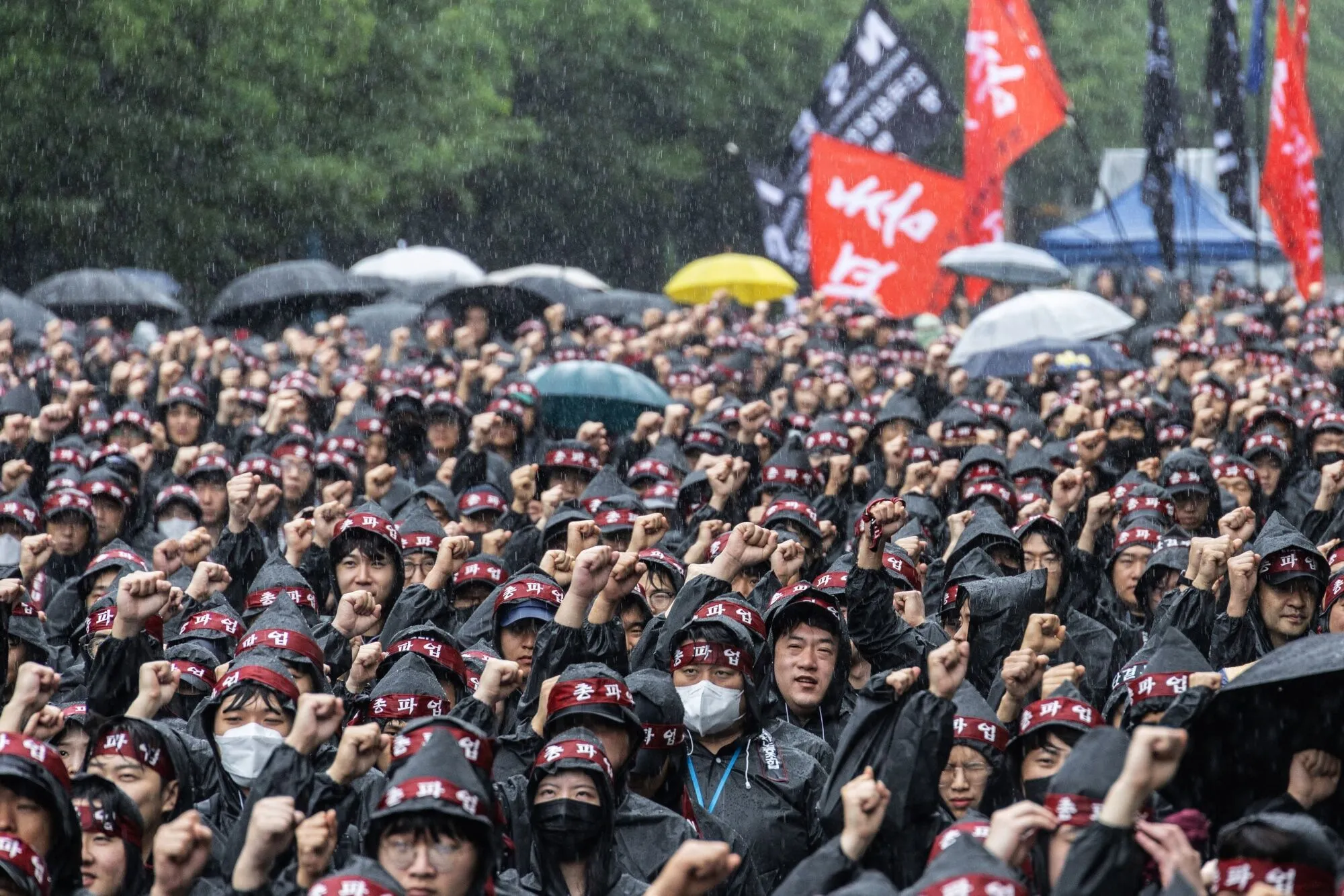
Samsung Electronics is finding itself caught between the enormous opportunities created by the global artificial intelligence boom and growing frustration among its workforce, as labor tensions threaten to escalate into broader industrial action.
The South Korean technology giant has been racing to strengthen its position in the highly competitive AI semiconductor market, where advanced memory chips are becoming essential for training and operating large AI models. However, the company’s aggressive push to regain leadership in high-bandwidth memory (HBM) chips and advanced semiconductor manufacturing has exposed deeper divisions between management and employees.
At the center of the dispute are disagreements over wages, performance bonuses, and employee recognition at a time when the AI-driven chip market is generating renewed optimism across the semiconductor industry.
Why Samsung’s AI Business Matters Now
The explosion of generative AI services has transformed the global semiconductor landscape over the past two years. Companies developing AI systems increasingly depend on powerful graphics processors and high-performance memory chips capable of handling massive data workloads.
Samsung, one of the world’s largest memory chip manufacturers, sees AI as a critical growth engine after experiencing a difficult period marked by weak consumer electronics demand and declining semiconductor profits. The company has invested heavily in AI-related memory technologies, particularly HBM chips used alongside Nvidia’s AI accelerators in data centers.
Yet Samsung faces intense competition from rival SK Hynix, which has gained a stronger foothold in supplying advanced HBM memory to Nvidia. Industry analysts say Samsung’s slower progress in securing key AI chip certifications has added pressure internally as executives push teams to accelerate development timelines.
The result is a workplace environment where employees increasingly feel the burden of heightened expectations.
Labor Unions Warn of Escalating Action
Samsung’s labor unions have accused management of failing to adequately reward workers despite the company’s renewed AI-focused growth ambitions. Union representatives argue that employees played a major role in helping Samsung navigate the semiconductor downturn and position itself for the next wave of AI demand.
Disputes intensified after disagreements emerged over compensation structures and bonus calculations tied to business performance. Union leaders have warned that frustration among workers is rising, with strike discussions becoming more serious if negotiations fail to produce meaningful progress.
The tensions are particularly significant because Samsung has historically maintained tight control over labor relations. For decades, organized labor activity inside the company remained relatively limited compared to other major South Korean industrial groups.
That dynamic has changed in recent years as unions gained visibility and bargaining power, especially within Samsung’s semiconductor operations.
AI Competition Is Reshaping Corporate Culture
The conflict inside Samsung reflects a broader shift occurring across the global technology industry. The rapid expansion of AI infrastructure has increased pressure on companies to innovate faster, improve manufacturing yields, and secure strategic partnerships before competitors gain market dominance.
Employees inside semiconductor firms are now operating under tighter production schedules and higher performance expectations as the industry races to meet soaring AI demand.
Analysts say Samsung’s current challenges reveal how the AI boom is not only transforming financial performance but also reshaping workplace culture inside major technology companies.
“AI has become a strategic priority for every major chipmaker, and that creates enormous operational pressure,” said one semiconductor industry observer familiar with South Korea’s tech sector. “Workers expect to share in the rewards when companies emphasize growth and long-term competitiveness.”
The dispute also raises concerns about potential disruptions to production at a time when global demand for advanced memory chips remains extremely strong.
Investors Watching Samsung’s Next Move
Financial markets are closely monitoring Samsung’s response because any prolonged labor instability could affect production schedules and investor confidence. Semiconductor manufacturing is highly sensitive to delays, particularly in advanced AI-related components where supply remains tight globally.
Samsung is simultaneously trying to reassure investors that it can narrow the technology gap with competitors in the AI memory sector. The company has recently highlighted progress in next-generation HBM development and advanced packaging technologies aimed at major AI customers.
Still, analysts believe Samsung must balance operational efficiency with employee morale if it hopes to maintain long-term competitiveness in the AI era.
The stakes are high not only for Samsung but also for South Korea’s broader economy, where semiconductors remain one of the country’s most important export industries.
Broader Implications for the Global AI Industry
Samsung’s internal divisions underscore a larger reality emerging across the technology sector: the AI boom is creating winners financially, but it is also intensifying workplace tensions, competitive stress, and corporate restructuring.
As companies pour billions into AI infrastructure, employees are increasingly demanding greater participation in the financial upside generated by rapid technological growth.
The situation at Samsung may ultimately become a case study in how global technology leaders manage labor relations during one of the most transformative periods in modern computing history.
Whether negotiations lead to compromise or deeper confrontation, the outcome could influence how other semiconductor firms approach workforce management in the accelerating AI economy.