 TECH TIMES NEWS
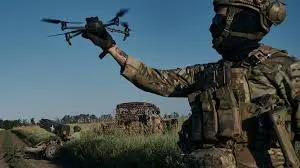
What once belonged to science fiction films and military concept labs is now becoming a battlefield reality in Ukraine. Swarm drones — groups of coordinated unmanned aerial vehicles capable of operating together — are increasingly emerging as one of the most disruptive technologies in the Russia-Ukraine war.
Ukraine’s military has spent the past two years transforming commercially available drones, AI-assisted systems, and low-cost FPV (first-person view) aircraft into highly adaptive combat tools. But the next phase of this evolution is even more significant: coordinated drone swarms designed to overwhelm defenses, confuse enemy systems, and strike targets simultaneously.
Defense experts now view the Ukraine conflict as a real-world testing ground for the future of autonomous warfare.
What Are Swarm Drones?
Unlike traditional military drones that are operated individually, swarm drones function as a connected network. Multiple drones communicate with each other, share targeting information, and coordinate movement in real time.
Some swarms are remotely guided by human operators, while more advanced systems can use AI algorithms to adjust flight paths, avoid obstacles, or identify targets independently.
The military value is straightforward: instead of relying on one expensive missile or aircraft, a country can deploy dozens — or even hundreds — of low-cost drones at once. Even if several are destroyed, others can still complete the mission.
This “quantity over cost” model is becoming central to Ukraine’s wartime strategy.
Why Ukraine Is Investing Heavily in Drone Warfare
Ukraine faces a difficult military equation. Russia maintains larger artillery reserves, deeper missile stockpiles, and greater industrial capacity. To offset that imbalance, Kyiv has increasingly leaned on innovation and asymmetric warfare tactics.
Swarm drones fit that strategy perfectly.
Small drones are relatively cheap to produce compared to tanks, fighter jets, or cruise missiles. Many can be assembled rapidly using commercial components, 3D-printed parts, and locally developed software.
Ukraine has also benefited from a growing domestic defense-tech ecosystem. Since 2023, Ukrainian startups and military innovation groups have accelerated development of reconnaissance drones, kamikaze drones, naval drones, and AI-enhanced targeting systems.
Officials in Kyiv have repeatedly stated that drones are now a core pillar of national defense planning.
FPV Drones Changed the Battlefield First
Before swarm systems gained attention, FPV drones had already transformed frontline combat.
These drones, often modified from commercial racing models, allow operators to fly directly toward tanks, bunkers, or troop positions while viewing live video feeds through goggles. Equipped with explosives, they act as precision-guided weapons at a fraction of the cost of traditional missiles.
The Russia-Ukraine war has seen FPV drones used extensively for:
- Destroying armored vehicles
- Striking artillery systems
- Targeting supply convoys
- Conducting reconnaissance missions
- Attacking trenches and fortified positions
Military analysts say swarm technology is the natural next step — moving from isolated drone strikes to coordinated aerial attacks.
How Drone Swarms Could Change Warfare
The strategic advantage of swarms lies in saturation.
Air defense systems are typically designed to intercept a limited number of incoming threats. But when dozens of drones approach simultaneously from different directions, defenses can become overloaded.
This creates several military advantages:
Overwhelming Enemy Defenses
Even advanced missile systems can struggle against large numbers of small, fast-moving drones. Interceptors designed for aircraft or ballistic missiles are often too expensive to use against low-cost drones.
Real-Time Battlefield Intelligence
Swarm drones can share surveillance data across multiple units instantly, giving commanders better situational awareness during combat operations.
Reduced Human Risk
Drones allow missions to be carried out without exposing pilots or soldiers directly to enemy fire.
Lower Cost, Higher Scalability
A swarm attack costing thousands of dollars can potentially destroy equipment worth millions.
This economic imbalance is forcing militaries worldwide to rethink defense spending priorities.
AI Is Becoming the Critical Layer
Artificial intelligence is increasingly central to swarm drone development.
AI-assisted systems can help drones:
- Navigate in GPS-jammed environments
- Identify battlefield targets
- Coordinate flight patterns
- Avoid collisions
- Continue missions despite signal disruption
Electronic warfare has become a major factor in Ukraine, with both sides attempting to jam communications and disable drone operations. Autonomous functions help reduce dependence on continuous operator control.
However, experts caution that fully autonomous lethal weapons remain controversial. Human-rights organizations and arms-control advocates continue to push for international regulations governing AI-driven combat systems.
Russia Is Also Expanding Drone Capabilities
Ukraine is not alone in this race.
Russia has significantly increased its own drone production, including long-range attack drones and loitering munitions. Iranian-designed Shahed drones have also played a major role in Russian strike campaigns targeting Ukrainian infrastructure.
Both sides are now locked in what many analysts describe as a “drone arms race,” where adaptation happens in weeks rather than years.
Frontline tactics evolve rapidly as new countermeasures emerge, including:
- Signal jamming systems
- Drone-catching nets
- Portable anti-drone rifles
- AI-assisted interception systems
- Directed-energy weapon research
The pace of innovation has stunned many military planners globally.
A Warning Sign for Global Militaries
The implications extend far beyond Eastern Europe.
Countries across NATO, Asia, and the Middle East are closely studying Ukraine’s drone operations. Military strategists increasingly believe future conflicts could involve large-scale autonomous systems operating alongside conventional forces.
The Pentagon, China, and several European defense agencies are already investing heavily in swarm technologies, autonomous naval drones, and AI-enabled battlefield coordination.
The conflict has also demonstrated that smaller nations can challenge stronger adversaries using inexpensive but intelligent systems.
That shift could permanently alter military doctrine.
Ethical and Security Concerns Are Growing
As swarm drone technology advances, concerns around accountability and control are intensifying.
Critics warn that autonomous weapons could lower the threshold for conflict by making attacks cheaper and easier to deploy. Others fear cyberattacks or software failures could cause unintended strikes.
There are also broader geopolitical risks. Technologies developed in wartime often spread rapidly, raising concerns that sophisticated drone systems could eventually reach extremist groups or unstable regions.
International regulation has struggled to keep pace with the speed of innovation.
The Future of Warfare May Already Be Here
The image of coordinated drone swarms once belonged to futuristic military simulations. In Ukraine, it is becoming operational reality.
What makes the shift especially significant is not just the technology itself, but the economics behind it. Cheap, adaptable, software-driven systems are increasingly capable of challenging traditional military hardware that costs exponentially more.
For defense planners worldwide, Ukraine’s battlefield experience offers a stark lesson: the wars of the future may depend less on massive platforms and more on intelligent, networked machines operating at scale.