 TECH TIMES NEWS
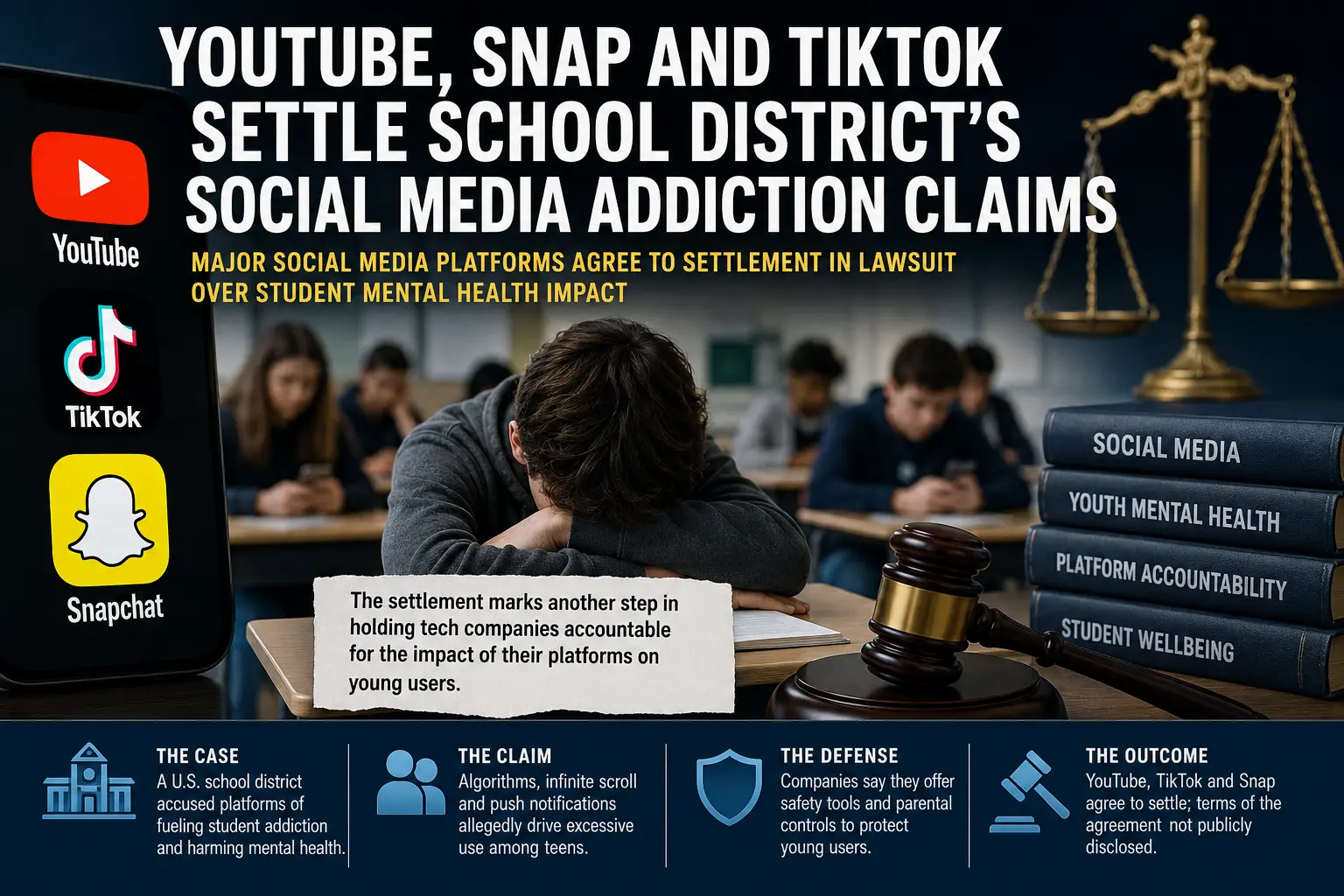
YouTube, TikTok and Snap have agreed to settle a lawsuit brought by a U.S. school district that accused major social media companies of designing addictive platforms that negatively affected students’ mental health, classroom performance, and overall wellbeing. The settlement marks another significant moment in the growing legal and political scrutiny surrounding the influence of social media on young users.
While the financial terms and specific conditions of the agreement were not immediately disclosed publicly, the case represented part of a broader wave of litigation targeting tech companies over alleged harmful platform design practices. School districts across the United States have increasingly argued that social media addiction among teenagers has placed additional pressure on educational systems, counseling resources, and student support programs.
The companies involved — Google-owned YouTube, ByteDance-owned TikTok, and Snap Inc. — have consistently maintained that they provide safety controls, parental supervision tools, and wellbeing features intended to protect younger users.
School Districts Claimed Platforms Fueled Student Mental Health Problems
The lawsuit alleged that social media platforms intentionally used engagement-focused algorithms, endless scrolling systems, push notifications, and personalized recommendation engines to maximize user attention, particularly among minors.
According to the claims, these platform mechanics contributed to excessive screen time, anxiety, depression, attention issues, and behavioral disruptions among students. Educational institutions argued that schools were forced to allocate additional resources toward mental health counseling, disciplinary management, and digital behavior intervention programs.
The case reflects growing concern among educators and parents who believe social media consumption has fundamentally altered student focus, sleep habits, and emotional wellbeing over the past decade.
Mental health experts have repeatedly warned that highly personalized recommendation systems can reinforce compulsive usage patterns, especially among teenagers whose behavioral and emotional development is still evolving.
Social Media Companies Continue Defending Their Safety Measures
Despite agreeing to the settlement, the companies have not admitted wrongdoing. Tech firms facing similar lawsuits have consistently argued that social media platforms can also provide educational value, creativity tools, social connection, and support communities for young people.
YouTube has highlighted features such as supervised accounts, screen-time reminders, and content moderation systems. TikTok has expanded parental control options and introduced default screen-time limits for younger users in several regions. Snap has also promoted safety initiatives aimed at protecting teen users and improving platform transparency.
Industry representatives argue that responsibility for online behavior should be shared among platforms, parents, educators, and policymakers rather than being placed entirely on technology companies.
Still, critics say many safety tools remain optional and often fail to address the underlying business model that rewards maximum engagement and prolonged user retention.
Lawsuits Against Social Media Giants Continue to Grow
The settlement arrives at a time when social media companies face mounting legal challenges from schools, parents, state attorneys general, and lawmakers worldwide. Multiple lawsuits filed across the United States accuse tech firms of knowingly creating products that encourage compulsive usage among children and teenagers.
Several states have already introduced or proposed legislation aimed at restricting addictive platform features for minors, increasing transparency around algorithms, and strengthening age verification systems.
Regulators in Europe and the United Kingdom have also intensified scrutiny of recommendation algorithms, targeted advertising practices, and child safety standards under evolving digital regulation frameworks.
Legal analysts believe these cases could shape future industry standards around platform accountability and youth protection online.
Growing Debate Over Algorithmic Design and Digital Responsibility
At the center of many social media lawsuits is the debate over algorithm-driven engagement systems. Critics argue that recommendation engines are specifically optimized to keep users online for longer periods, often prioritizing emotionally charged or highly stimulating content.
Researchers have linked excessive social media use to increased rates of anxiety, loneliness, sleep disruption, and reduced concentration among adolescents. However, experts also caution that mental health outcomes are complex and influenced by multiple social, economic, and environmental factors beyond technology alone.
The ongoing legal battles highlight a larger societal question: how much responsibility technology companies should bear for the psychological and behavioral effects of their platforms.
For schools, the issue has become increasingly urgent as educators report rising classroom distractions, cyberbullying incidents, and mental health concerns tied to digital activity.
Settlement Could Influence Future Cases Against Tech Companies
Although the agreement resolves this particular dispute, the broader legal pressure facing social media companies is unlikely to slow down. Courts, regulators, and lawmakers continue examining whether existing consumer protection and child safety laws are sufficient for modern digital platforms.
The settlement may encourage additional school districts and public institutions to pursue similar claims, especially as awareness grows around youth mental health and online platform design.
For the tech industry, the case underscores how social media companies are entering a new era of accountability where product design, algorithmic transparency, and youth safety policies are increasingly becoming legal and political battlegrounds.
As governments worldwide continue debating stricter digital regulations, the outcome of these lawsuits could help define the future relationship between technology platforms and younger users for years to come.