
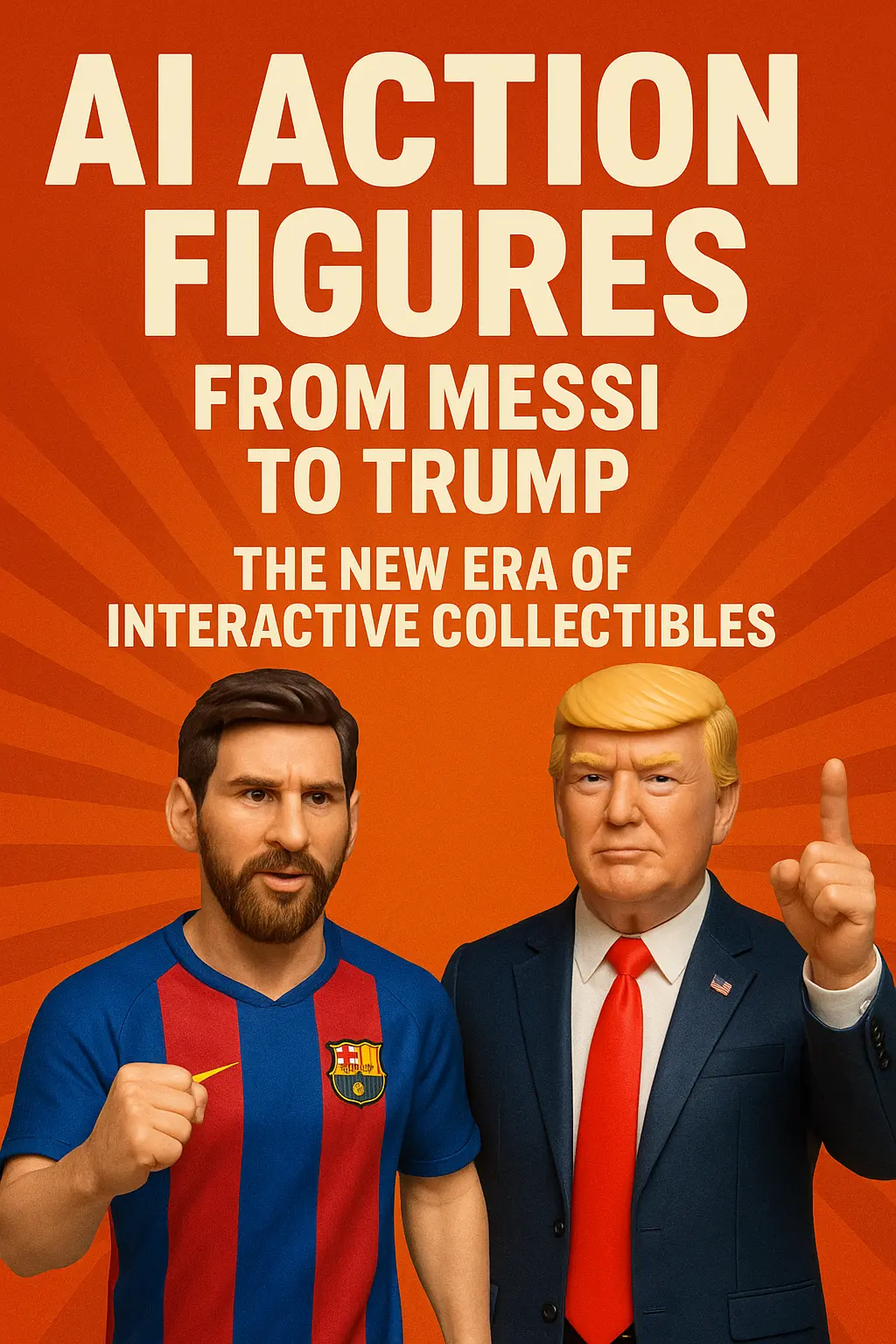
In an era where artificial intelligence is reshaping the way we interact with the world, a new and rather unexpected trend has exploded across pop culture: AI-generated action figures. From sports legends like Lionel Messi to political icons such as Donald Trump, lifelike collectible figurines powered by AI modeling have taken center stage in the world of fandom and novelty.
These are no ordinary toys. Designed using advanced AI-based 3D modeling and voice synthesis, the latest generation of action figures do more than just look like their real-life counterparts—they talk, gesture, and in some cases, even respond to basic voice commands.
A New Era of Collectibles
Companies like SynthPlay, VoxFig, and NeoReplica are leading the charge, blending cutting-edge generative AI with robotics and voice emulation. The result: hyper-realistic miniatures that can deliver Messi’s greatest goals in commentary form or quote some of Trump’s most infamous speeches with uncanny accuracy.
“AI has allowed us to push the boundaries of what collectibles can be,” said Morgan Taylor, creative director at VoxFig. “These aren’t static pieces on a shelf anymore—they're dynamic, interactive experiences.”
The appeal lies not only in the realism but in the customization. Fans can now commission personalized versions of their favorite figures. Want Messi in your local club jersey? Or Trump delivering a birthday message? A few taps on an app and it’s yours.
The Technology Behind the Hype
At the core of this movement is generative AI, specifically diffusion models for detailed figure design, coupled with synthetic voice engines trained on public audio datasets. Small-scale motors and sensors give figures subtle movement, from head nods to arm raises.
“We use an ensemble of machine learning techniques,” explained Dr. Lina Patel, a robotics engineer with NeoReplica. “Pose estimation, audio-lip sync, and even sentiment analysis all come together to make these figures feel ‘alive’—at least within the illusion of fandom.”
Cultural Impact and Controversy
Unsurprisingly, the trend has sparked debate. Critics argue that these AI figures blur ethical lines, especially when depicting controversial figures or using voices without consent. While companies maintain that all models of public figures fall under fair use or are officially licensed, legal gray areas persist—particularly when these digital clones speak.
“There’s a difference between satire and simulation,” noted media ethics expert Professor Jonah Fields. “When you have a talking, smiling replica of a politician or celebrity, the line between entertainment and misinformation can become dangerously thin.”
On the flip side, enthusiasts view them as harmless fun, even a form of digital memorabilia. Collectors are snapping up limited-edition runs, with some AI figures reselling at three times their original value. Messi fans, for instance, clamored for a model that celebrated his 2022 World Cup win, complete with iconic goal commentary in multiple languages.
What's Next?
The AI figure market, projected to be worth over $2.5 billion by 2027, shows no sign of slowing. Future iterations may include cloud-connected personalities that evolve over time, integrating with smart homes or even acting as interactive assistants.
“We’re entering a new genre of companionship,” said Taylor. “It’s not just about who the figure is, but how they engage with you.”
From bedroom shelves to collector’s showcases, these AI-enhanced mini-celebrities are more than a passing fad. They’re a reflection of how the lines between technology, identity, and culture continue to blur—and just maybe, a glimpse into the future of personalized entertainment.