
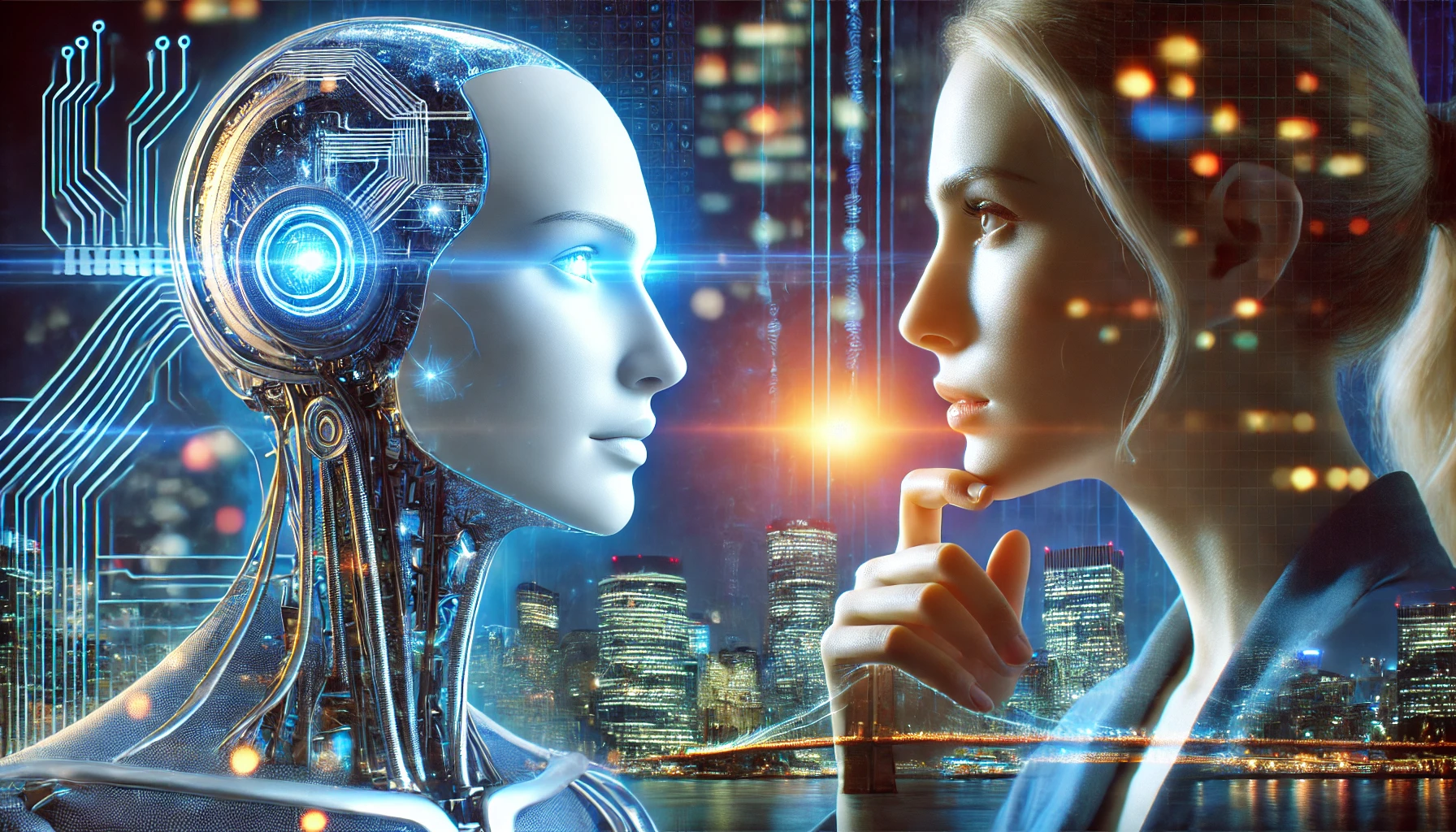
As artificial intelligence advances beyond ChatGPT and other conversational models, the question of what it means to be human in an age of thinking machines is more relevant than ever. From AI-driven creativity to autonomous decision-making, the rapid evolution of machine intelligence is reshaping society, challenging long-held notions of consciousness, work, and even personal identity.
Beyond Chatbots: The Expanding Role of AI
While ChatGPT and similar AI systems have revolutionized communication and information access, AI has progressed far beyond text generation. AI-powered systems now autonomously design products, compose music, diagnose diseases, and even assist in scientific discoveries. Robotics and automation have reached new heights, with AI-driven humanoids and self-learning machines performing tasks once thought to be uniquely human.
"We are moving beyond AI as a tool and into a world where AI becomes a collaborator, a decision-maker, and in some cases, even a creator," says Dr. Elaine Carter, an AI ethicist at the Institute for Future Technologies.
The Changing Definition of Humanity
With AI mimicking human-like creativity, reasoning, and even emotions, the philosophical question arises: What truly defines us as human? Traditionally, human uniqueness has been attributed to complex emotions, abstract thinking, and ethical reasoning. However, as AI becomes more adept at simulating these traits, distinctions blur.
Neuroscientist Dr. Jonathan Reynolds explains, "If AI can compose a symphony, write a novel, or provide therapy, does that mean it understands? Or are we merely seeing an advanced form of pattern recognition?" The debate intensifies as AI models evolve, sparking discussions about machine consciousness and self-awareness.
The Human-AI Relationship: Coexistence or Competition?
As AI becomes more capable, concerns about its impact on jobs, ethics, and personal identity grow. Some fear widespread job displacement, while others see AI as a tool that can enhance human potential. The workplace of the future is likely to see humans and AI collaborating rather than competing, with AI handling repetitive tasks and humans focusing on strategic thinking and emotional intelligence.
Moreover, AI-driven decision-making raises ethical concerns. Autonomous systems now assist in legal rulings, hiring processes, and even military strategy, prompting urgent discussions about bias, accountability, and the limits of AI autonomy.
Preserving Human Uniqueness in an AI-Dominated Future
Despite AI’s rapid advancement, experts argue that human intuition, empathy, and moral judgment remain irreplaceable. "AI can analyze vast amounts of data, but it lacks lived experience, cultural context, and personal emotions," says futurist Rebecca Li. As AI continues to shape society, there is a growing movement advocating for ethical AI development, transparency, and the reinforcement of uniquely human skills.
Looking Ahead: A New Era of Human-AI Synergy
Rather than replacing humans, AI has the potential to enhance human capabilities, driving innovation and efficiency while reshaping societal roles. The future may see humans and AI forming an unprecedented partnership, where machines amplify creativity and problem-solving rather than erode individuality.
As thinking machines become a part of everyday life, the question is not whether AI will surpass humans, but how humanity will adapt to coexist with its most intelligent creation yet. The challenge ahead lies in harnessing AI’s potential while preserving the very essence of what makes us human.