
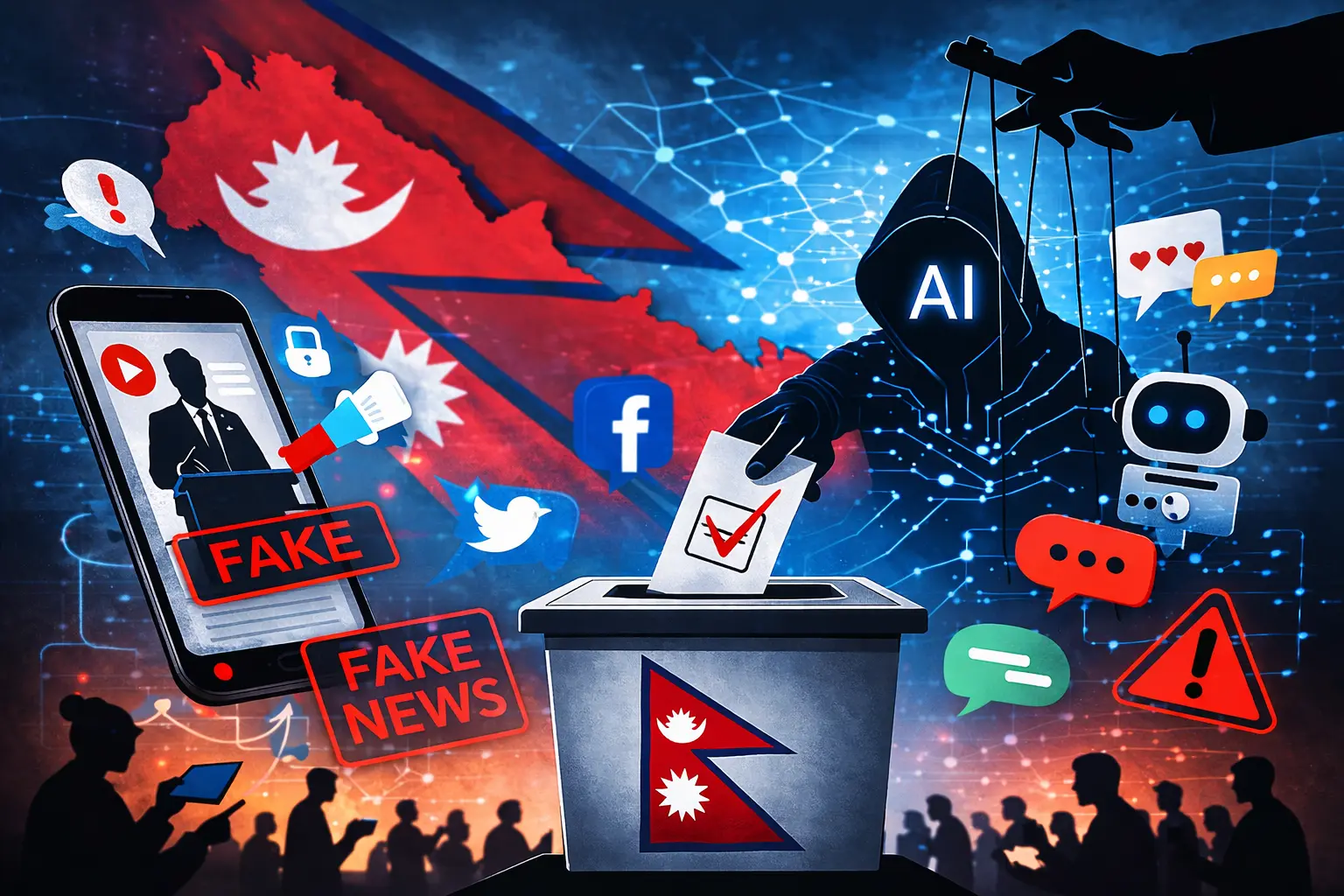
Nepal’s election season has taken a sharp digital turn, with artificial intelligence-fueled disinformation transforming social media platforms into a fierce political battleground. Political analysts, digital rights groups and election observers warn that AI-generated content — from deepfake videos to synthetic audio clips — is rapidly distorting public debate ahead of key national and provincial polls.
The surge in manipulated content has raised concerns about voter confusion, reputational damage to candidates and the broader integrity of Nepal’s democratic institutions.
Deepfakes and Synthetic Speeches Circulate Online
In recent weeks, doctored videos allegedly showing political leaders making inflammatory remarks have circulated widely on Facebook, TikTok and messaging apps like WhatsApp and Viber. Many of these clips were later flagged by independent fact-checkers as digitally altered using AI tools capable of cloning voices and modifying facial expressions with alarming realism.
Experts say the accessibility of generative AI platforms has lowered the barrier for producing convincing fake content. What once required technical expertise can now be created in minutes, amplifying misinformation at unprecedented speed.
Bot Networks and Coordinated Campaigns
Digital researchers monitoring online discourse in Nepal report coordinated activity by anonymous accounts that rapidly amplify divisive narratives. Automated bots and troll networks are allegedly pushing polarizing hashtags, targeting rival candidates and spreading misleading claims about voting procedures.
These coordinated campaigns often exploit sensitive issues such as federalism, identity politics and economic grievances — themes that historically influence voter sentiment in Nepal’s diverse political landscape.
Impact on Voter Trust and Election Integrity
Election observers fear that AI-driven misinformation could erode public trust in official results. False claims about rigged electronic voting machines, altered ballots and fabricated opinion polls have already begun circulating in some regions.
Civil society groups argue that even when debunked, viral misinformation leaves lasting impressions. “The speed of false content often outpaces fact-checking,” a Kathmandu-based digital rights advocate noted, emphasizing the psychological impact on undecided voters.
Authorities and Tech Platforms Under Pressure
Nepal’s Election Commission has urged political parties to refrain from using manipulated content and has called on social media platforms to act swiftly against misleading material. However, enforcement remains challenging due to limited regulatory frameworks and the cross-border nature of online content distribution.
Tech companies have reportedly expanded monitoring teams for South Asia, but critics argue that moderation in Nepali and regional languages remains inconsistent.
Calls for Digital Literacy and Stronger Safeguards
Policy experts are urging long-term solutions beyond reactive content removal. Recommendations include stricter campaign transparency rules, mandatory labeling of AI-generated political advertisements, and large-scale digital literacy campaigns to help citizens identify manipulated media.
As Nepal navigates its evolving digital ecosystem, the election cycle underscores a broader global challenge: how democracies can safeguard free expression while preventing AI tools from being weaponized against the electoral process.