
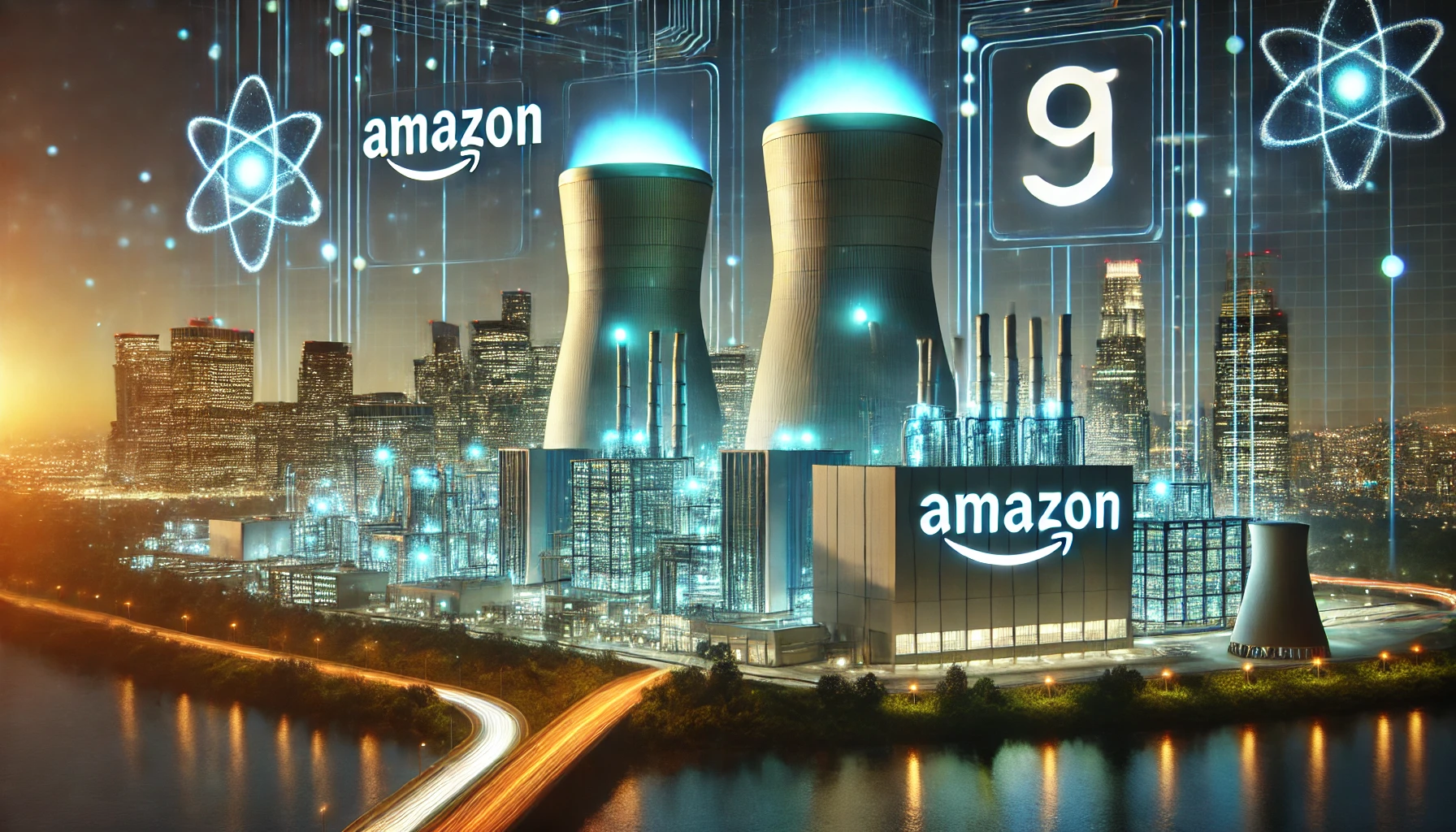
In a significant move toward clean energy, Amazon and Google have joined a global coalition pledging to triple nuclear power capacity by 2050. The commitment, announced at the Nuclear Energy Summit in Brussels, is backed by governments, corporations, and international organizations, aiming to accelerate the shift toward carbon-free electricity.
Key Highlights:
- Global Commitment: Amazon and Google, along with other major stakeholders, have pledged to support the expansion of nuclear power to meet growing global energy demands sustainably.
- Objective: The initiative, led by the International Atomic Energy Agency (IAEA), aims to cut carbon emissions and ensure a reliable, round-the-clock power supply.
- Current Nuclear Share: At present, nuclear power accounts for 10% of global electricity generation. Tripling this capacity would make it a dominant force in the clean energy sector.
- Tech Giants’ Role:
- Google has invested in small modular reactors (SMRs) and advanced fission technologies through its parent company, Alphabet.
- Amazon is exploring nuclear as a viable energy source for its global operations, including data centers that require continuous, large-scale electricity.
Statements from Industry Leaders
Speaking at the summit, IAEA Director General Rafael Mariano Grossi called the pledge a "historic step" toward a sustainable energy future.
Kate Brandt, Google’s Chief Sustainability Officer, emphasized the company’s commitment:
"To power a carbon-free future, we must embrace all available clean energy solutions, including nuclear. This commitment aligns with our goal of operating on 24/7 carbon-free energy by 2030."
Kara Hurst, Amazon’s Vice President of Sustainability, highlighted the company’s growing interest in nuclear energy:
"Nuclear power offers a stable, scalable solution for decarbonizing the grid. We are proud to support this initiative and drive meaningful change in the energy sector."
Challenges and Future Prospects
Despite the ambitious goal, challenges remain. High upfront costs, regulatory barriers, and public skepticism about nuclear safety could slow progress. However, next-generation nuclear technologies such as SMRs and fusion reactors promise safer, more cost-effective solutions.
Governments and private investors are expected to provide substantial funding. The U.S. Department of Energy and the European Union have already pledged billions in grants and loan guarantees to accelerate nuclear development.
Impact on the Future of Clean Energy
With global electricity demand rising, expanding nuclear power could be a game-changer in the fight against climate change. The pledge by Amazon, Google, and other stakeholders signals growing recognition that renewables alone may not be enough to meet energy demands. As policies and investments align, nuclear power is poised to become a key player in the world’s transition to a carbon-free, energy-secure future.