
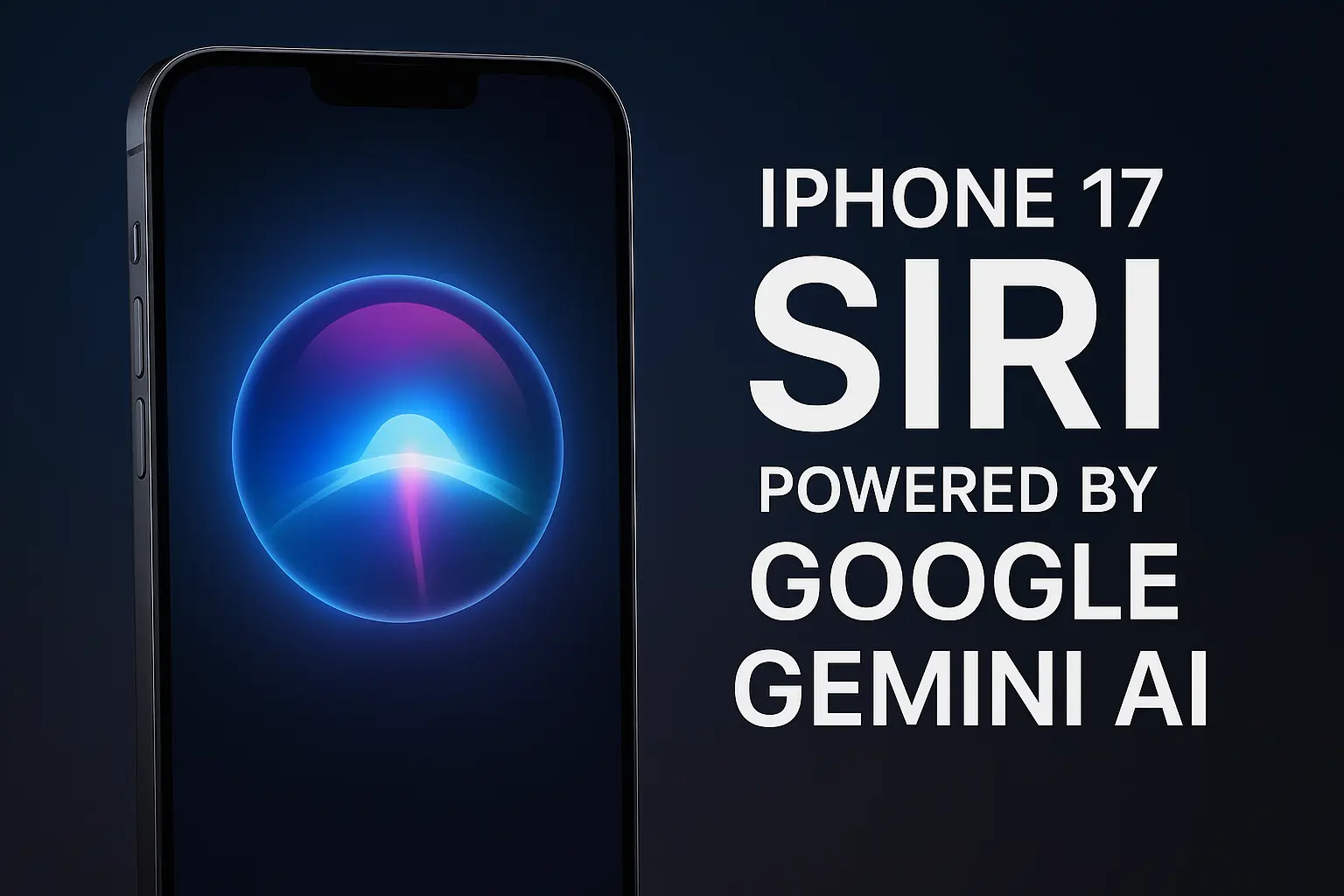
Apple’s upcoming iPhone 17 series, expected to launch in 2025, is already generating buzz—not for its design, but for a potential artificial intelligence partnership. Reports suggest Apple is in advanced talks with Google to integrate the Gemini AI model into a revamped version of Siri, internally dubbed “Siri 2.0.”
Siri’s Evolution and Apple’s AI Strategy
For years, Siri has faced criticism for lagging behind rivals like Google Assistant, Amazon Alexa, and now ChatGPT-based tools. Apple’s strategy has historically leaned toward in-house development, but industry insiders claim the company is now considering external AI partnerships to remain competitive.
Why Google Gemini?
Google’s Gemini AI, unveiled as a multimodal large language model, has demonstrated advanced reasoning, conversational fluency, and cross-platform adaptability. Integrating Gemini could allow Siri 2.0 to handle complex queries, multitask across apps, and generate more natural interactions—something Apple users have long demanded.
Privacy Concerns and Apple’s Control
One major question is whether Apple will compromise on its strict privacy stance. Analysts believe Apple may run Gemini in a hybrid model, where sensitive user data is processed on-device while cloud-based AI handles larger tasks. This could strike a balance between AI power and Apple’s core promise of privacy.
Industry Impact and Competition
If Apple adopts Gemini, it would mark one of the most significant collaborations between two tech giants often seen as rivals. The move could pressure Amazon, Microsoft, and even OpenAI to reassess their consumer strategies. For Apple, it could transform the iPhone 17 into not just a hardware upgrade, but a leap into the AI-driven future.