
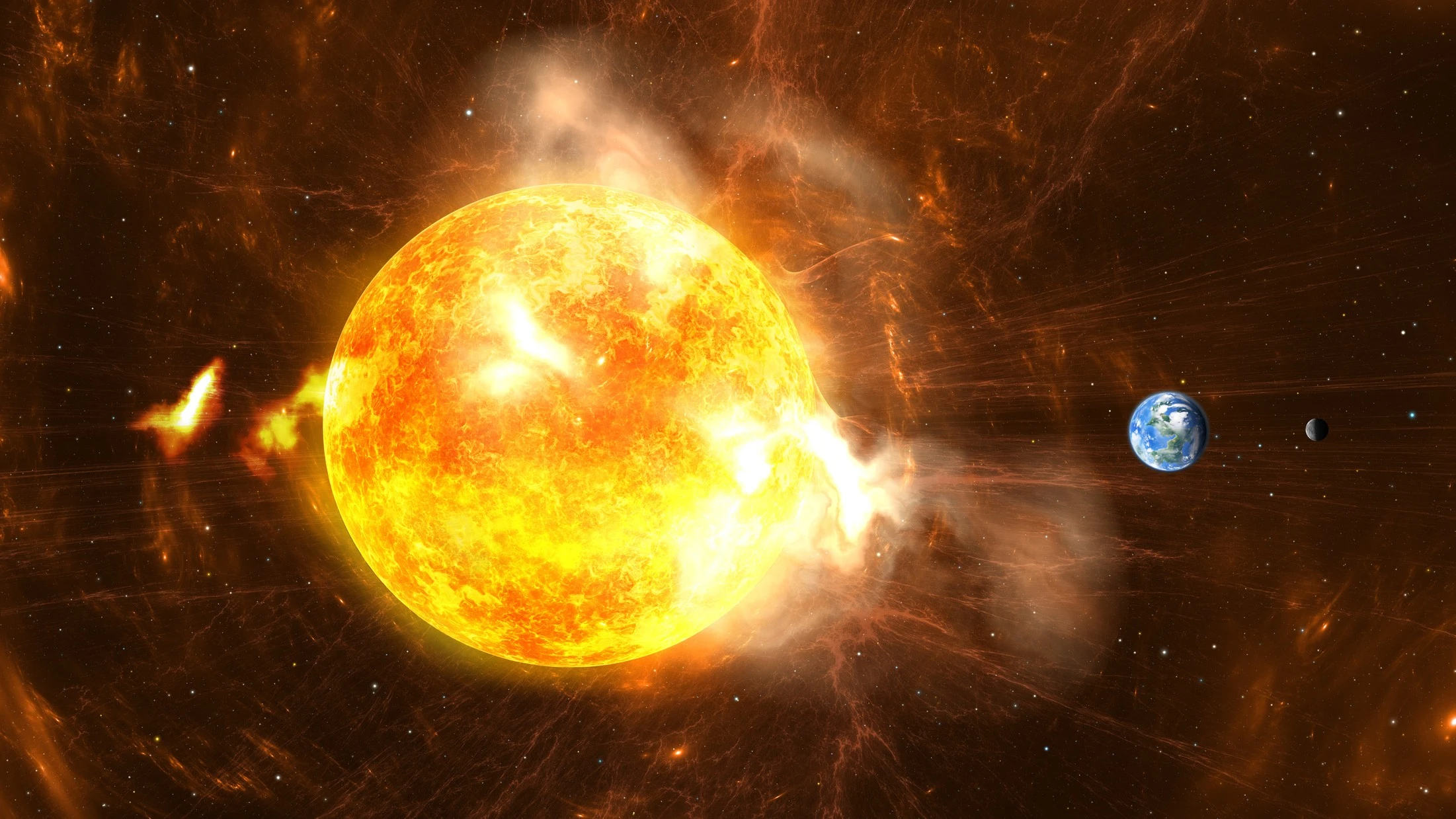
In an extraordinary space-weather event, a series of massive coronal mass ejections (CMEs) erupted from the Sun, unleashing one of the strongest solar storms of the current cycle. The powerful solar blast traveled across space and struck Earth’s magnetic field with unexpected intensity, prompting global monitoring systems to issue high-level geomagnetic warnings.
🚨 ISS Astronauts Ordered Into Protective Modules
As radiation levels surged, astronauts aboard the International Space Station were instructed to take refuge in shielded compartments. These specially designed areas offer enhanced protection against solar particle events.
Space agencies confirmed that the crew followed standard emergency protocols, staying inside the safe zones until radiation levels dropped to acceptable limits. No injuries were reported.
☀️ CMEs Arrived Faster and Stronger Than Expected
Early solar observations indicated multiple CMEs erupting from an active sunspot cluster, but their acceleration and combined impact caught scientists by surprise. The shockwave carried highly charged particles that intensified upon reaching Earth, triggering a G4–G5 level storm, one of the most severe classifications.
🌍 Impact Felt on Earth: Satellites and Power Systems on Alert
The storm produced strong geomagnetic activity, with space-weather agencies reporting temporary disruptions to GPS signals, satellite telemetry, and high-frequency radio communication.
Power grid operators were placed on standby due to the potential risk of geomagnetic-induced currents, though major outages were avoided.
✨ Spectacular Auroras Seen Far Beyond Polar Regions
While the storm posed challenges for satellites and space operations, it also generated stunning auroras visible across regions that rarely witness such displays. Observers in parts of Europe, North America, and Asia reported vibrant red and green lights illuminating the night sky.
🔭 Scientists Warn of More Solar Activity Ahead
Experts suggest that the Sun is approaching its solar maximum phase, meaning more frequent and intense solar events may occur over the next several months. Agencies are closely monitoring active regions on the Sun for further eruptions that could impact space missions and technological infrastructure on Earth.