
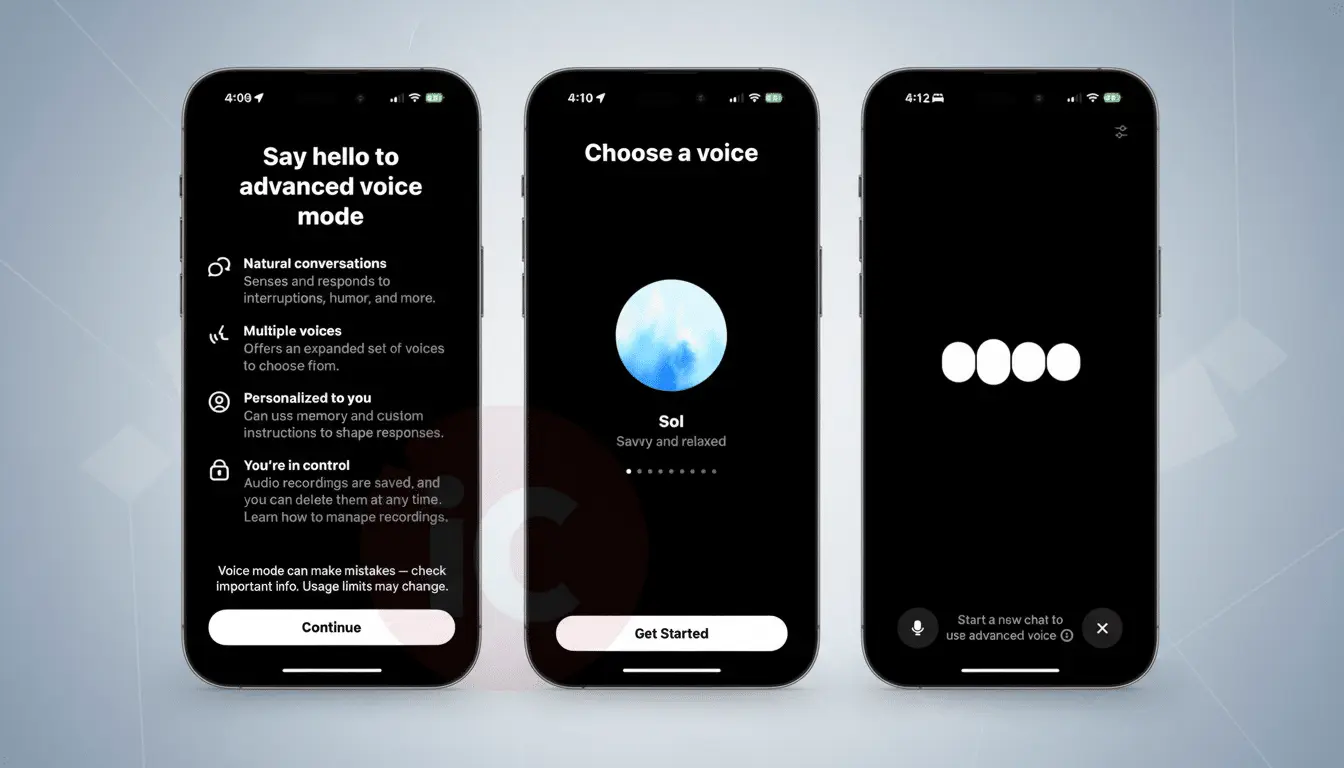
In a significant upgrade aimed at making AI interactions more natural and fluid, ChatGPT has launched the ability for users to switch to voice mode directly within any chat window. The feature eliminates the need to switch screens or open a separate panel, creating a smooth transition from typing to speaking.
A Step Toward More Human-Like Conversations
The new in-chat voice capability is designed to make interactions feel more conversational and spontaneous. OpenAI says the update makes it easier for users who prefer hands-free operation, whether they are multitasking, commuting, or simply want faster responses.
One-Tap Voice Access for Instant Interaction
Voice mode can now be toggled with a single tap or click inside the chat interface. Once enabled, ChatGPT listens in real time, converts speech to text instantly, and returns spoken responses with improved clarity and natural tone. The streamlined workflow mirrors the experience of talking to a smart speaker — but with the contextual intelligence of ChatGPT.
Enhanced Speech Recognition and Response Quality
The latest implementation features enhanced speech recognition models capable of capturing accents, multilingual speech, and rapid instructions. OpenAI has also upgraded the voice synthesis system to deliver more expressive responses, improving both understanding and output quality.
Integrated Experience Across Devices
The voice mode update is rolling out across web and mobile versions simultaneously. Users on smartphones can start a conversation by speaking without touching the keyboard, while desktop users can shift seamlessly to dictation during long tasks. The integration aims to unify the user experience across platforms.
Privacy Controls and User Safety Built In
OpenAI noted that voice interactions adhere to existing privacy and data handling rules. Microphone access remains under user control, and audio data is processed according to standard ChatGPT policies.
Broader Rollout Signals Shift Toward Multimodal AI
The introduction of in-chat voice mode underscores OpenAI's push toward more multimodal AI interactions — blending text, voice, and soon, more real-time modes of communication. The upgrade reflects the industry’s wider shift toward AI tools that fit into natural human communication patterns.