
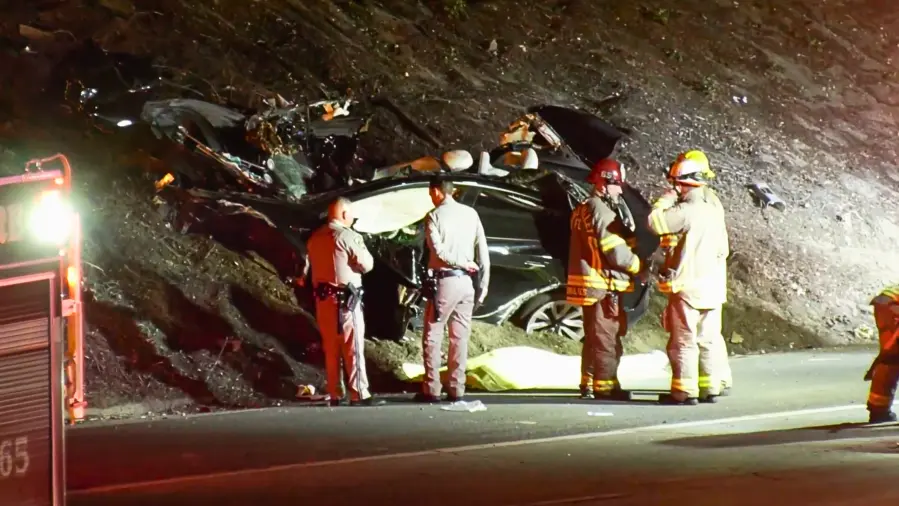
In China's rapidly evolving automotive landscape, smart driving technology is fast becoming the fiercest new front in the battle for market supremacy, even as safety concerns loom large following a recent fatal crash involving a semi-autonomous vehicle.
The tragedy, which involved a premium electric sedan equipped with advanced driver assistance features, has reignited debate over the safety and readiness of intelligent driving systems. Despite this, major automakers — from domestic giants like BYD and NIO to global players such as Tesla and BMW — are doubling down on their investments in smart driving, betting that the future belongs to those who master autonomy first.
Racing Toward a Smarter Future
As China's electric vehicle (EV) market matures, competition has shifted from basic electrification to software-driven experiences. Enhanced autopilot functions, intelligent navigation, self-parking, and even urban autonomous driving capabilities have become key differentiators in consumer purchasing decisions.
"Cars are no longer just about horsepower or battery range," said Chen Liang, an automotive analyst at Shanghai-based consultancy Automobility Ltd. "The real competition now is in intelligent driving — how safely and smoothly a car can drive itself in complex city environments."
Startups like Xpeng Motors and Li Auto have aggressively marketed their driver-assist systems, while established firms such as Huawei-backed Aito and Geely's Zeekr brand have rapidly integrated cutting-edge chips and sensors into their newest models. Tesla, long considered a leader in autonomous driving technology, faces increasing pressure from Chinese rivals offering similar — or even superior — smart driving packages at competitive prices.
Public Concern Meets Corporate Ambition
The fatal crash earlier this month involved a mid-size electric SUV that was reportedly operating under an assisted-driving mode when it collided with a construction vehicle on a highway near Guangzhou. The incident is under investigation by local authorities, but initial findings suggest that while the system was active, the driver may have failed to intervene when necessary.
In the wake of the accident, critics have pointed to the dangers of "overtrust" in semi-autonomous systems, which still require constant driver attention. Nonetheless, industry leaders have maintained that smart driving technology, when properly used, significantly reduces the overall risk of accidents.
"Any loss of life is tragic and must be taken seriously," said an executive from one leading Chinese EV maker, speaking on condition of anonymity. "But smart driving is a critical part of the mobility future. We must improve public education, system transparency, and regulatory standards — not halt innovation."
Regulators Step In
The Chinese government, keen to maintain leadership in next-generation transportation, has so far encouraged the development of autonomous driving technologies, issuing permits for pilot programs in major cities like Beijing, Shanghai, and Shenzhen. However, regulatory scrutiny is increasing.
Following the crash, the Ministry of Industry and Information Technology (MIIT) announced plans to tighten safety standards for intelligent driving systems and mandate clearer guidelines for when drivers must assume control. Officials are also considering requiring more visible warnings and standardized driver monitoring systems to ensure users remain engaged behind the wheel.
An Unstoppable Trend?
Despite heightened scrutiny, the momentum behind smart driving innovation shows no sign of slowing. Market research firm Canalys projects that by 2027, more than 70% of new cars sold in China will feature Level 2 or higher assisted-driving capabilities, up from around 30% today.
"Consumers want smarter, safer, and more convenient mobility," said Sophie Zhang, a senior analyst at Canalys. "Incidents like this remind us that the path won't be smooth, but the destination remains the same."
As automakers vie for dominance in the world's largest car market, mastery of smart driving technology could determine the winners and losers in China's intensifying automotive wars — a race where innovation and caution must go hand in hand.