
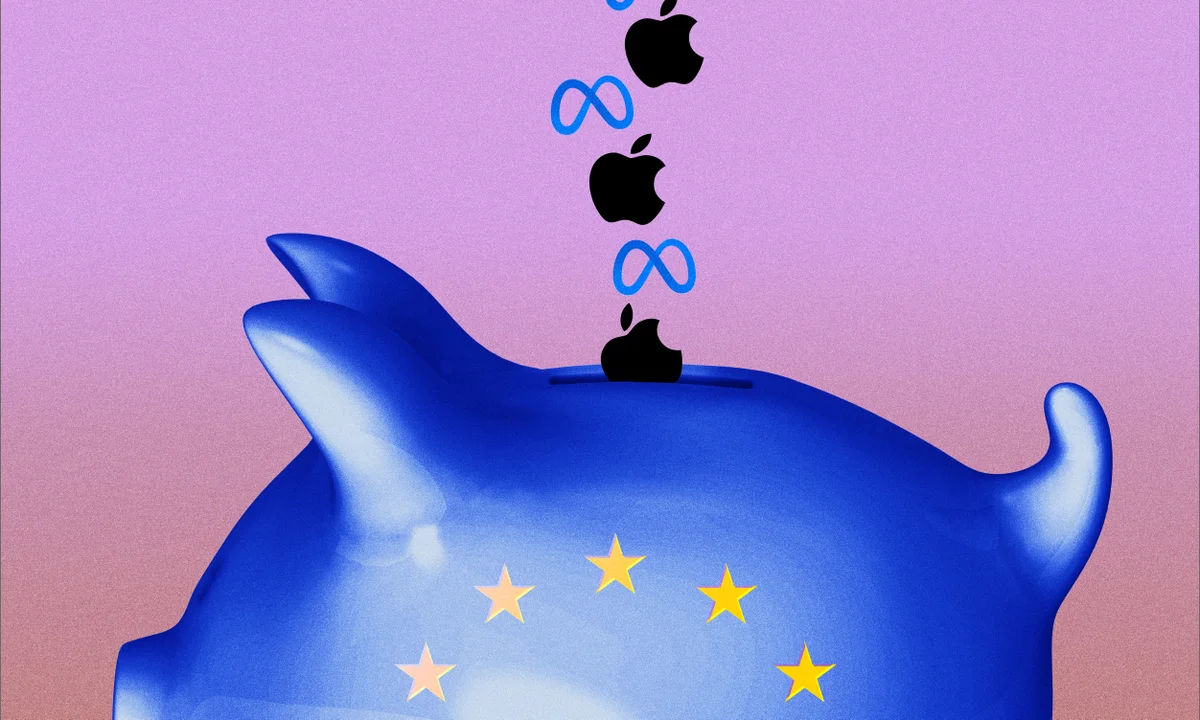
In a landmark move under the European Union’s Digital Markets Act (DMA), two of the world’s most powerful tech companies—Apple Inc. and Meta Platforms Inc.—have been slapped with major fines for non-compliance with the bloc’s sweeping new digital competition rules.
The European Commission, the executive arm of the EU, announced that it has fined Apple €500 million (approximately $570 million) and Meta €210 million (around $228 million) following investigations into practices deemed harmful to fair competition in the European digital market.
Apple Accused of Limiting Consumer Choice
Apple’s penalty stems from its App Store policies, which regulators say restrict developers from informing users about alternative purchasing options outside the Apple ecosystem. Under the DMA, designated “gatekeepers”—large digital platforms with significant market power—are required to allow app developers to communicate freely with their customers, including offering links to external payment options.
European Commissioner for Competition Margrethe Vestager stated that Apple’s restrictions amounted to an abuse of its dominant position and directly undermined consumer rights.
“Apple has continued to impose anti-steering rules that prevent developers from informing users about cheaper alternatives. This restricts innovation and inflates prices,” said Vestager during a press conference in Brussels.
Apple, in response, expressed disappointment with the decision and is expected to appeal the fine, arguing that its policies are in place to protect user privacy and ensure a secure app ecosystem.
Meta Penalized for Subscription Model Practices
Meta, the parent company of Facebook and Instagram, faces a €210 million fine over the introduction of a “pay or consent” model which the EU says violates user consent rules under both the DMA and the General Data Protection Regulation (GDPR). The model offered users a choice between a paid, ad-free experience or continuing to use the platform for free by consenting to data tracking for personalized ads.
According to the European Commission, the structure of the model left users with “no real alternative” and failed to provide an equivalent experience without forced consent.
“Users must have a genuine choice, not a privacy ultimatum,” said Vestager. “What Meta offered is a form of coercion, not compliance.”
Meta has said it believes its model respects the latest regulatory framework and that it was designed in response to the evolving privacy landscape. However, the Commission deemed it incompatible with the DMA's principle of user empowerment and transparency.
First Major Enforcement Under DMA
These enforcement actions mark the first major financial penalties under the DMA, which came into effect in 2023 and targets “gatekeepers” in digital markets. The law seeks to promote fairer competition, enhance innovation, and reduce the dominance of Big Tech over key online services.
Under the DMA, gatekeepers are subject to strict requirements, including the prohibition of self-preferencing, mandatory data-sharing obligations, and the obligation to allow interoperability with third-party services.
Failure to comply can result in fines of up to 10% of a company’s global turnover, and up to 20% for repeated violations.
What's Next?
Both Apple and Meta have the right to appeal the Commission’s decisions to the EU’s General Court. Legal analysts anticipate that these rulings could set important precedents for how tech giants operate within the European Union.
In the meantime, the Commission has signaled that more enforcement actions could follow as investigations into other major platforms, including Google and Amazon, are ongoing.
Broader Implications
The fines send a clear message: the European Union is serious about curbing digital monopolies and restoring balance in the online economy. As regulators worldwide grapple with how to oversee Big Tech, the EU continues to position itself at the forefront of digital policy enforcement.