
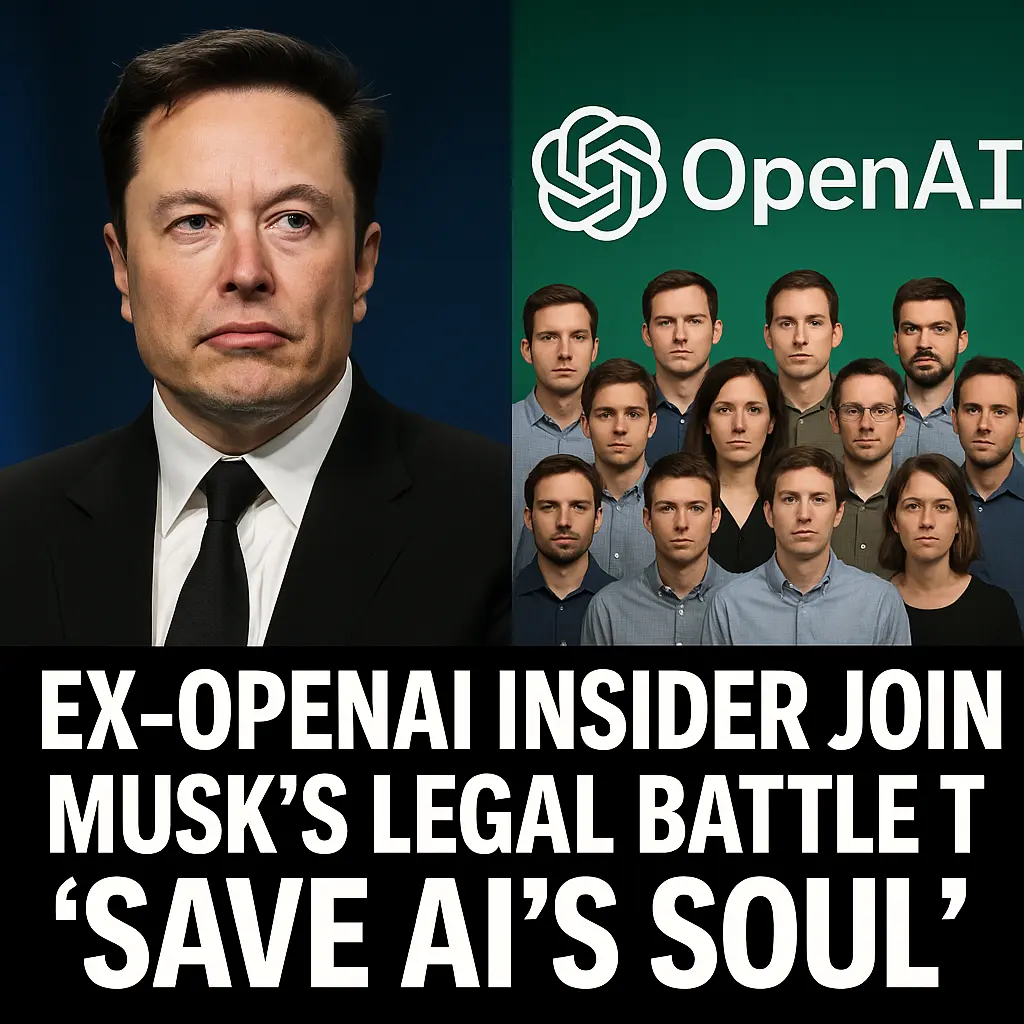
A dozen former OpenAI employees have publicly aligned themselves with Elon Musk’s high-profile lawsuit against the AI giant, arguing that the company’s ongoing restructuring threatens to betray its foundational mission. This latest development adds significant weight to Musk’s legal crusade, which has already stirred major controversy in the tech and artificial intelligence communities.
A Founding Mission Under Fire
Elon Musk, one of OpenAI’s original co-founders, filed a lawsuit earlier this year alleging that the company has strayed from its founding principles. Initially created in 2015 as a nonprofit aimed at ensuring artificial general intelligence (AGI) benefits “all of humanity,” OpenAI has since transitioned into a “capped-profit” model—culminating in a for-profit subsidiary and a powerful alliance with Microsoft.
According to Musk, this pivot violates the company’s original charter, especially its promise not to allow corporate or profit-seeking interests to dominate the development and deployment of AGI technologies. He argues that OpenAI's close relationship with Microsoft—including multi-billion-dollar investments and product integrations—demonstrates a stark shift away from the altruistic goals he helped establish.
Support From Inside the Ranks
In a legal brief filed earlier this week, twelve former OpenAI employees backed Musk's lawsuit, echoing concerns that the organization is at risk of becoming indistinguishable from the very tech giants it was created to counterbalance.
“We joined OpenAI because we believed in its mission to develop AGI safely and responsibly—not to serve as an innovation engine for one of the world's largest corporations,” the signatories wrote. They warned that continued restructuring, without strong public oversight or nonprofit governance, could lead to AGI tools being driven by market incentives rather than global safety and accessibility.
Many of these former employees held senior research or leadership roles, lending their perspective considerable credibility. Some were directly involved in early decisions that shaped OpenAI's hybrid governance model, which attempted to balance nonprofit values with the need to raise capital.
OpenAI Pushes Back
OpenAI has dismissed Musk’s lawsuit as “meritless,” and in a recent countersuit, the company accused the Tesla and SpaceX CEO of engaging in a campaign of harassment aimed at derailing its progress. The organization also revealed that Musk previously led a failed $97.4 billion acquisition attempt, which they argue was a thinly veiled attempt to seize control of OpenAI’s operations.
In court filings, OpenAI claimed that Musk's lawsuit is more about personal ambition and business rivalry than genuine concern for the public good. “Mr. Musk has no legal standing to determine how the company should be governed today,” an OpenAI spokesperson said.
The company maintains that its shift to a for-profit structure is essential to raise the estimated $40 billion needed to stay competitive in AI development and deployment. It has also reiterated that its core safety protocols and public-interest commitments remain intact.
Tech Ethics at a Crossroads
The Musk-OpenAI saga is quickly becoming a flashpoint in a larger conversation about the future of artificial intelligence. Should AGI be developed under nonprofit, mission-driven organizations accountable to the public? Or is commercial funding—and with it, commercial interest—an unavoidable reality of building transformative technologies?
“The stakes couldn’t be higher,” said Dr. Amelia Tran, an AI policy analyst at the Center for Digital Governance. “This isn’t just a legal fight. It’s a debate over who will control the most powerful technology humanity has ever created—and for whose benefit.”
Next Steps
The case is expected to go to trial in the spring of 2026, with a federal judge recently rejecting OpenAI’s motion to dismiss the lawsuit. Legal experts predict a prolonged and closely watched courtroom battle, one that could set major precedents for how AI companies are governed in the future.
As the tech world awaits further developments, the voices of those who helped build OpenAI from the ground up may prove to be a powerful force in shaping how the organization—and the future of artificial intelligence—evolves from here.