
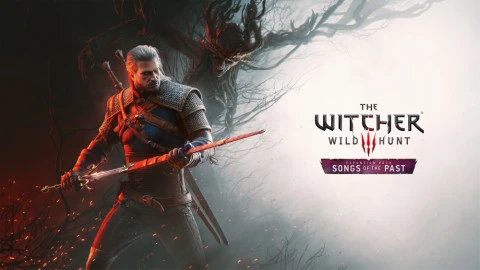
In an industry where the lifecycle of a single-player game rarely extends past a few years of post-launch support, CD Projekt Red (CDPR) has upended the traditional playbook. The official announcement of Songs of the Past, a massive third expansion for the 2015 masterpiece The Witcher 3: Wild Hunt, represents a calculated structural maneuver. Slated for release in 2027 across PlayStation 5, Xbox Series X|S, and PC, this expansion arrives 12 years after the base game and 11 years after its last critically acclaimed DLC, Blood & Wine.
The strategic intent here goes far beyond a simple nostalgia cash-grab. By keeping a title that has already sold over 60 million copies globally relevant, CDPR is bridging a massive generational gap. AAA development cycles now routinely span six to eight years; by revitalizing The Witcher 3, the studio maintains active brand engagement and creates a direct, revenue-generating on-ramp for the upcoming The Witcher 4.
HIGHLIGHT: Development Dynamics and the Fool’s Theory Alliance
To pull off a feat of this scale without disrupting its internal pipelines, CDPR has structured a clever co-development partnership. The heavy lifting is being handled by Fool’s Theory, a specialized Polish studio staffed by numerous industry veterans who originally worked on the base version of The Witcher 3.
This allocation allows CDPR's core internal teams to remain fully focused on the development of The Witcher 4 (Project Polaris) and the upcoming Cyberpunk 2077 sequel. Joint CEO Michał Nowakowski revealed during the company's Q1 2026 earnings call that Songs of the Past was initially considered for a late 2026 launch. However, management pushed the release window into 2027 to afford the development team the buffer needed to ensure the expansion hits the uncompromising quality standards consumers demand.
HIGHLIGHT: Scope, Narrative Positioning, and Technical Upgrades
For players questioning whether this release is merely a minor add-on, the studio has made its stance explicitly clear. Associate Game Director Paweł Sasko emphasized that this is a full-scale premium expansion, comparable to the narrative depth and mechanical breadth of Blood & Wine. Players can anticipate a robust 20-to-30-hour campaign that returns Geralt of Rivia to the focal point of the story, exploring the familiar, gritty ecosystems of Velen and its surrounding regions.
+-----------------------------------------------------------------------------------------------+
|                       EXPANSION COMPARATIVE SCOPE                                |
+----------------------+--------------------+--------------------------------------------------+
| Expansion Name       | Release Year       | Average Gameplay Length      |
+----------------------+--------------------+--------------------------------------------------+
| Hearts of Stone        | 2015                      | 10 - 17 Hours                           |
| Blood & Wine           | 2016                       | 15 - 40 Hours                          |
| Songs of the Past     | 2027 (Expected)    | 20 - 30 Hours (Projected)       |
+----------------------+--------------------+---------------------------------------------------+
Industry analysts note that Songs of the Past will actively function as a narrative prelude to The Witcher 4, dropping subtle environmental and historical clues regarding the future path of Ciri and the broader world lore.
However, this ambitious scope requires modern infrastructure. CDPR has confirmed that alongside the expansion, the base game's REDengine 3 framework will receive a significant technical overhaul. System requirements on PC will be raised to accommodate modern rendering pipelines, advanced asset streaming, and cross-platform mod support, ensuring that a game built in 2015 can take full advantage of current hardware.
HIGHLIGHT: The Broader Market Impact
CDPR’s strategy offers an elegant solution to the most pressing crisis facing modern game publishing: the massive, silent windows between major releases. Rather than leaving the market empty for years while The Witcher 4 finishes production, the studio uses its existing, highly optimized engine architecture to deploy premium content to an already massive, eager player base. More concrete gameplay details and a guided developer presentation are scheduled to debut at Gamescom 2026, setting the stage for one of the most fascinating experiments in modern gaming history.