
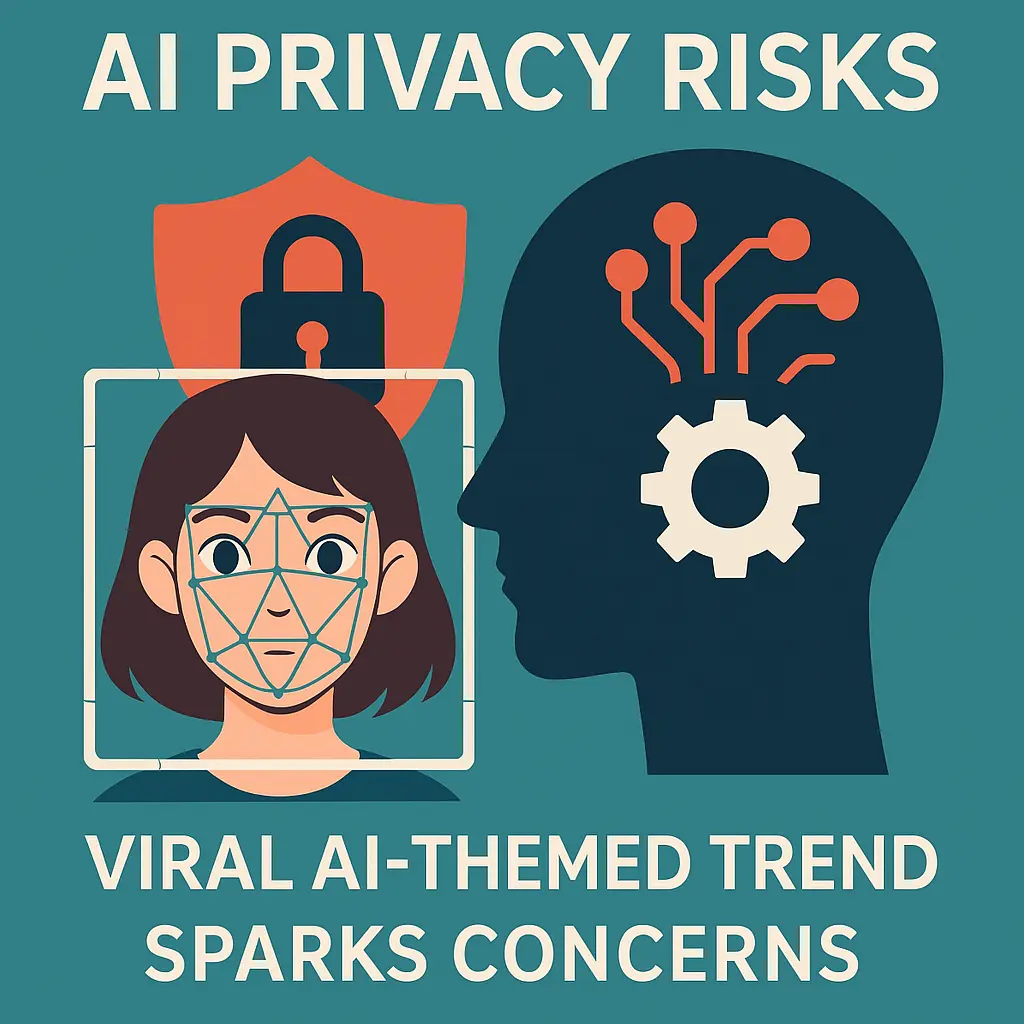
A new social media trend transforming people’s photos into Studio Ghibli-style animations using AI has taken the internet by storm — but privacy experts are raising the alarm. While users are charmed by the whimsical, painterly transformations reminiscent of Spirited Away and My Neighbor Totoro, concerns are growing that the trend is masking a deeper issue: the widespread harvesting and misuse of biometric data.
The Viral Trend With a Hidden Cost
In recent months, a surge of AI apps and online tools have allowed users to upload selfies and receive stunning anime-style portraits, modeled after the iconic aesthetic of Studio Ghibli films. Hashtags like #GhibliAI and #AIAnimeSelfie have flooded platforms like TikTok, Instagram, and X (formerly Twitter), with millions of users participating.
But what seems like harmless fun may be anything but, say cybersecurity and legal experts.
“These tools are not just stylizing your photos — they’re collecting high-resolution images of your face, often without adequate transparency around data storage and usage,” said Dr. Leah Kravitz, a digital privacy researcher at NYU. “In many cases, users are granting these apps the right to store, share, or even sell their biometric data.”
Who’s Behind the AI?
Many of the most popular Ghibli-style AI generators are run by little-known or anonymous developers, some based overseas with servers in jurisdictions that have minimal data protection laws. While some tools claim to delete images within 24 hours, there is little way for users to verify this.
“There’s an enormous black box around how these models are trained and how long the data sticks around,” said cybersecurity analyst Jon Mendoza. “The cute output distracts from the real issue: you may be handing over sensitive facial data to an unknown entity with zero accountability.”
Studio Ghibli Has No Involvement
It’s important to note that Studio Ghibli has no affiliation with these AI tools. In fact, the company has historically opposed digital imitation of its distinct hand-drawn style. Neither Studio Ghibli nor its parent company, Nippon TV, has released an official statement on the trend — but intellectual property experts suggest legal challenges could arise.
“The irony is that the style being imitated is the product of years of human craftsmanship — and now it's being automated and commercialized without consent,” said Kenji Aoki, a Tokyo-based IP attorney.
Potential for Deepfakes and Identity Theft
With facial data in the wrong hands, the risks go far beyond personalized avatars. Experts warn that such data can be used to train deepfake models, commit identity fraud, or even bypass facial recognition security systems.
“If an app creates a 3D facial model from your photos, it could theoretically be used to impersonate you in video calls, biometric logins, or synthetic media,” said Kravitz. “And there’s almost no way to claw that data back once it’s out.”
Calls for Stricter Oversight
The trend has prompted calls for greater regulation of AI-powered image tools. Privacy watchdogs in the EU and Canada have opened preliminary reviews into several of these services, while U.S. lawmakers are being urged to expand digital rights legislation to include biometric consent for AI apps.
In the meantime, experts advise caution. “If an app doesn't clearly explain what it does with your data, you should assume the worst,” said Mendoza.
A Tradeoff Between Art and Anonymity
While the AI-generated Ghibli portraits may seem magical, critics argue that users are trading privacy for aesthetics. As AI tools grow more sophisticated and pervasive, the line between digital creativity and personal security is becoming increasingly blurred.
“This isn’t about resisting innovation — it’s about protecting people from exploitation,” said Kravitz. “Just because an app makes you look like a Miyazaki character doesn’t mean it deserves access to your face.”