
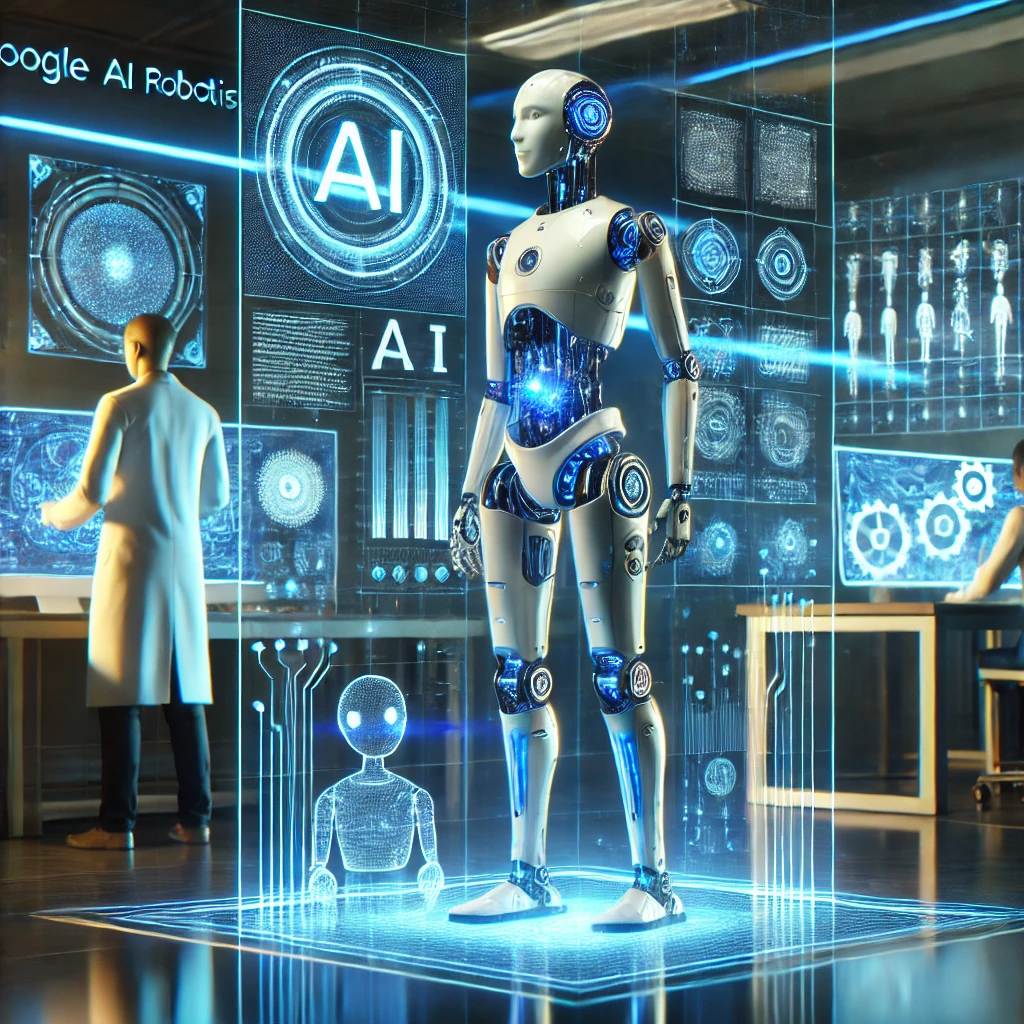
Google has introduced a new suite of artificial intelligence (AI) models aimed at accelerating advancements in the robotics industry. The cutting-edge models are designed to enhance machine learning capabilities, improve robotic adaptability, and enable more intuitive human-robot interactions. With automation playing an increasingly vital role in industries ranging from manufacturing to healthcare, Google’s latest AI innovations mark a significant step forward in robotics development.
Revolutionizing Robotics with AI
The new AI models leverage deep learning, reinforcement learning, and multimodal processing to equip robots with enhanced perception, decision-making, and motor skills. These advancements allow robots to operate more efficiently in dynamic environments, making them suitable for a variety of real-world applications, including industrial automation, logistics, and personal assistance.
According to Google, the AI models integrate natural language processing (NLP), vision, and real-time sensory data, enabling robots to better understand and respond to human instructions. This marks a shift from traditional robotics programming toward AI-driven adaptability, where machines can learn and refine their behavior over time.
Key Features and Capabilities
-
Enhanced Learning Abilities: The AI models enable robots to process vast amounts of data and continuously learn from new experiences, making them more effective in unpredictable settings.
-
Improved Object Recognition: Advanced vision and spatial awareness systems allow robots to identify and interact with objects with higher accuracy, a crucial capability for automation in warehouses and factories.
-
Natural Language Interaction: AI-powered language processing helps robots interpret and execute spoken or written commands, paving the way for more intuitive human-robot collaboration.
-
Adaptive Decision-Making: Reinforcement learning algorithms help robots make complex decisions based on real-time environmental feedback, increasing efficiency in industrial and service applications.
Implications for the Robotics Industry
With the global robotics market growing rapidly, Google’s AI-powered models are expected to drive new innovations across multiple sectors. Industries such as manufacturing, e-commerce logistics, and healthcare stand to benefit significantly from more intelligent and adaptable robotic systems.
Industrial Automation: AI-driven robotics can enhance production lines by automating complex tasks, reducing errors, and increasing efficiency.
Healthcare & Assistance: Advanced robots can assist in patient care, rehabilitation, and elderly support, improving accessibility to medical services.
Logistics & Warehousing: Smarter robots equipped with AI models can optimize inventory management, package sorting, and last-mile delivery operations.
Google’s AI Leadership in Robotics
Google has been at the forefront of AI and robotics research, with projects such as DeepMind’s reinforcement learning advancements and the Robotics Transformer (RT) model, which demonstrated AI-driven robotic learning. The latest AI models represent a continued commitment to making robots more autonomous, intelligent, and user-friendly.
While Google has not disclosed specific commercialization plans, industry analysts anticipate that the AI models will be integrated into various robotic platforms developed by Google and its technology partners.
Future Outlook
As AI-driven robotics continue to evolve, Google’s latest models could serve as a foundation for the next generation of intelligent machines. By enhancing robot perception, decision-making, and communication, these AI advancements are expected to reshape industries and improve automation capabilities worldwide.
With competitors such as Tesla, Boston Dynamics, and NVIDIA also investing heavily in AI-powered robotics, the race to develop more sophisticated autonomous systems is intensifying. Google’s latest AI models reinforce its position as a key player in shaping the future of robotics and artificial intelligence.