
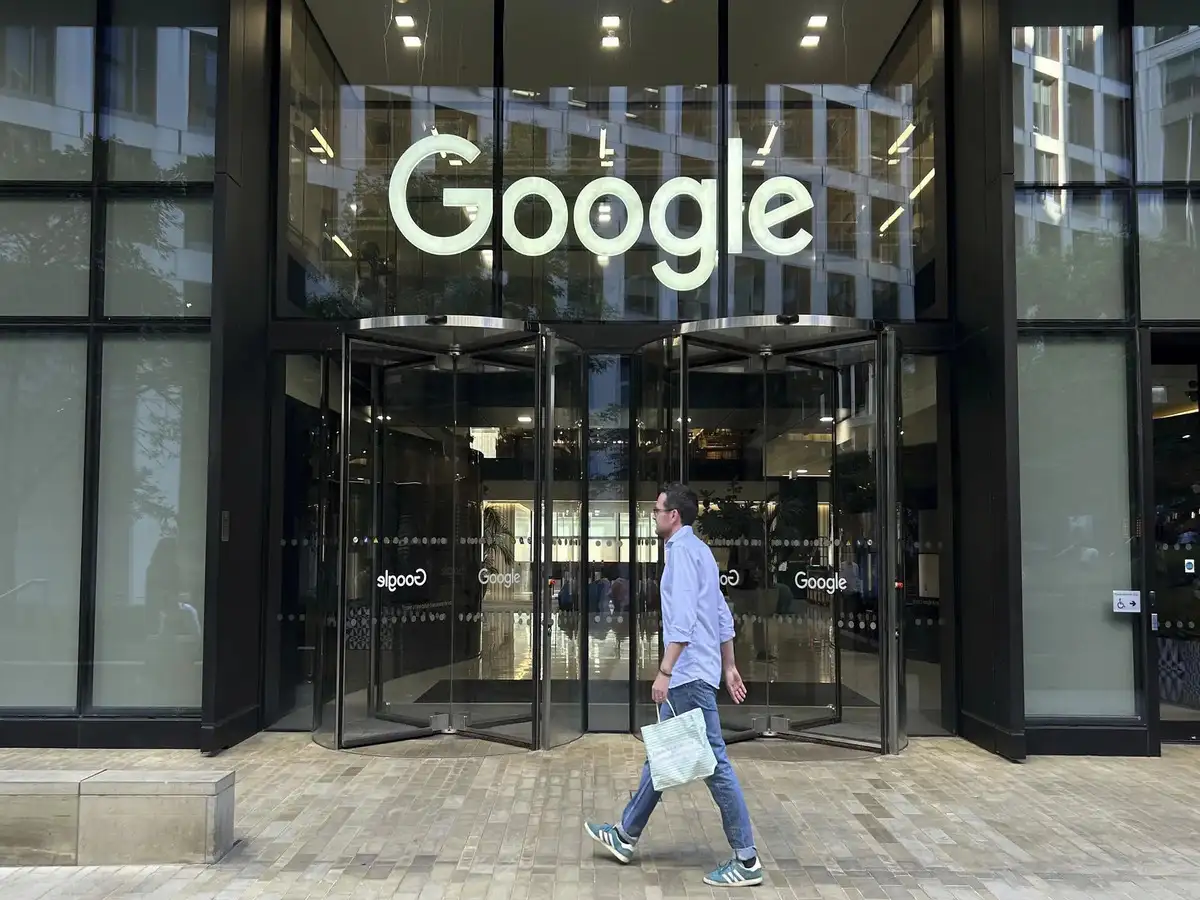
As Google accelerates its artificial intelligence (AI) initiatives in India, its global regulatory troubles are casting a shadow over its ambitions in one of the world's fastest-growing tech markets.
In recent months, Google has announced a series of AI partnerships, investments, and product launches across India. From rolling out AI-powered solutions for agriculture and healthcare to expanding cloud-based AI services for startups, the tech giant is making a calculated push to embed itself deeply into India's digital economy. Sundar Pichai, CEO of Google parent Alphabet Inc., emphasized earlier this year that India is “central to Google’s global AI strategy.”
However, these efforts come at a time when Google faces mounting antitrust scrutiny worldwide. Regulators in the United States, European Union, and even emerging economies are raising alarms over the company’s dominance in search, advertising, and now, artificial intelligence.
In India, the Competition Commission of India (CCI) has already fined Google over anticompetitive practices in the smartphone market, and analysts suggest that the commission may soon turn its gaze toward AI dominance. “There is growing concern that Google’s scale could allow it to monopolize emerging AI markets before they are fully formed,” said Radhika Mehta, a Delhi-based technology policy expert.
Google’s AI ambitions in India are multifaceted. The company has pledged significant investments through its $10 billion “Google for India Digitization Fund.” New AI centers have been established in Bengaluru and Hyderabad, focused on developing models tailored to India’s diverse languages and rural needs. Additionally, partnerships with leading Indian universities aim to create a new generation of AI researchers and engineers.
Despite the optimism, critics warn that Google's deep pockets and early mover advantage could stifle local innovation. “Startups often find themselves at a disadvantage when a giant like Google enters their domain," noted Sameer Kulkarni, founder of an AI health-tech startup in Pune. “We fear a future where Google owns the platform, the data, and the algorithms, leaving little room for homegrown companies.”
Globally, regulators have begun to grapple with the implications of AI monopolization. In the EU, new draft regulations under the Digital Markets Act (DMA) specifically mention AI ecosystems. The U.S. Department of Justice and Federal Trade Commission are jointly investigating whether tech giants’ control over AI infrastructure, from cloud services to foundational models, violates antitrust laws.
In India, the CCI has remained tight-lipped about any ongoing AI-specific investigations. However, several industry groups have reportedly lobbied policymakers to monitor Google's AI expansion more closely. A senior official at India’s Ministry of Electronics and Information Technology (MeitY), speaking on condition of anonymity, said, “We are aware of the strategic importance of AI and the risks of concentration. Regulatory frameworks are under active review.”
Adding complexity is the geopolitical backdrop. As India seeks to position itself as a global AI hub, it also values foreign investment and expertise. “There’s a delicate balance,” explained political economist Shweta Rao. “India wants to attract tech giants for growth and innovation but cannot afford to surrender its digital sovereignty.”
For now, Google is pressing ahead with its India plans. Just last week, the company unveiled new AI tools for small businesses, including chatbots for customer service and AI-driven inventory management systems, promising to make “cutting-edge technology accessible to all.”
But the road ahead may not be smooth. With watchdogs circling and rivals voicing concerns, Google’s AI push in India could soon become the latest flashpoint in the global debate over the future of technology monopolies.