
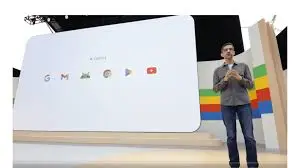
In what could be a major stride in the evolution of digital assistants, Google is reportedly developing a powerful new AI software agent ahead of its flagship I/O 2025 developer conference, scheduled for later this month. The yet-to-be-named system is expected to represent a leap beyond the company’s existing Google Assistant, integrating advanced generative AI capabilities to offer more context-aware and proactive user support.
A Next-Generation AI Interface
According to insiders familiar with the project, the new AI agent is being designed as a multimodal interface—capable of understanding and generating text, voice, and visual data in real time. Built on the Gemini AI architecture, which succeeded Google’s Bard initiative in 2024, this next-generation assistant aims to unify a wide array of Google services, including Search, Gmail, Maps, and Calendar.
Rather than being a simple voice-activated tool, the new agent is expected to act as a deeply embedded smart layer across Android devices, Chrome OS, and potentially even Google’s Pixel hardware lineup. It may also serve as a productivity partner, able to summarize documents, compose emails, manage schedules, and even complete tasks across third-party applications.
Competing with Rivals
Google's move appears to be a direct response to increased competition in the AI assistant space. OpenAI, Microsoft, and Amazon have all made substantial upgrades to their own intelligent agents, with OpenAI rumored to be working on an AI assistant with voice and visual understanding aimed at rivaling traditional virtual assistants like Siri and Alexa.
By developing an AI agent that leverages its vast ecosystem of apps and services, Google could position itself as a leader in the "AI-first" consumer experience—an ambition the company has repeatedly signaled since Sundar Pichai took the helm.
Privacy and Security Focus
Sources suggest that Google is also working on integrating enhanced privacy controls into the new system. Unlike earlier iterations of virtual assistants that required cloud processing for even basic commands, the new AI agent could process many tasks locally on-device, reducing latency and addressing concerns about data security.
The agent may also feature adaptive learning capabilities, allowing it to personalize responses over time while offering users clear controls over what data is stored or retained.
Expected Reveal at I/O 2025
While Google has not officially confirmed the project, the company has historically used its I/O developer conference to unveil key innovations. If the AI agent is indeed on the docket for I/O 2025, it would likely be positioned as a central component of the next major Android release and possibly even integrated into future Pixel devices.
Analysts expect a strong emphasis on AI infrastructure during the event, with the new agent potentially being one of the biggest highlights alongside updates to Android 15, new AI-powered tools for developers, and advancements in quantum computing research.
The Future of Assistants?
If successful, Google’s new AI agent could mark a turning point in how users interact with technology—moving from reactive queries to dynamic, collaborative interactions. Whether this initiative will gain widespread adoption will likely depend on its ability to deliver practical utility, maintain user trust, and seamlessly integrate into the digital lives of millions.