
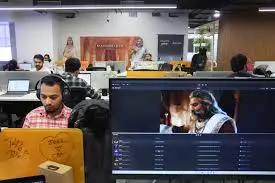
India produces over 1,500–2,000 films annually, making it the most prolific film industry globally. But beyond the glitz of Bollywood and the rise of regional cinema, a quieter transformation is underway—Artificial Intelligence is becoming a core part of filmmaking.
From scriptwriting tools to AI-assisted editing, the industry is witnessing a shift that could redefine not just how films are made, but who gets to make them.
AI in Scriptwriting and Pre-Production
AI tools are increasingly being used to analyze audience preferences, predict box-office performance, and even assist in writing scripts. Platforms powered by generative AI can now:
- Suggest plot structures based on successful films
- Generate dialogues in multiple languages
- Identify potential audience segments
Studios are leveraging these insights to reduce financial risks in an industry where uncertainty has always been high.
Takeaway: AI is turning filmmaking from instinct-driven to data-informed storytelling.
Production Gets Faster—and Cheaper
One of AI’s biggest impacts is in cost and time efficiency.
Key Use Cases:
- Virtual production & AI backgrounds: Reducing need for expensive sets
- AI-assisted cinematography: Automated camera framing and lighting suggestions
- Deepfake & de-aging tech: Reviving actors or altering appearances
For an industry where budgets vary massively—from indie films to ₹500+ crore blockbusters—AI is helping level the playing field.
AI Dubbing and Voice Cloning Changing Distribution
India’s linguistic diversity has always been both a strength and a challenge. AI is now solving this with:
- Real-time dubbing across languages
- Voice cloning to retain original actor tone
- Lip-sync correction using AI
This allows films to scale nationally and globally faster, especially on OTT platforms like Netflix, Amazon Prime Video, and Disney+ Hotstar.
Example Insight: A Tamil film can now release in Hindi, Telugu, and even international languages almost simultaneously—with minimal manual effort.
Post-Production Gets a Tech Upgrade
Editing and VFX—traditionally time-consuming—are now being accelerated through AI.
- Automated video editing tools can cut scenes based on emotion and pacing
- AI VFX engines reduce rendering time significantly
- Color grading AI ensures visual consistency across scenes
Studios are reporting 30–50% faster turnaround times in post-production workflows.
AI in Marketing and Audience Targeting
AI is also reshaping how films are marketed.
- Predictive analytics for trailer performance
- Personalized recommendations on OTT platforms
- Social media sentiment tracking to adjust campaigns in real-time
This data-driven approach ensures better ROI on marketing spend, which often rivals production budgets.
The Ethical and Employment Debate
While AI brings efficiency, it also raises critical concerns:
Key Challenges:
- Job displacement: Editors, writers, and VFX artists face automation risks
- Deepfake misuse: Potential for unauthorized actor replication
- Creative authenticity: Over-reliance on data could lead to formulaic storytelling
Industry bodies in India are beginning to discuss regulations and ethical frameworks, but clear policies are still evolving.
India’s Unique Position in the AI Film Revolution
India’s scale, diversity, and cost-sensitive ecosystem make it an ideal testing ground for AI-driven filmmaking.
- Massive content demand across languages
- Rapid OTT growth (expected to cross $7–8 billion market size in coming years)
- Strong IT and AI talent pool
This combination positions India not just as a user, but potentially a global leader in AI-powered cinema innovation.
What Lies Ahead
The next phase of AI in Indian cinema could include:
- Fully AI-generated short films
- Hyper-personalized movie experiences
- Virtual actors and digital influencers starring in films
But the core question remains:
Will AI enhance creativity—or replace it?
Final Takeaway
AI is not just a tool—it’s becoming a creative collaborator in India’s film industry. While it unlocks efficiency, scale, and innovation, the real challenge lies in balancing technology with human storytelling.