
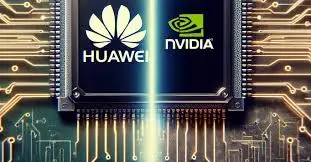
Huawei has officially introduced its next-generation AI computing system, aiming squarely at challenging Nvidia’s dominance in high-performance AI chips. The system, based on Huawei’s in-house Ascend AI architecture, showcases the company’s growing ambition in becoming a global leader in artificial intelligence infrastructure.
Powered by Ascend 910B Chipset
At the heart of the system lies the Ascend 910B, Huawei’s most powerful AI processor to date. Designed as a successor to the original 910 chip, the new iteration offers significant improvements in processing speed, energy efficiency, and memory bandwidth. According to Huawei, the 910B can perform 256 teraflops of AI computation—comparable to Nvidia's A100 and H100 GPUs used globally in training large language models like ChatGPT.
Designed for National Independence in AI
The unveiling also carries strategic importance. Amid export restrictions from the U.S. on advanced chips and Nvidia’s AI hardware, Huawei's system is a bold statement of China’s push for self-reliance in core technologies. The company highlighted that the solution was fully developed using domestically sourced components, underlining Beijing’s ambition to reduce dependency on Western tech.
Key Features & Applications
Huawei’s AI computing system supports large-scale model training, cloud inference, and edge deployment. It integrates seamlessly with the company’s MindSpore AI framework and supports mainstream deep learning libraries. The system is expected to power various sectors, from smart manufacturing to autonomous driving and scientific research.
Industry Impact and Global Implications
Analysts say the move could impact the global AI hardware market by offering a regional alternative to Nvidia, especially in Asia, the Middle East, and parts of Europe where Huawei has a strong presence. However, export controls and restrictions on Huawei’s global business could limit the system's international reach in the short term.
Looking Ahead: A Shift in the AI Power Balance?
Huawei’s aggressive foray into AI computing underscores the intensifying global race for AI supremacy. With the ability to locally produce competitive AI hardware, China could accelerate its efforts in building home-grown AI ecosystems. Whether Huawei can match Nvidia’s ecosystem and software stack remains to be seen, but the gap is visibly narrowing.