
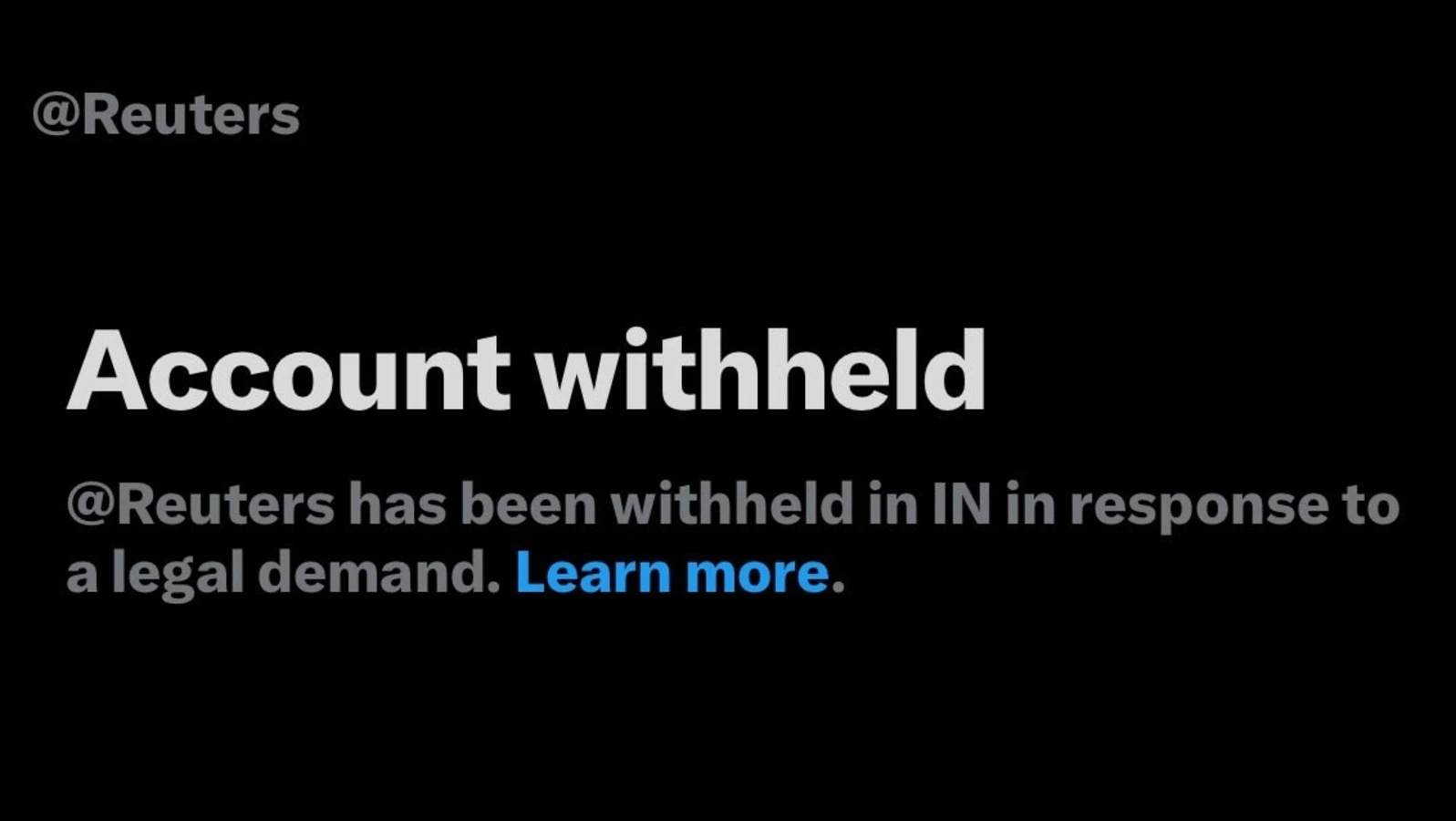
Reuters’ official X account, one of the world’s most respected international news agencies, appears to have been inaccessible to users in India, sparking intense speculation and concern. The action was allegedly taken following a government request related to content published during “Operation Sindoor,” a recent military rescue mission in Jammu and Kashmir.
The exact timing of the block remains unclear, but multiple users in India reported being unable to access Reuters’ X account over the weekend.
🪖 What Is Operation Sindoor?
“Operation Sindoor” refers to a high-profile Indian Army operation conducted in the Gurez sector of Jammu and Kashmir, aimed at neutralizing cross-border infiltration threats. The operation, launched in late June 2025, resulted in a heavy exchange of fire and the reported killing of several terrorists attempting to infiltrate across the Line of Control (LoC). The military termed the operation a success, hailing the bravery of its soldiers.
According to preliminary reports, Reuters’ coverage may have included graphic visuals or commentary that the Indian authorities deemed sensitive or potentially misrepresentative.
⚖️ Government’s Role Under Scrutiny
Sources familiar with the matter indicate that the Indian government issued a blocking order under Section 69A of the IT Act, which allows the Ministry of Electronics and Information Technology (MeitY) to block public access to online content in the interest of sovereignty, public order, or security.
While there has been no official confirmation, the Ministry has used this legal provision multiple times in the past to restrict access to content or accounts that allegedly spread misinformation or disturb national harmony.
📢 Reuters and X Remain Silent
As of now, Reuters has not issued an official statement regarding the block. X (formerly Twitter), which is owned by Elon Musk, has also not acknowledged or clarified the development. This silence from both parties is fueling more questions about the nature of the request and the broader implications for global news dissemination in India.
🧑⚖️ Freedom of Press vs. National Security
Media rights organizations and free speech advocates have expressed alarm at the development, saying such actions set a worrying precedent for press freedom in the world’s largest democracy. Critics argue that the blocking of a global media house’s social media channel could affect transparency and accountability, especially in conflict zones.
On the other hand, government supporters maintain that national security should take precedence, particularly when foreign media allegedly undermine the operational integrity of security forces.
🌐 Broader Pattern of Digital Restrictions
This incident follows a string of similar content takedowns and account bans targeting independent journalists, fact-checkers, and international media platforms in India. Earlier this year, BBC documentaries and reports by The Washington Post were also subject to restrictions.
Digital rights activists warn of a tightening grip on online discourse, especially ahead of regional elections and amid increasing geopolitical tensions in South Asia.
🧭 What’s Next?
It remains to be seen whether the block will be lifted or extended indefinitely. International diplomatic pressure, especially from Western governments and media bodies, may influence the outcome. Meanwhile, users in India are forced to rely on alternate platforms or VPNs to access Reuters’ reporting — a concerning signal for digital freedom in the region.