
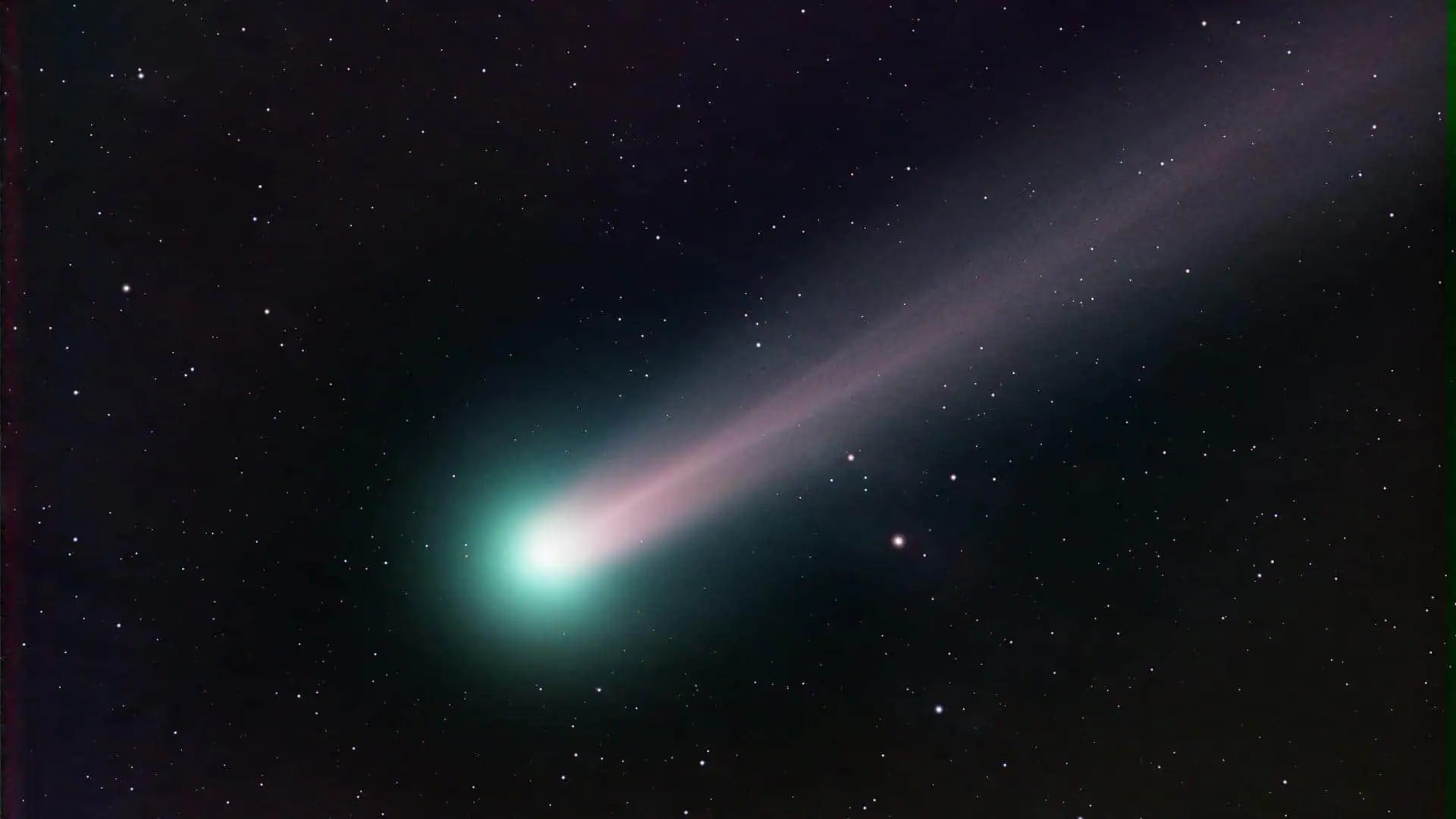
Astronomers around the world are closely monitoring Interstellar Comet 3I/ATLAS, a rare object originating beyond our solar system that is set to make a close approach to Earth on December 19. Identified by the ATLAS sky survey, the comet represents only the third confirmed interstellar object ever observed passing through our cosmic neighborhood, making it a scientifically valuable event.
What Makes 3I/ATLAS Special
Unlike typical comets that orbit the Sun, 3I/ATLAS follows a hyperbolic trajectory, confirming that it is not gravitationally bound to our solar system. This trajectory strongly suggests the object formed around another star before being ejected into interstellar space, carrying with it clues about planetary systems far beyond our own.
Scientific Opportunity Without Risk
Despite headlines about its proximity, space agencies emphasize that 3I/ATLAS poses no threat to Earth. Its closest distance remains safely beyond the Moon’s orbit. However, its path offers astronomers a rare opportunity to study the chemical makeup, structure, and behavior of material formed in another star system using ground-based telescopes and space observatories.
Clues to Alien Planetary Systems
Early observations indicate faint outgassing, suggesting the comet contains volatile compounds similar to those found in solar system comets. By analyzing its dust and gas emissions, researchers hope to compare its composition with familiar comets, potentially revealing whether planet formation processes are universal across the galaxy.
Boost for Interstellar Research
The flyby of 3I/ATLAS further strengthens the case for improved detection systems aimed at spotting interstellar objects earlier. Scientists believe many such visitors pass through undetected each year. With upcoming observatories like the Vera C. Rubin Observatory, detection rates could increase dramatically, transforming fleeting encounters into long-term scientific investigations.
A Moment That Expands Cosmic Perspective
While the comet will soon exit our solar system, its brief appearance highlights humanity’s growing ability to observe and understand objects from beyond our stellar neighborhood. Each interstellar visitor deepens our understanding of the galaxy and reinforces the idea that our solar system is just one of countless planetary environments scattered across the cosmos.