
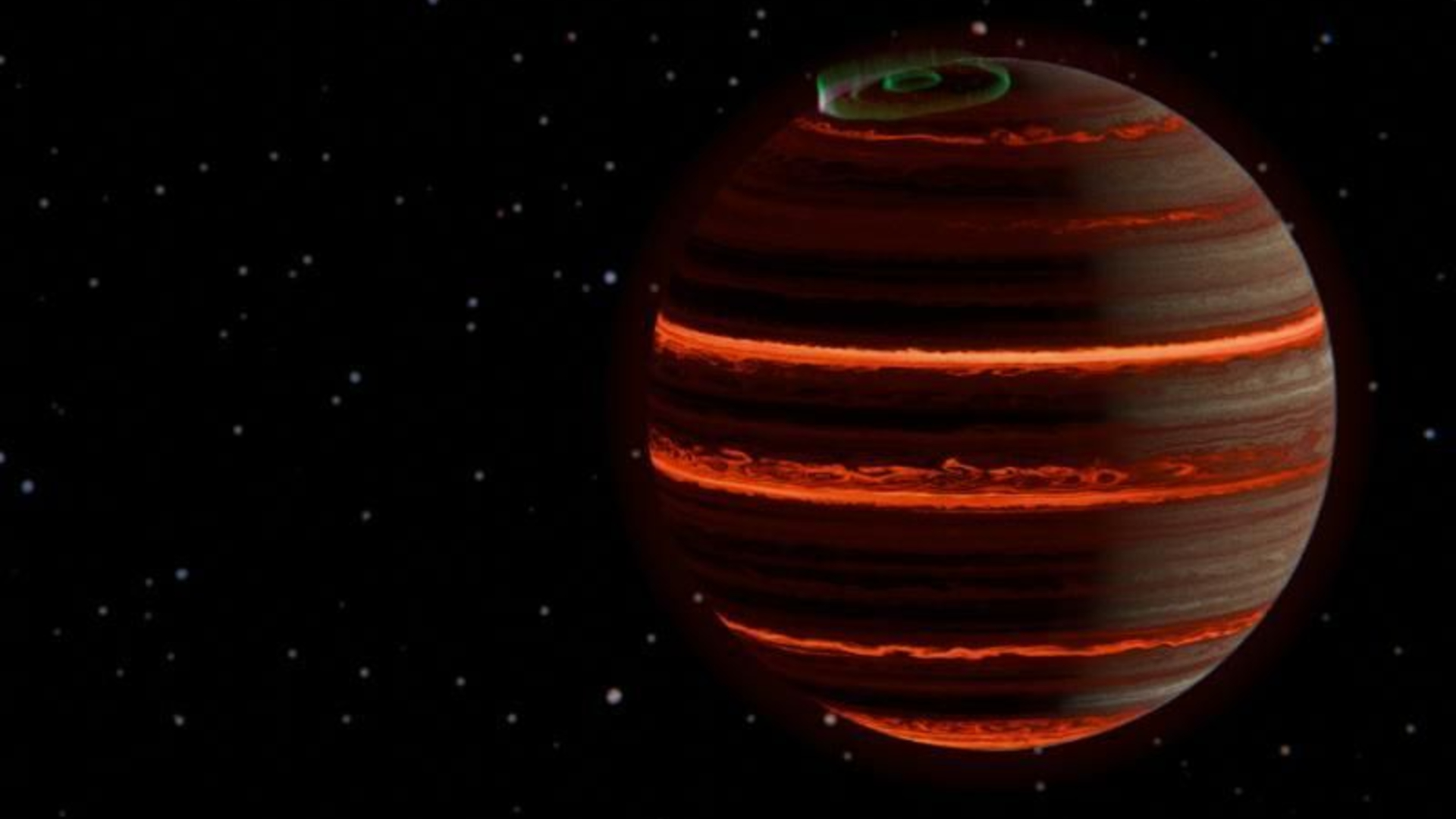
Astronomers using NASA’s James Webb Space Telescope (JWST) have made a remarkable discovery — the detection of phosphorus-bearing gas molecules in the atmosphere of an ancient brown dwarf, a celestial object often described as a “failed star.” The finding marks the first time phosphorus compounds have been detected in such an environment, reshaping scientists’ understanding of how key life-related elements form and persist in the cosmos.
Phosphorus: A Crucial Element for Life
Phosphorus is an essential ingredient for biological molecules like DNA, RNA, and ATP, the energy currency of cells. Yet, detecting it beyond our Solar System has long been a challenge due to its rarity and faint spectral signatures. Webb’s high-resolution infrared instruments allowed astronomers to identify phosphine (PH₃) and related compounds within the brown dwarf’s gaseous layers, suggesting active chemical processes in low-temperature stellar objects.
Ancient Object Offers Clues to the Early Universe
The brown dwarf, estimated to be over 10 billion years old, resides in the galactic halo, a region populated by some of the oldest stars in the Milky Way. Its composition reflects the early chemical conditions of our galaxy, making the phosphorus detection even more intriguing. Scientists believe this may offer insights into how essential elements for life were distributed in the early universe.
Webb’s Instruments Prove Their Precision
Using the Near-Infrared Spectrograph (NIRSpec) and Mid-Infrared Instrument (MIRI), researchers were able to isolate distinct spectral fingerprints associated with phosphorus-bearing gases. These instruments enabled the precise measurement of molecular abundances, helping scientists understand the atmospheric chemistry and thermal dynamics of the brown dwarf with unprecedented clarity.
Implications for Exoplanet and Life Research
The discovery strengthens the hypothesis that complex chemical processes can occur in unexpected cosmic environments, potentially influencing exoplanet atmospheres or prebiotic chemistry. It also opens new avenues for searching for biosignature elements beyond our Solar System, reinforcing Webb’s pivotal role in astrobiology and planetary formation research.
Next Steps in Cosmic Exploration
Researchers plan to extend their observations to similar ancient objects, aiming to determine whether phosphorus-bearing gases are widespread in substellar systems or unique to this case. These studies could bridge the gap between stellar evolution, planetary chemistry, and the origins of life.