
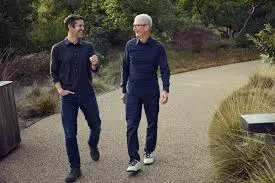
In an industry often dominated by charismatic CEOs and public-facing product evangelists, John Ternus stands apart. As Apple’s Senior Vice President of Hardware Engineering, he rarely seeks the spotlight—yet his fingerprints are all over the company’s most important products.
Ternus isn’t the face of Apple in the traditional sense. He doesn’t command keynote stages with the frequency of Tim Cook, nor does he carry the design mystique once associated with Jony Ive. Instead, he represents a different kind of leadership: deeply technical, execution-focused, and quietly influential.
For readers, the takeaway is clear—Apple’s future isn’t just being shaped by visionaries, but by engineers who can turn that vision into scalable, high-performance products.
From Intern to Apple’s Hardware Chief
John Ternus joined Apple in 2001, initially working as part of the product design team. Over more than two decades, he steadily climbed the ranks, contributing to multiple generations of Apple devices.
His career trajectory reflects Apple’s internal culture: long-term commitment, deep product knowledge, and cross-functional expertise. Ternus played key roles in:
- Early Mac hardware evolution
- Transition phases in MacBook design
- iPad hardware development
- Apple’s broader device engineering strategy
In 2021, he was promoted to Senior Vice President of Hardware Engineering, succeeding Dan Riccio. This role placed him in charge of a vast portfolio, including iPhone, iPad, Mac, and other core hardware products.
The Architect Behind Apple Silicon Momentum
One of Ternus’ most defining contributions has been his leadership during Apple’s transition to custom silicon. The shift from Intel processors to Apple-designed M-series chips marked a turning point for the company.
Under his watch, Apple delivered:
- The M1 chip (2020), redefining laptop performance-per-watt
- Successive M2 and M3 generations, improving efficiency and AI capabilities
- A tightly integrated hardware-software ecosystem
This transition wasn’t just about performance—it was about control. Apple now designs its own chips, optimizing them specifically for macOS, iPadOS, and beyond.
For tech readers, this signals a broader industry trend: vertical integration is becoming a competitive advantage, and Ternus is central to executing that strategy at scale.
Engineering Philosophy: Integration Over Isolation
Ternus’ approach to product development reflects Apple’s long-standing philosophy—tight integration across hardware, software, and services.
Rather than treating components as isolated systems, Apple designs them as interconnected layers. This philosophy shows up in:
- Unified memory architecture in Apple Silicon
- Seamless cross-device functionality (Mac, iPhone, iPad)
- Optimized thermals and battery efficiency
- Custom silicon tailored for AI and machine learning workloads
This is where Ternus’ engineering mindset becomes critical. His role isn’t just to build devices—it’s to ensure every component works cohesively within Apple’s ecosystem.
A Low-Profile Leader in a High-Stakes Role
Despite his influence, Ternus maintains a notably low public profile. He occasionally appears in Apple product launches, presenting hardware features with clarity and precision—but without theatrics.
Internally, however, his importance is growing. Industry observers increasingly point to him as a potential successor to Tim Cook. While Apple has not confirmed any succession plans, Ternus fits several key criteria:
- Deep institutional knowledge
- Strong engineering credibility
- Proven leadership across product lines
- Alignment with Apple’s long-term strategy
That said, stepping into the CEO role would require more than technical expertise. Apple’s next leader will need to balance operations, global markets, and regulatory challenges—areas where Cook has excelled.
Strategic Impact: Shaping Apple’s Next Decade
Ternus’ influence extends beyond current products. He is likely to play a central role in several future-facing initiatives:
Custom AI Hardware
As AI becomes a core part of consumer technology, Apple is investing in on-device intelligence. Ternus’ hardware teams are responsible for enabling these capabilities efficiently.
Next-Gen Mac Evolution
With Apple Silicon still evolving, future Mac systems could see major leaps in performance, graphics, and specialized AI processing.
Product Convergence
The lines between devices—Mac, iPad, and even emerging categories—continue to blur. Hardware decisions made today will define how these ecosystems evolve.
Why John Ternus Matters Right Now
Apple is entering a phase where hardware innovation is once again a primary differentiator. In a market saturated with incremental updates, meaningful performance gains and deep integration stand out.
Ternus sits at the center of this shift. His leadership ensures that Apple’s products are not just polished, but fundamentally engineered for long-term advantage.
For general readers, the takeaway is simple: while CEOs define direction, it’s leaders like Ternus who make that direction real.
The Bottom Line
John Ternus may not dominate headlines, but his role inside Apple is difficult to overstate. From steering the Apple Silicon transition to overseeing the company’s entire hardware portfolio, he has become one of the most critical figures in Apple’s leadership structure.
As Apple navigates the next wave of computing—AI, custom chips, and deeper ecosystem integration—Ternus is likely to remain a key architect behind the scenes.