
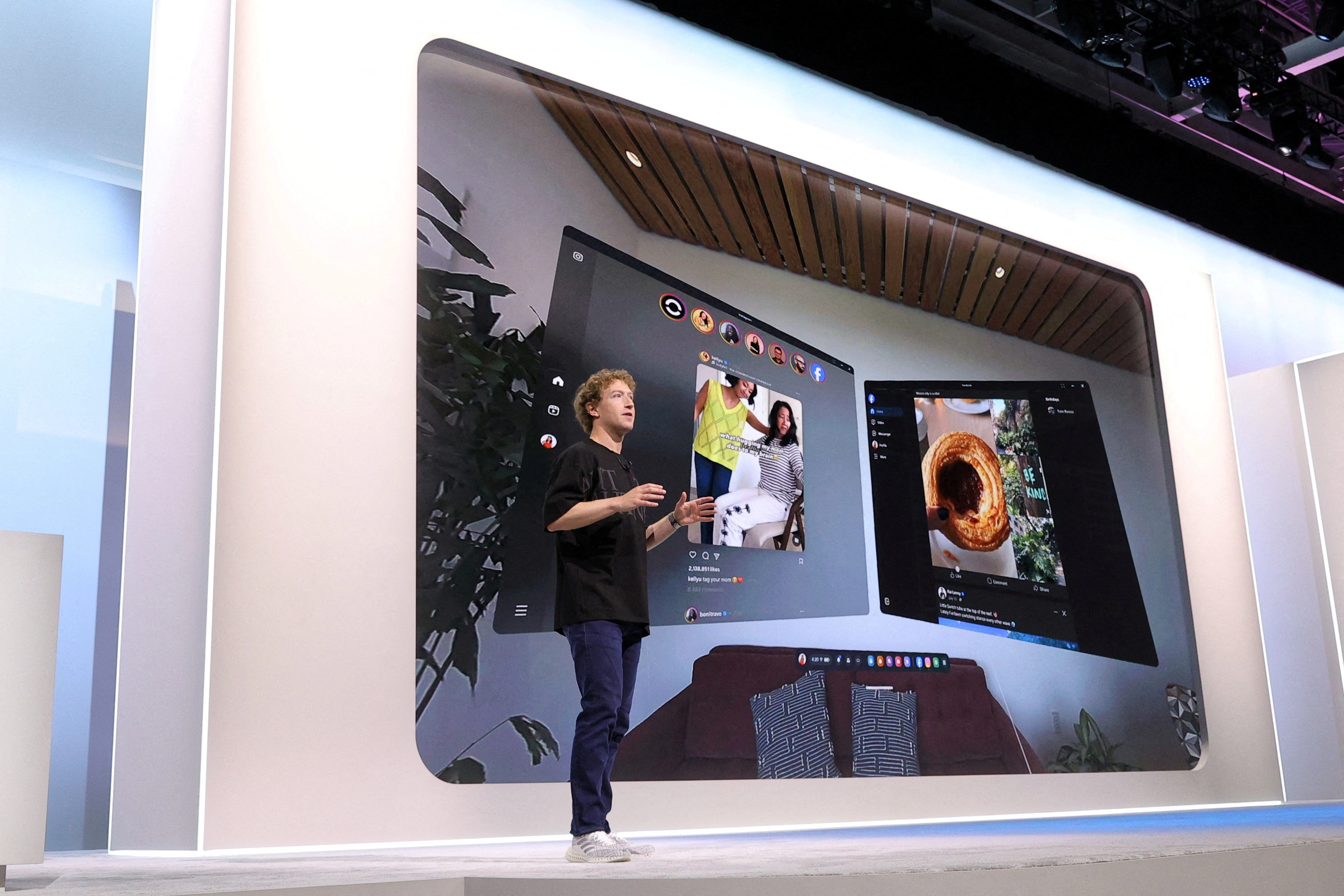
Meta has reportedly pushed the release of its Phoenix mixed-reality glasses by nearly two years, shifting the expected commercial launch from 2025 to 2027. According to people familiar with the company’s internal roadmap, the delay stems from Meta’s decision to rework critical hardware components and elevate the device’s performance benchmarks.
🔹 A Core Product in Meta’s Immersive Tech Strategy
Phoenix is designed to be one of Meta’s most ambitious XR products, seen internally as a step toward lightweight, all-day-wearable mixed-reality glasses. The project sits at the center of Meta CEO Mark Zuckerberg’s long-term vision for a future where immersive computing becomes mainstream.
The additional development time suggests Meta is pacing itself for a more polished ecosystem before wide rollout.
🔹 Hardware Challenges Prompting the Delay
Engineers reportedly faced bottlenecks involving display brightness, thermal management, and battery life. Mixed-reality glasses require high-efficiency optics and sustained power delivery—areas where Meta is still optimizing. The company is also exploring new materials and compact designs to improve comfort for extended use.
🔹 AI and Software Ecosystem Still Under Development
While Meta’s recent advances in on-device AI appear promising, sources indicate the company wants the Phoenix glasses to deeply integrate generative AI and real-time environment mapping.
Ensuring seamless multitasking, gesture control, and realistic spatial overlays is taking longer than initially expected. The delay gives Meta more time to refine Meta OS for XR and strengthen app developer tools.
🔹 Competitive Pressure in the XR Landscape
The decision comes amid intensified competition in the mixed-reality market. Apple is expanding Vision Pro capabilities and exploring more affordable models, while Samsung and Google are jointly developing their own XR ecosystem.
By delaying Phoenix, Meta may be aiming to leapfrog competitors with superior hardware rather than rushing an unfinished product.
🔹 Manufacturing & Cost Optimization Underway
Industry analysts believe supply chain adjustments and cost-cutting efforts also played a role. Meta aims to avoid the high pricing that limited adoption of premium XR devices. Extending the timeline allows the company to negotiate better component pricing and scale up production.
🔹 What the Delay Means for Consumers
Although fans of Meta’s XR lineup may be disappointed, the revised schedule signals a more advanced and consumer-ready product. The extra time could translate to better battery life, lighter design, enhanced optics, and a deeper AI-supported interface.