
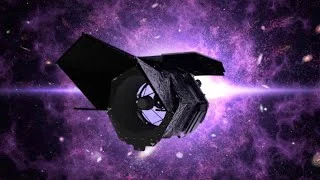
NASA has officially completed the full assembly of the Nancy Grace Roman Space Telescope, one of the most ambitious space observatories slated for launch in the next decade. Engineers at NASA’s Goddard Space Flight Center reported that all major systems—optical components, spacecraft bus, instruments, and protective structures—have now been integrated into a single flight-ready spacecraft.
🔹 Designed to Unlock Mysteries of Dark Energy
At the heart of Roman’s mission is the study of dark energy, the enigmatic force accelerating the expansion of the universe. Using advanced wide-field imaging capabilities, the telescope will map billions of galaxies, offering scientists a more detailed look at cosmic structure and evolution than ever before.
🔹 Wide-Field Instrument to Deliver Massive Sky Coverage
Roman’s Wide-Field Instrument (WFI) is engineered to capture images 100 times larger than those produced by the Hubble Space Telescope while maintaining similar clarity. This massive field of view will allow astronomers to scan vast cosmic regions quickly, dramatically expanding survey efficiency for galaxy clusters, supernovae, and cosmic expansion studies.
🔹 Coronagraph Will Advance Exoplanet Imaging Technologies
In addition to cosmology goals, Roman will carry a cutting-edge coronagraph—an experimental instrument intended to block starlight and directly image orbiting exoplanets. While still in a technology demonstration phase, the coronagraph could lay the foundation for future missions capable of detecting Earth-like worlds.
🔹 Launch Target: Between 2026 and 2027
NASA confirmed that Roman remains on schedule for launch between 2026 and 2027, with the final date to be set after environmental testing and integration with its launch vehicle. The telescope is expected to fly aboard a commercial rocket, most likely a Falcon Heavy or another heavy-lift launch system.
🔹 Rigorous Testing Phase Underway
Now that assembly is complete, Roman has entered months of intensive thermal, vibration, and vacuum testing. These tests are designed to ensure the telescope can withstand both launch stress and the harsh environment of deep space—located nearly a million miles from Earth at the L2 Lagrange point.
🔹 A Successor to Hubble and a Partner to Webb
Roman is often described as the “wide-field sibling” of the Hubble and James Webb Space Telescope. While Webb specializes in high-detail infrared imaging, Roman will excel in panoramic sky surveys, making them complementary tools for a new era of astrophysics.