
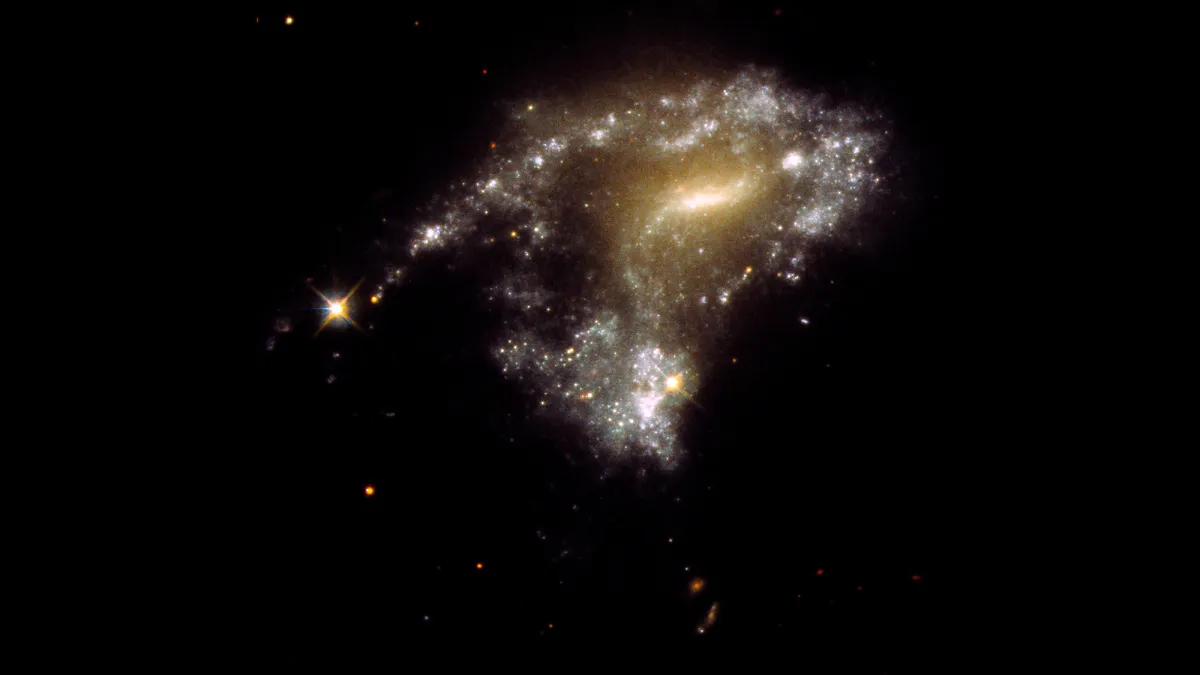
Astronomers using NASA’s Hubble Space Telescope have uncovered new insights into how star clusters evolve over time. Recent observations suggest that binary star systems—pairs of stars orbiting around each other—play a major role in shaping the structure and long-term stability of star clusters. These findings are helping scientists better understand the dynamic processes that govern stellar populations across the universe.
What Are Binary Stars and Why They Matter ✨
Binary stars are systems where two stars are gravitationally bound and orbit a shared center of mass. Such systems are surprisingly common in the universe, and in some star clusters they may represent a large fraction of the stellar population. According to astronomers, these stellar pairs can act like gravitational “engines,” transferring energy to nearby stars and influencing the overall motion within a cluster.
Hubble’s High-Precision Observations Provide New Evidence 📡
The Hubble Space Telescope’s sharp imaging capabilities allowed scientists to closely study the distribution and movement of stars inside dense clusters. By tracking subtle changes in brightness and position, researchers were able to identify numerous binary star systems embedded within these crowded stellar environments. The data revealed that interactions involving binary stars can significantly affect how clusters evolve and how their stars spread out over time.
Binary Stars Help Prevent Cluster Collapse 🌌
One of the most important discoveries from the study is that binary stars may help prevent star clusters from collapsing under their own gravity. When stars in a cluster interact with a binary system, energy can be transferred between them. This process can push stars outward and stabilize the cluster, slowing down the gravitational collapse that might otherwise occur.
A New Perspective on Stellar Dynamics 🛰️
The findings provide astronomers with a deeper understanding of stellar dynamics in densely packed environments. By studying how binary stars interact with other stars, scientists can refine models that describe how clusters grow, evolve, and eventually disperse. These insights also help researchers understand the history of ancient star clusters that have existed for billions of years.
Future Observations Will Expand the Research 🔬
Researchers plan to combine Hubble’s data with observations from other telescopes, including the James Webb Space Telescope and ground-based observatories. These additional studies may reveal even more about how binary stars influence star cluster evolution and help astronomers piece together the complex interactions that shape galaxies.