
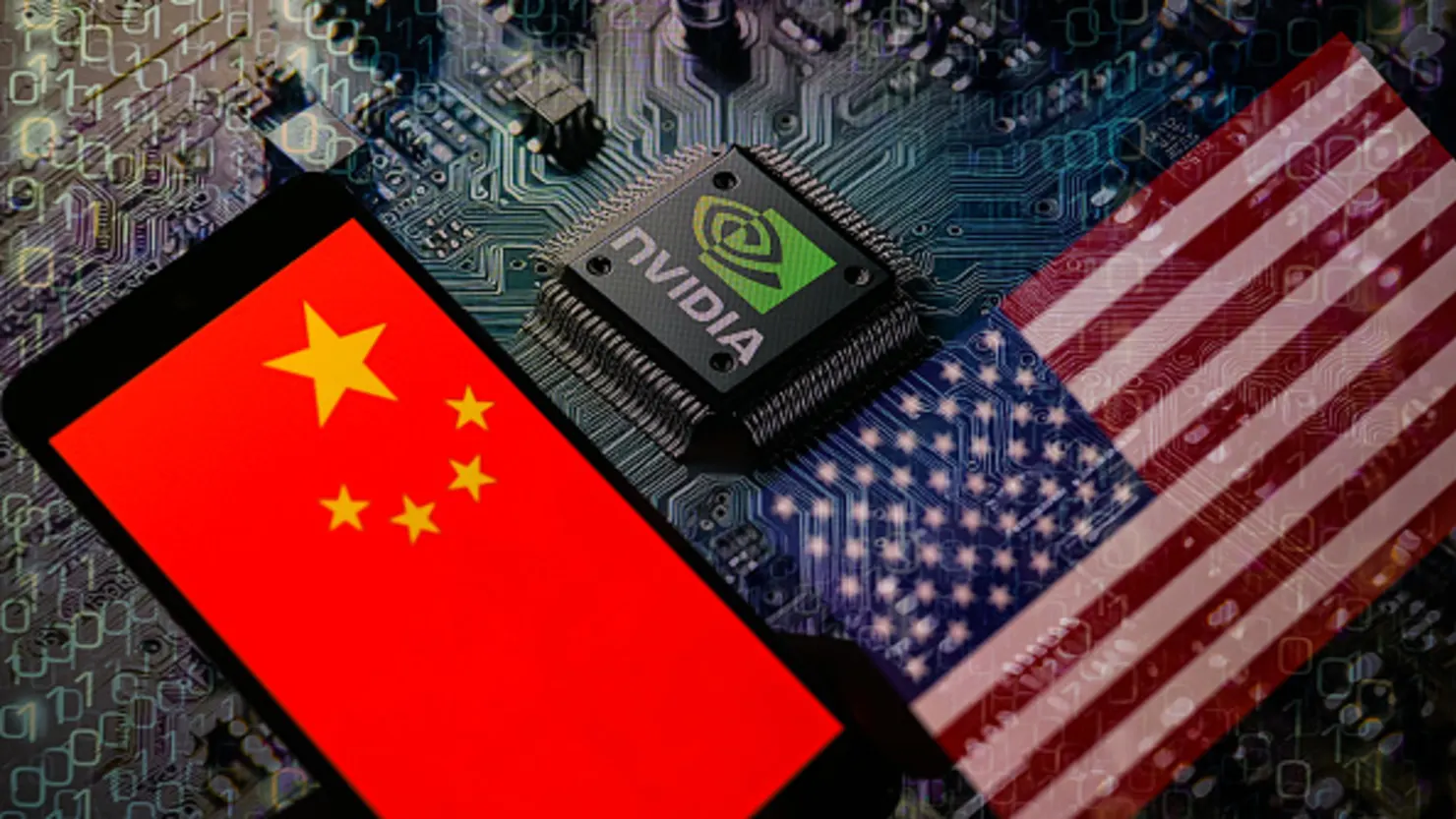
Nvidia, the global leader in artificial intelligence and GPU technology, has reportedly modified its H20 AI chip to comply with U.S. export regulations while continuing to serve the Chinese market. The move underscores the increasing complexity of global tech trade amid ongoing geopolitical tensions and strategic competition over semiconductor technology.
The H20 chip, part of Nvidia’s "Hopper" series designed for high-performance AI tasks, had initially been caught in the crosshairs of U.S. export controls aimed at restricting China's access to advanced computing capabilities. However, industry sources suggest that Nvidia has now redesigned the chip to reduce performance metrics—specifically data transfer rates and interconnect capabilities—just enough to meet new U.S. thresholds without significantly diminishing the chip’s utility for many Chinese clients.
Strategic Adjustments to Navigate Regulatory Barriers
The modified H20 maintains core AI processing functionality but operates under constraints that place it below the threshold for banned high-bandwidth processors, as defined by recent U.S. Commerce Department rules. These changes reportedly focus on limiting inter-chip communication speeds and overall throughput, which are key indicators used to determine export eligibility.
This strategic reengineering follows the U.S. government's October 2023 expansion of export restrictions, which sought to block China from acquiring high-performance semiconductors vital to developing military AI, supercomputing, and advanced surveillance systems.
Nvidia had previously faced setbacks when its top-tier chips, such as the A100 and H100, were blocked from export to China. In response, it introduced the A800 and H800 variants—slightly weakened versions designed to stay under the regulatory radar. The new H20 appears to be a continuation of this workaround approach, now refined further in the face of tightening rules.
Market Repercussions and Demand Outlook
According to analysts, demand for AI accelerators in China remains robust, driven by companies building large language models and generative AI tools domestically. With U.S. sanctions limiting access to the most advanced chips, Chinese firms have been scrambling for alternatives. Nvidia’s move offers a middle ground—ensuring continued business in the world’s second-largest economy without violating Washington's restrictions.
“The H20 variant may not be cutting-edge by U.S. standards, but it’s still a powerful AI engine for Chinese firms working within their own constraints,” said Alex Zhang, a semiconductor analyst based in Hong Kong. “Nvidia’s ability to quickly pivot shows just how critical the Chinese market still is, despite rising tensions.”
While Nvidia has not publicly disclosed detailed specifications of the modified H20, insiders report that the company has already begun small-scale shipments to select Chinese cloud service providers and data centers for testing and integration. Wider commercial availability is expected later this year.
Policy and Industry Implications
The situation highlights the tightrope Nvidia and other tech firms must walk as the U.S. government aims to control strategic technologies without entirely crippling American business interests abroad. It also raises questions about the long-term viability of such export-adjusted products, as China accelerates efforts to develop homegrown alternatives.
Beijing has poured billions into its domestic semiconductor industry, and firms like Huawei and Biren Technology have made notable strides, though still lag behind Nvidia in raw AI chip performance. In the meantime, reengineered products like the H20 give Chinese developers a temporary lifeline.
As U.S.-China tech competition intensifies, Nvidia’s modified H20 chip may serve as a symbol of the compromises and creativity required to navigate a fragmented global technology landscape.