
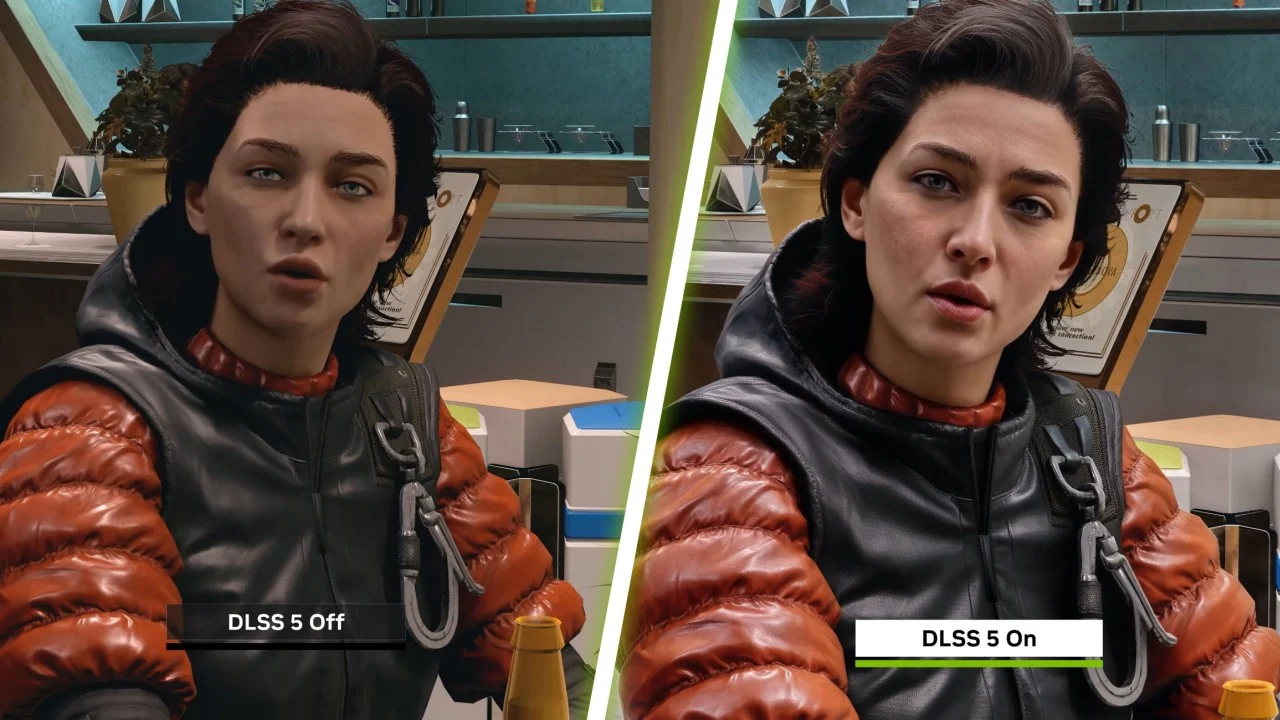
Nvidia has officially unveiled its next-generation graphics upscaling technology, DLSS 5, promising substantial improvements in image quality, frame generation, and AI-assisted rendering. The new iteration builds on the company’s deep learning framework, aiming to deliver sharper visuals and smoother gameplay even at lower native resolutions. DLSS 5 is expected to be integrated into upcoming AAA titles and supported by next-gen RTX GPUs.
Focus on Enhanced Frame Generation and Neural Rendering
One of the standout features of DLSS 5 is its upgraded frame generation pipeline, which leverages advanced neural networks to predict and render intermediate frames more accurately. Nvidia claims the system reduces latency while maintaining visual fidelity, addressing earlier criticisms of artifacts and ghosting in fast-moving scenes. The company is also emphasizing “neural rendering,” where AI plays a more central role in constructing entire frames rather than just upscaling them.
Backlash Over ‘AI Slop Filter’ Sparks Debate
Shortly after the announcement, parts of the gaming and developer community reacted strongly to references made during technical discussions that were interpreted as Nvidia describing a filtering process as an “AI slop filter.” Critics argued that such terminology suggested excessive reliance on AI-generated content that could degrade artistic intent or introduce visual inconsistencies.
The phrase quickly gained traction online, fueling concerns that DLSS 5 might prioritize performance gains over authentic image quality.
Nvidia Issues Clarification on Terminology
In response to the backlash, Nvidia clarified that the controversial phrase was not an official feature name or product component. According to the company, it was an informal or misinterpreted description used in a technical context to explain how AI models clean up noisy or imperfect frames during rendering.
Nvidia emphasized that DLSS 5 is designed to enhance, not replace, developers’ artistic vision. The company reiterated that game studios retain full control over how the technology is implemented and tuned.
Developers and Gamers Remain Cautiously Optimistic
Despite the controversy, early reactions from developers suggest cautious optimism about DLSS 5’s potential. Many studios are interested in the improved performance headroom it could offer, particularly for ray tracing-heavy titles and large open-world games.
However, some experts have called for greater transparency in how AI models process visual data, urging Nvidia to provide clearer documentation and side-by-side comparisons to build trust among players.
What This Means for the Future of Gaming Graphics
DLSS 5 signals Nvidia’s continued push toward AI-driven rendering as a core pillar of gaming graphics. As hardware demands grow and visual expectations rise, technologies like DLSS are becoming increasingly important for balancing performance and fidelity.
The success of DLSS 5 will likely depend not only on its technical capabilities but also on how effectively Nvidia communicates its benefits and addresses community concerns moving forward.