
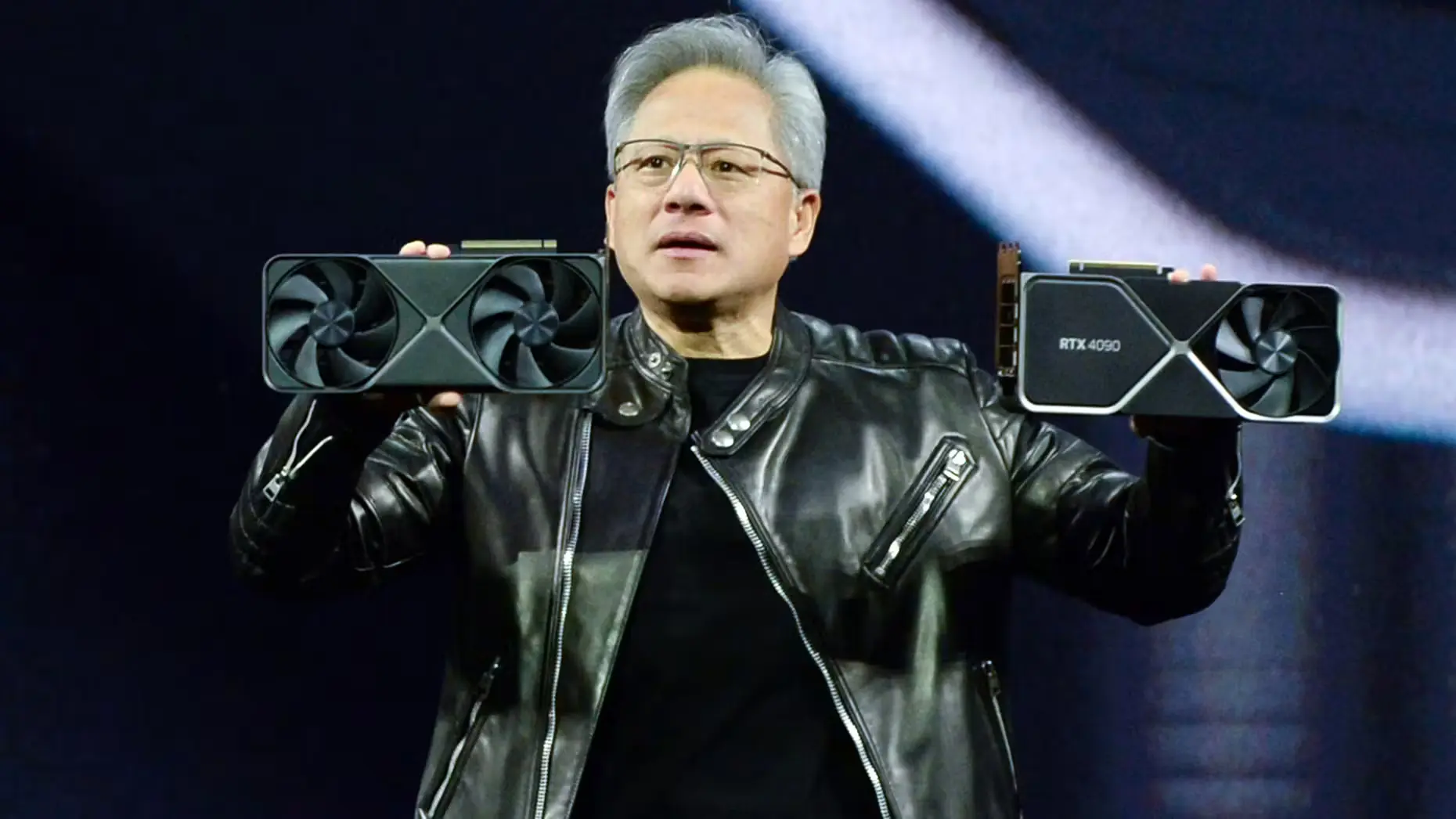
In a strategic move to maintain its foothold in the critical Chinese market, Nvidia is reportedly developing a new line of artificial intelligence (AI) chips tailored specifically to comply with tightened U.S. export controls, according to sources familiar with the matter.
The California-based semiconductor giant, which has dominated the AI hardware space globally, had been forced to halt exports of some of its most advanced GPUs to China following a series of restrictions imposed by the U.S. Department of Commerce in 2023 and updated in 2024. These restrictions were aimed at curbing Beijing’s access to cutting-edge AI capabilities, citing national security concerns.
However, rather than exiting the Chinese market, Nvidia is said to be re-engineering certain chip designs to stay within the bounds of the U.S. regulations while still serving Chinese clients. According to industry insiders and reports from local Chinese media, Nvidia has begun working on new GPUs with deliberately limited performance thresholds—enough to support commercial AI applications, but insufficient for high-end military or national security use.
New Lineup in Development
Though Nvidia has not officially announced new China-bound chips, speculation suggests that the company is preparing replacements for previous models like the A800 and H800—scaled-down versions of its flagship A100 and H100 chips, respectively. These customized variants had been introduced after the initial wave of U.S. sanctions in late 2022, but were also banned in a subsequent tightening of export controls in late 2023.
The new chips, rumored to be in early-stage development or testing, would aim to navigate the latest regulatory framework by reducing interconnect speeds and computational capabilities, while still offering value to Chinese tech firms engaged in AI research, cloud services, and data center operations.
Strategic Balancing Act
Analysts suggest Nvidia’s move reflects the complex balancing act faced by U.S. tech firms operating in an increasingly fractured global tech landscape. China remains one of the world’s largest markets for data center hardware and AI infrastructure, and Nvidia’s revenue from China was estimated to account for nearly 20–25% of its data center sales before the ban.
“Nvidia has a strong incentive to stay in the Chinese market, even under constrained conditions,” said Dan Wang, a tech analyst at Gavekal Dragonomics. “They’re trying to preserve market share while following Washington’s rules. It’s a tightrope.”
Geopolitical and Market Implications
The effort to redesign chips specifically for China also highlights the growing impact of geopolitics on semiconductor supply chains. The Biden administration’s ongoing efforts to limit China’s access to high-performance computing—alongside parallel moves by allies such as the Netherlands and Japan—have reshaped how U.S. companies engage with the Chinese market.
Meanwhile, Chinese tech firms, including Alibaba, Tencent, and Baidu, are reportedly exploring alternatives such as domestically developed AI chips, including those from Huawei and startup Biren Technology. However, these local solutions are still catching up to Nvidia’s performance and ecosystem support.
Nvidia’s Official Stance
Nvidia has not publicly commented on the specific details of any China-customized products currently in development. In past statements, the company emphasized its commitment to complying with all export regulations while continuing to support global customers.
“As we adapt to new licensing requirements, we are working to ensure a consistent supply of products that are fully compliant,” a company spokesperson said in a recent earnings call.
With ongoing political uncertainty and further potential regulatory shifts on the horizon, it remains to be seen how sustainable Nvidia’s China-specific chip strategy will be. Nonetheless, the latest developments suggest that the company is not ready to relinquish its role in one of the world’s most strategically important tech markets.