
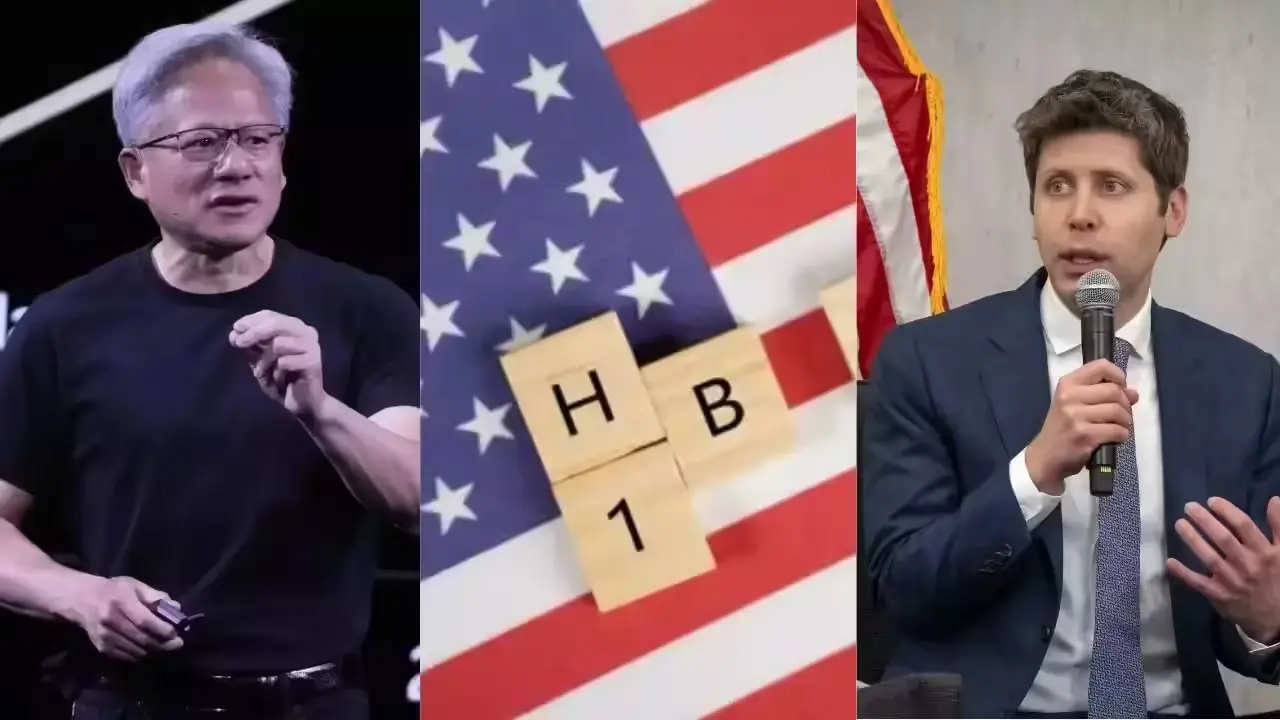
Nvidia, the world’s leading AI and semiconductor company, has reaffirmed its commitment to continue sponsoring H-1B work visas for skilled foreign professionals, according to recent reports. The move highlights the company’s ongoing effort to secure top-tier global talent as it expands its research and development footprint in artificial intelligence, chip design, and data center technology.
Focus on Global Talent and Innovation
The report indicates that Nvidia sees international talent as a cornerstone of its innovation strategy. With increasing demand for expertise in AI algorithms, GPU architecture, and machine learning frameworks, the company plans to maintain — and possibly increase — the number of H-1B visa applications it files annually. This decision comes at a time when the U.S. tech industry faces mounting pressure to fill advanced technical roles amid a competitive global labor market.
H-1B Workers Play Key Role in Nvidia’s AI Expansion
Nvidia’s engineering teams, which include many H-1B visa holders, are instrumental in developing cutting-edge technologies such as CUDA computing, generative AI platforms, and next-generation GPUs. Insiders note that several of Nvidia’s AI research breakthroughs have been driven by a highly diverse workforce, combining local and international expertise.
Industry Context: Tech Giants Continue Visa Sponsorships
Nvidia joins companies like Google, Microsoft, and Amazon in reaffirming their commitment to the H-1B program. Despite evolving U.S. immigration policies, these firms view foreign skilled workers as essential for sustaining innovation and maintaining a competitive edge in the AI revolution. According to U.S. Department of Labor data, Nvidia consistently ranks among the top H-1B sponsors in the semiconductor and AI sectors.
Nvidia’s Broader Hiring and Expansion Plans
The company is reportedly expanding its hiring across multiple global R&D hubs, including the U.S., India, and Europe. This approach aligns with Nvidia’s vision of fostering an international workforce that can collaborate on AI model training, data infrastructure, and advanced chip design projects — areas crucial to sustaining its market dominance.
Conclusion: A Signal of Confidence in Global Collaboration
By continuing to sponsor H-1B visas, Nvidia sends a strong message about its commitment to global collaboration and technological leadership. As AI demand surges and competition intensifies, the company’s strategy reinforces its position as a magnet for the world’s brightest engineers and researchers.