
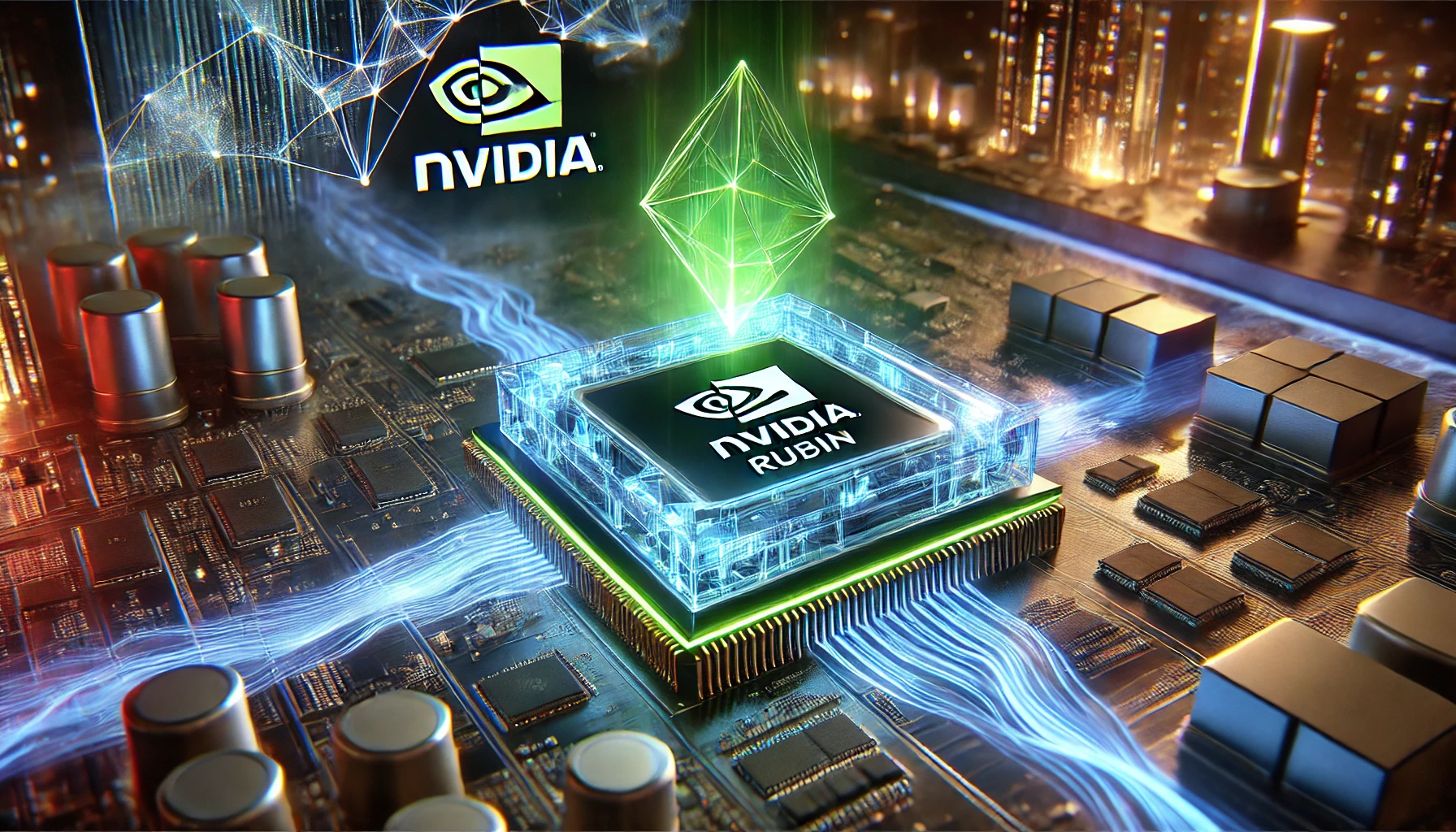
Nvidia CEO Jensen Huang took the stage at GTC 2025 to unveil the company's latest breakthrough in AI hardware: the Rubin AI chips. Positioned as the next evolution in high-performance computing, the Rubin architecture promises unprecedented efficiency, power, and scalability for AI workloads.
Huang, known for his signature leather jacket and engaging presentations, described Rubin as a “leap forward in AI acceleration”, designed to handle the growing demand for generative AI, large-scale simulations, and autonomous systems. The new chips integrate cutting-edge advancements in GPU architecture, memory bandwidth, and energy efficiency, aiming to push AI innovation even further.
What Makes Rubin AI Chips Special?
Rubin introduces a revolutionary multi-tiered AI processing unit, optimized for deep learning models, natural language processing, and real-time AI inferencing. The architecture boasts:
- Next-Gen Tensor Cores – Delivering significantly higher throughput for large-scale AI computations.
- Advanced Memory Fabric – Enabling seamless data flow with reduced latency.
- Energy Efficiency Breakthroughs – Making AI workloads more sustainable and cost-effective.
With major cloud providers, AI research labs, and enterprise partners already on board, Nvidia’s Rubin chips are expected to redefine the AI landscape. Industry analysts predict these chips could power the next wave of generative AI, from more human-like chatbots to advanced robotics.
Competition Heats Up
As AI demand skyrockets, Nvidia faces increasing competition from AMD, Intel, and custom AI accelerator startups. However, with the Rubin series, the company is doubling down on its dominance in the AI chip market.
With the AI revolution in full swing, Nvidia’s latest unveiling reinforces its role as a driving force behind the future of computing. As Huang put it, “The era of AI is just beginning, and Rubin is here to power it.”
Stay tuned for further insights from GTC 2025 as the tech world reacts to this groundbreaking announcement.