
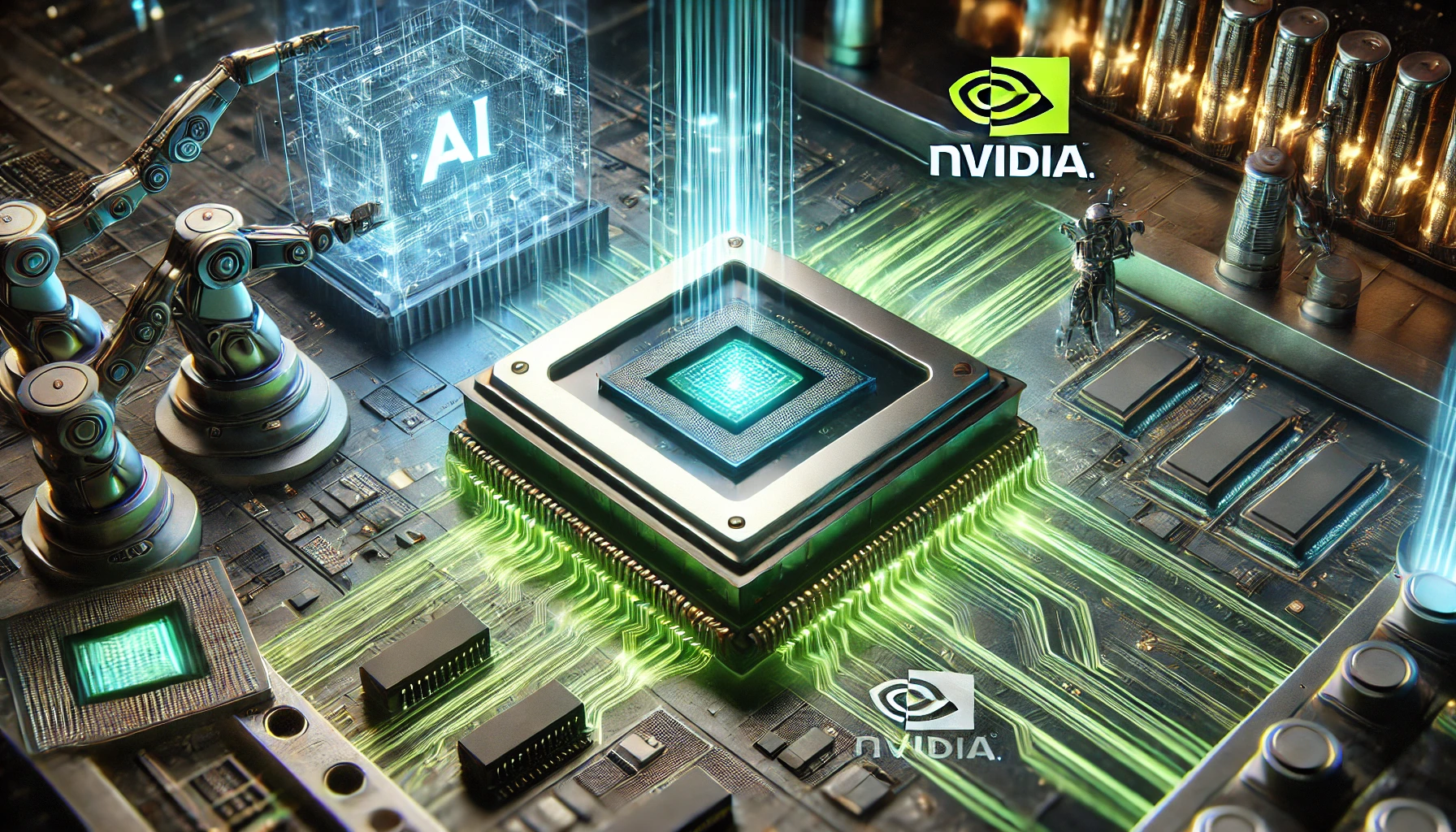
Nvidia has once again reinforced its dominance in the AI hardware sector by unveiling its latest generation of AI chips, demonstrating significant advancements in computing power and efficiency. The announcement comes amid growing competition from emerging players like DeepSeek, but Nvidia remains confident in its leadership, brushing off concerns about new challengers in the market.
Next-Gen AI Chips Push Boundaries of Performance
Nvidia’s latest AI processors are designed to power next-generation AI applications, from deep learning models to autonomous systems and data centers. These new chips promise:
✔ Higher processing speeds with advanced GPU architectures
✔ Improved energy efficiency, reducing power consumption
✔ Enhanced AI acceleration, optimizing deep learning workloads
✔ Seamless integration with Nvidia’s CUDA ecosystem
The company emphasized that its new AI chips will outperform existing solutions, making them ideal for industries relying on AI, such as cloud computing, robotics, and autonomous driving.
Nvidia’s Confidence Amid Rising Competition
While Chinese tech firm DeepSeek recently announced its entry into the AI chip market, Nvidia remains unfazed. CEO Jensen Huang highlighted Nvidia’s extensive experience, software ecosystem, and established partnerships as key advantages that newcomers cannot easily replicate.
DeepSeek, backed by significant investment, aims to challenge Nvidia with its own AI hardware solutions. However, industry analysts believe that breaking into Nvidia’s dominance in AI computing will be an uphill battle due to the company’s long-standing expertise and deep integration with the global AI ecosystem.
A Booming AI Hardware Market
With AI applications expanding across industries, demand for high-performance chips continues to soar. Nvidia’s latest chips are expected to set new benchmarks in AI computing, strengthening its market position even as competitors try to carve out space in the AI semiconductor industry.
By maintaining its innovation-driven approach, Nvidia ensures that it stays ahead of the curve, keeping rivals at bay while continuing to shape the future of AI computing.