
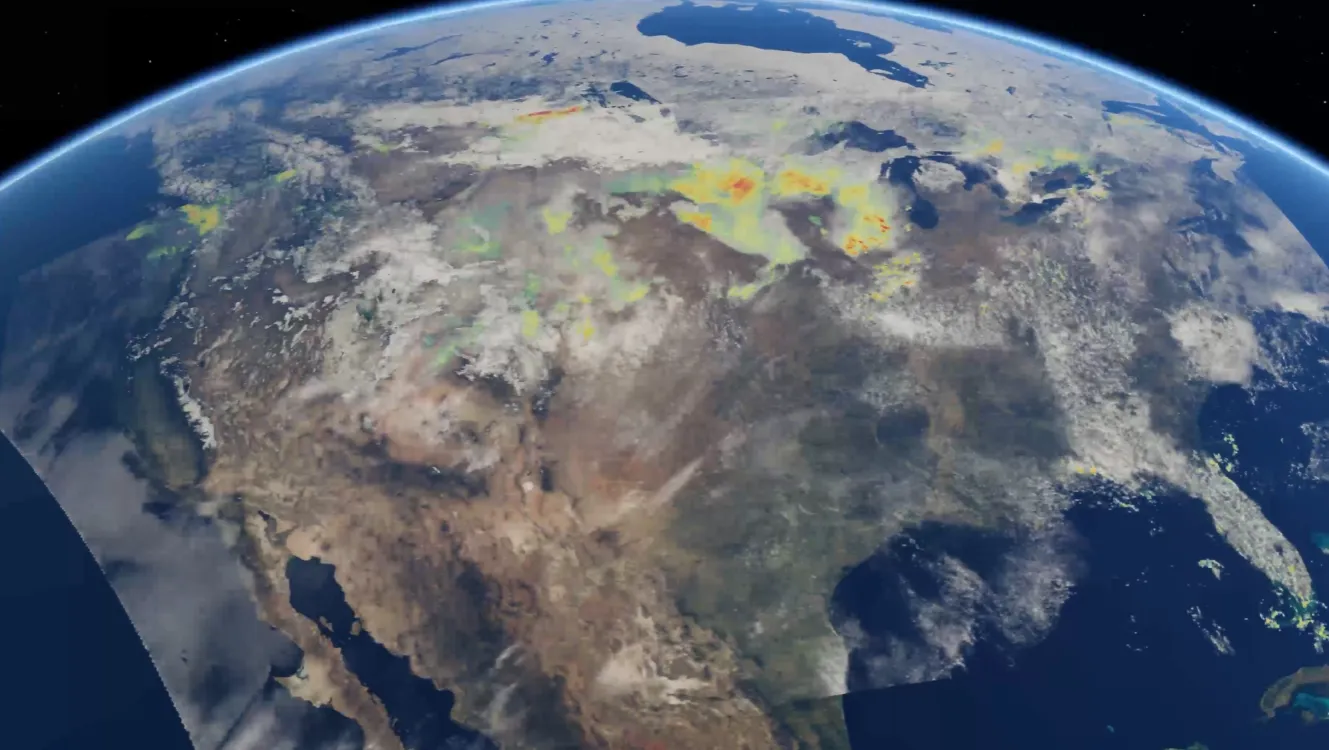
Nvidia has introduced a new suite of artificial intelligence models designed to dramatically speed up weather forecasting while reducing operational costs. The company says its AI-powered approach can deliver highly accurate forecasts in seconds—tasks that traditionally require hours of computation on supercomputers.
How Nvidia’s AI Weather Models Work
The newly unveiled models rely on deep learning architectures trained on decades of historical climate and atmospheric data. Instead of solving complex physics equations step by step, the AI models learn patterns directly from data, allowing them to predict weather conditions much faster than conventional numerical weather prediction systems.
Faster Forecasts at a Fraction of the Cost
According to Nvidia, AI-based weather models can run on significantly fewer computing resources, lowering energy consumption and infrastructure costs. This could make advanced forecasting accessible to smaller meteorological agencies, research institutions, and private enterprises that previously lacked supercomputing capabilities.
Improved Accuracy for Extreme Weather Events
Nvidia claims its models perform especially well in predicting extreme weather events such as hurricanes, heatwaves, and heavy rainfall. Faster forecast updates could help governments and disaster-response agencies issue earlier warnings, potentially saving lives and reducing economic losses.
Built for Climate Research and Commercial Use
The models are designed to integrate with existing climate and weather workflows, allowing researchers to combine AI predictions with physics-based simulations. Nvidia says the technology can be used across sectors including agriculture, aviation, energy, logistics, and insurance.
AI’s Growing Role in Climate Technology
The launch highlights Nvidia’s broader push into climate and earth-system science using accelerated computing and AI. As climate volatility increases worldwide, faster and more affordable forecasting tools are expected to play a critical role in preparedness and long-term planning.