
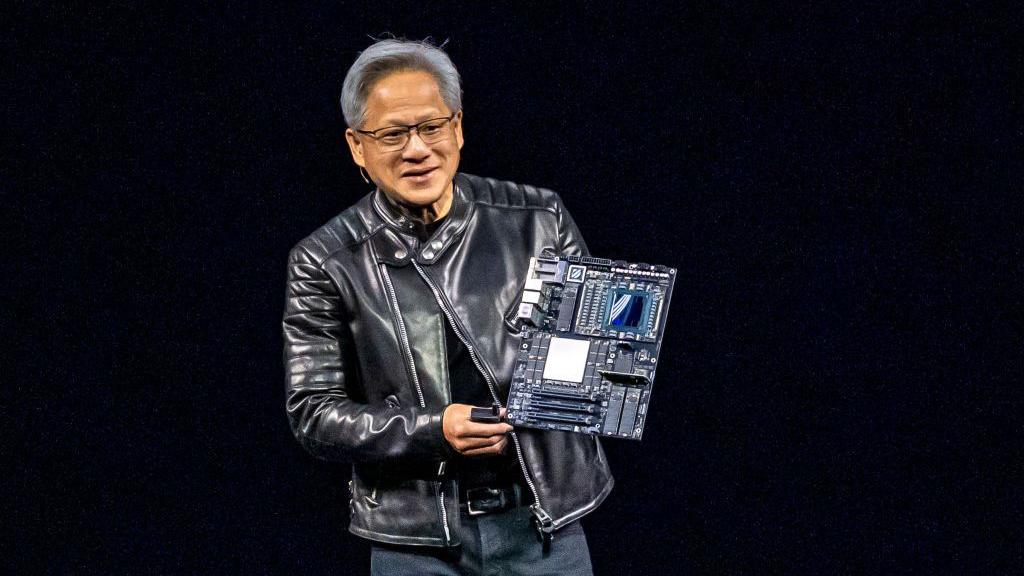
Nvidia CEO Jensen Huang has openly criticized the U.S. government’s ongoing export restrictions on artificial intelligence chips to China, warning that the policy “hurts us more than it helps.” Speaking at a tech industry event in Singapore on October 28, 2025, Huang emphasized that these curbs risk undermining America’s leadership in the global AI race while accelerating the rise of alternative chip ecosystems abroad.
“The U.S. has always led through innovation, not isolation,” Huang said. “Cutting off technology exports to one of the world’s largest markets doesn’t just hurt our business — it weakens the entire American semiconductor industry.”
🔹 Ban Impacts Nvidia’s Access to China Market
The U.S. Department of Commerce expanded export restrictions in 2024, prohibiting American companies like Nvidia, AMD, and Intel from selling high-performance AI chips — including Nvidia’s flagship H200, A100, and B200 GPUs — to Chinese customers.
China accounts for an estimated 20% to 25% of Nvidia’s total data center revenue, making the restrictions a major blow to the company’s international operations. Huang revealed that Nvidia has been forced to develop modified “compliant” chips for the Chinese market, which are less powerful but meet U.S. regulatory standards.
“These limitations don’t stop China’s progress — they just force them to build alternatives faster,” Huang noted.
🔹 AI Competition Intensifies as China Develops Domestic Chips
Industry experts warn that export curbs may accelerate China’s self-sufficiency in semiconductor production, a goal Beijing has been aggressively pursuing through its “Made in China 2025” initiative. Domestic tech giants such as Huawei, Baidu, and Alibaba Cloud are already investing billions in AI chip development, reducing dependence on U.S. suppliers.
Huang said Nvidia remains committed to compliance with all government regulations but expressed concern that U.S. companies could lose their competitive edge as global supply chains shift. “If we isolate ourselves from one of the largest innovation markets, we risk falling behind,” he warned.
🔹 Calls for Balance Between National Security and Innovation
The Nvidia chief called for a balanced approach between national security and global innovation, urging policymakers to consider the long-term implications of restricting AI technology trade.
“National security is important, but so is maintaining America’s technological leadership,” Huang said. “We need thoughtful policies that protect interests without crippling innovation.”
His comments echo similar concerns from Silicon Valley leaders and economists who argue that broad export bans may unintentionally hamper U.S. competitiveness and drive foreign markets to establish independent chip ecosystems.
🔹 Official Sources and References
- Nvidia Official Website: https://www.nvidia.com
- Nvidia Investor Relations: https://investor.nvidia.com
- U.S. Department of Commerce: https://www.commerce.gov