
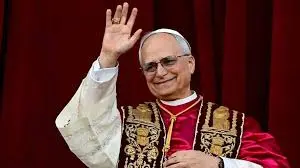
In a powerful and closely-watched address delivered from the Apostolic Palace, Pope Leo XIV outlined his vision for the Catholic Church and humanity’s moral path in an age of rapid technological change. At the center of his message was a stark and urgent warning: artificial intelligence (AI) is not merely a tool but a "profound moral frontier" that could either elevate or endanger human dignity.
The pontiff’s speech, which was livestreamed to millions across the globe, comes amid growing public and governmental concern over the unchecked development and deployment of advanced AI systems. In his remarks, Pope Leo XIV called for a “global ethical framework rooted in human dignity, solidarity, and stewardship” to guide the evolution of AI.
“We Must Ask Not Only What Machines Can Do, But What They Should Do”
During the 50-minute address, the Pope acknowledged the incredible potential of AI to alleviate suffering, improve medical care, and enhance human knowledge. However, he stressed that these benefits cannot come at the cost of fundamental human values.
“We must ask not only what machines can do, but what they should do,” said the 85-year-old pontiff, his voice steady. “The soul of humanity is not programmable. It cannot be reduced to data or code.”
He warned that technologies designed without ethical anchors risk becoming “instruments of control, exclusion, and dehumanization.” In particular, he expressed concern over AI's role in mass surveillance, autonomous weapons, and the manipulation of truth through deepfakes and misinformation.
A Call for Global Ethical Governance
Pope Leo XIV called on governments, tech companies, and academic institutions to come together in what he described as a “digital covenant for the common good.” He urged leaders to prioritize transparency, accountability, and inclusivity in the design and deployment of AI systems.
“Technology must serve all people—not just the privileged, not just the powerful,” he emphasized. “The age of artificial intelligence must be guided by an intelligence of conscience.”
He also hinted at the Vatican’s intention to launch an interfaith summit on AI ethics later this year, with the aim of uniting religious, scientific, and policy voices to confront the moral challenges posed by artificial intelligence.
A Church Not Opposed to Innovation—but Committed to Wisdom
Pope Leo XIV, elected to the papacy just last year, has quickly gained a reputation for engaging deeply with modern scientific and philosophical questions. In his previous public writings, he has expressed admiration for responsible innovation but has frequently returned to the theme of “technological humility”—a call to temper invention with reflection.
Today’s speech did not oppose technological progress. Rather, it urged that progress be “measured by its ability to respect life, protect the vulnerable, and preserve the earth.”
He reiterated that the Church would continue its efforts to collaborate with researchers and engineers on ethical AI, referencing the 2020 Rome Call for AI Ethics and calling for it to be “expanded, updated, and honored in practice.”
Public and Expert Reactions
Initial responses to the address were wide-ranging. Technology ethicists praised the Pope for taking a clear and principled stand, while others questioned how the Church might translate these moral appeals into real-world influence.
Dr. Maria Neves, a technology governance researcher at ETH Zurich, said, “This is a moral wake-up call. Whether or not one is Catholic, it is hard to ignore the Pope’s voice when he speaks so clearly about the shared risks humanity faces.”
On social media, many users echoed the pontiff’s concerns, with hashtags like #AIEthics and #PopeOnAI trending globally within hours of the address.
Looking Ahead
As the world stands at a critical crossroads in the development of intelligent machines, Pope Leo XIV’s message adds a uniquely spiritual dimension to the global conversation. By framing AI as a moral and human issue—not just a technical one—he has positioned the Catholic Church as an active participant in shaping the ethical foundation of the digital future.
“Let us not create machines in our image while forgetting the image of God within ourselves,” he concluded.