
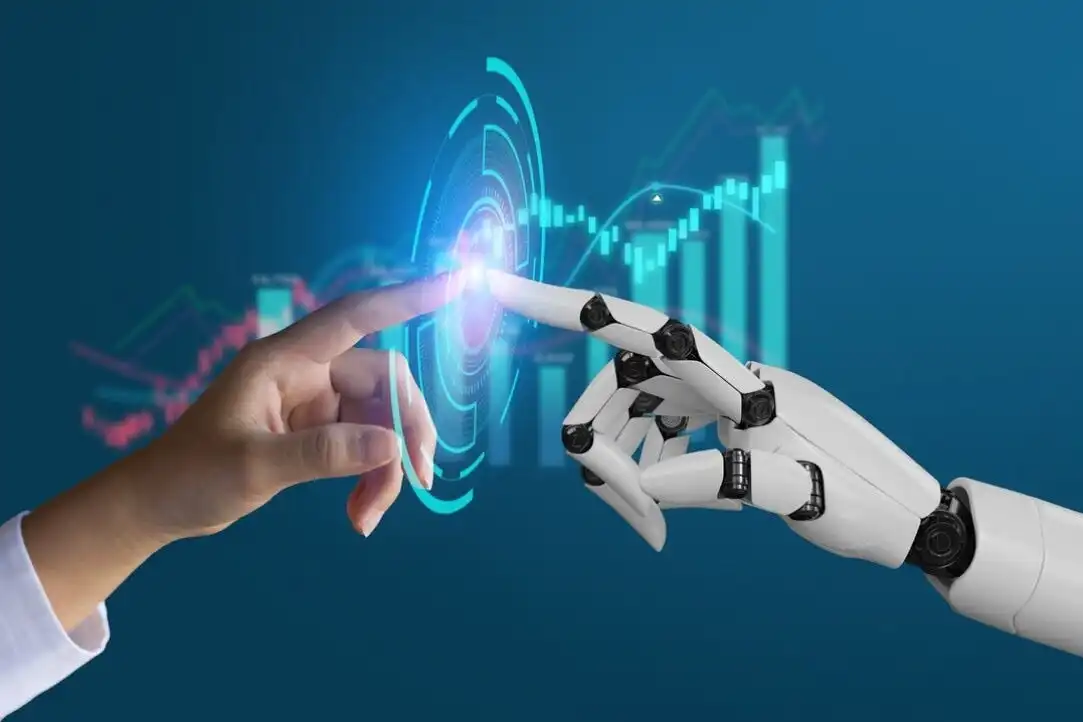
In a world where technology reshapes itself with breathtaking speed, artificial intelligence (AI) and machine learning (ML) stand at the forefront of a revolution redefining industries, societies, and even human understanding itself. From medical diagnostics to autonomous vehicles, the rapid evolution of these technologies is ushering in an era many are calling the Fourth Industrial Revolution.
Pushing the Boundaries of Machine Understanding
The last twelve months have witnessed monumental strides in AI and ML capabilities. Leading the charge are foundation models—large, versatile AI systems like OpenAI’s GPT-5 and Google DeepMind’s Gemini Ultra—capable of performing a wide range of cognitive tasks once thought to be the exclusive domain of human intelligence. Unlike earlier models, today’s systems can reason, plan, and even exhibit early forms of creativity across multiple domains without needing task-specific training.
A pivotal innovation driving this advancement is multi-modal AI—systems that process and generate not just text, but images, video, audio, and even physical interactions. This leap has opened new frontiers in human-computer collaboration, enabling AI to act more like a versatile partner rather than a single-purpose tool.
Democratizing AI Development
Another major development shaping the AI landscape is the emergence of low-code and no-code AI platforms. Companies like Hugging Face, Runway, and Microsoft’s Azure ML have simplified the process of designing, training, and deploying AI models, allowing individuals without deep technical expertise to contribute meaningfully to AI innovation. This democratization is fostering a new generation of citizen developers who are building solutions for everything from personalized education platforms to climate change modeling.
Moreover, open-source initiatives are gaining momentum. Tools like Meta’s Llama 3 and Mistral AI’s Mixtral are breaking down barriers, giving researchers and startups around the globe access to cutting-edge AI technology without the need for multi-million-dollar investments.
Ethical and Responsible AI: A Rising Priority
However, the explosion of AI capabilities has intensified debates around ethical use and governance. Governments and organizations worldwide are racing to draft regulations that ensure AI development remains safe and beneficial. The European Union’s AI Act, finalized earlier this year, sets a global benchmark by classifying AI applications based on risk levels, imposing stricter requirements on high-risk systems.
At the same time, a growing ecosystem of AI safety companies and research groups—such as Anthropic, Conjecture, and the Center for AI Safety—are exploring ways to make AI systems inherently more aligned with human values, secure, and transparent.
AI’s Expanding Role Across Industries
From healthcare to finance, the impact of AI is profound. In medicine, AI-powered diagnostic tools like PathAI’s cancer detection algorithms and Viz.ai’s stroke detection platform are reducing diagnostic errors and accelerating critical decision-making. Meanwhile, in finance, AI is being harnessed to detect fraud, manage risk, and even personalize customer service experiences.
In manufacturing, predictive maintenance models are minimizing downtime and reducing costs, while the agricultural sector is utilizing AI-driven analytics for better crop management and yield optimization.
Education, too, is seeing a revolution, as AI tutors and adaptive learning platforms cater to individual learning styles, making education more accessible and tailored than ever before.
What Lies Ahead?
As AI and ML continue their meteoric ascent, experts predict the next frontier will involve even closer integration with the physical world. Robotics powered by AI, brain-computer interfaces, and even AI-designed scientific research are on the horizon.
Despite the challenges, one thing is clear: the AI and ML revolution is not just transforming technology—it is redefining intelligence itself. In the coming years, society will face crucial choices about how to wield this new power responsibly, creatively, and equitably.
The future of intelligence, it seems, is already here—and it is ours to shape.