
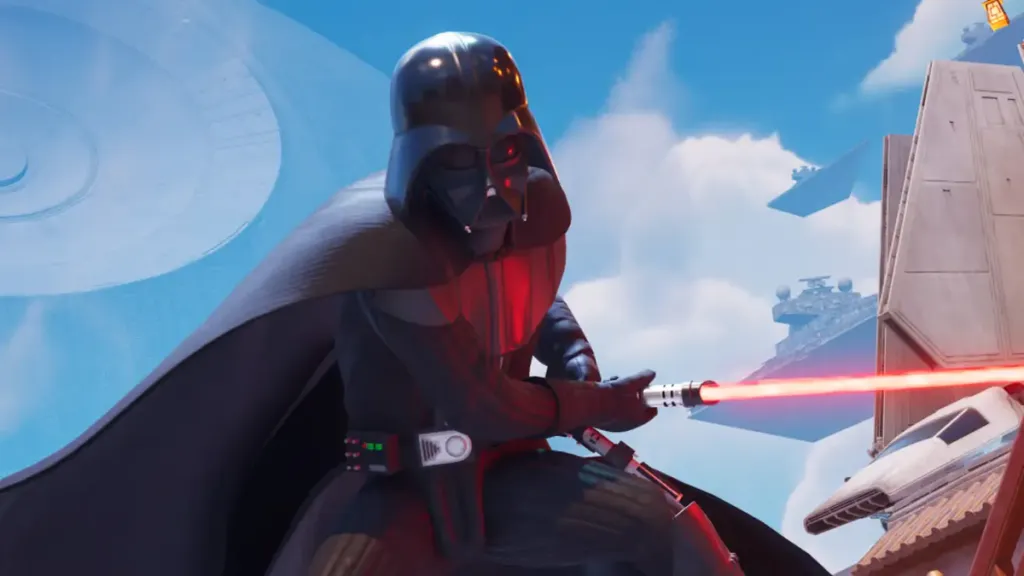
In a developing dispute that could shape the future of voice acting in gaming and entertainment, the Screen Actors Guild – American Federation of Television and Radio Artists (SAG-AFTRA) has filed an official unfair labor practice charge against Lucasfilm and Epic Games. The union claims the companies used artificial intelligence to replicate the voice of Darth Vader in Fortnite without appropriate consent or fair compensation.
AI and the Voice of a Legend
At the heart of the complaint is the use of AI-generated voice lines resembling those of James Earl Jones, the original and iconic voice of Darth Vader. The legendary actor, now in his 90s, reportedly licensed his voice likeness to Lucasfilm several years ago for preservation and limited use. However, SAG-AFTRA contends that the recent deployment of this voice technology in a commercial video game—specifically in Fortnite—violates both the spirit and letter of union agreements, as well as potentially federal labor law.
According to sources familiar with the complaint, the union is arguing that the use of synthetic voices based on a union member’s performance without appropriate negotiation sets a dangerous precedent. "This is not just about Darth Vader," said one union representative speaking on background. "It’s about protecting the value of human performance, and ensuring that actors—living or deceased—are not digitally exploited."
The Fortnite Crossover
Fortnite, developed by Epic Games, is known for its crossovers with blockbuster franchises. The recent Star Wars-themed event, which features a playable Darth Vader complete with voiced lines, drew considerable attention for how authentic the character sounded. Tech analysts speculate that the voice was likely generated using neural voice synthesis tools trained on archival recordings of Jones’ performances—possibly using technology similar to Respeecher or proprietary tools developed by Lucasfilm's tech divisions.
What makes this case particularly controversial is that while there may have been prior agreements between Jones and Lucasfilm regarding AI voice preservation, SAG-AFTRA claims those agreements do not extend to commercial re-use in third-party titles like Fortnite—especially when union consultation and residuals are bypassed.
Legal and Industry Implications
This case marks one of the most high-profile clashes between labor organizations and the entertainment industry's growing reliance on generative AI. SAG-AFTRA previously negotiated terms for AI usage during last year’s contract renewal after a historic strike that centered around AI risks to actors and writers. But enforcement and interpretation of those terms in cross-media situations—such as video games—remain a gray area.
Legal experts suggest this could lead to a broader reexamination of how AI voice licensing works in transmedia contexts. “If a voice licensed for one purpose ends up in an entirely different commercial product, that could raise serious contract and labor concerns,” said Professor Lila Mendes, a labor law specialist at UCLA. “Especially if no new compensation or consent is involved.”
Response From the Studios
Neither Epic Games nor Lucasfilm has issued a formal response as of press time. However, a spokesperson for Epic told a tech outlet last week that all licensing was “handled appropriately and in accordance with the rights provided by content owners.”
SAG-AFTRA, meanwhile, is urging the National Labor Relations Board (NLRB) to investigate the case promptly and is calling for immediate talks with both companies. The union also stated that it would continue lobbying for stronger protections around AI use in entertainment, particularly in gaming—a rapidly growing sector where synthetic voice technology is becoming increasingly prevalent.
A Turning Point?
This complaint could serve as a bellwether for future labor disputes involving AI. As technology enables studios to create lifelike performances with minimal human input, unions and creators are scrambling to ensure they are not left out of the equation.
“This is about dignity, legacy, and fairness,” said SAG-AFTRA President Fran Drescher in a statement. “Actors are not relics to be scanned and resurrected at will. They are living artists whose work must be respected—whether it’s on a sound stage or in a digital universe.”