
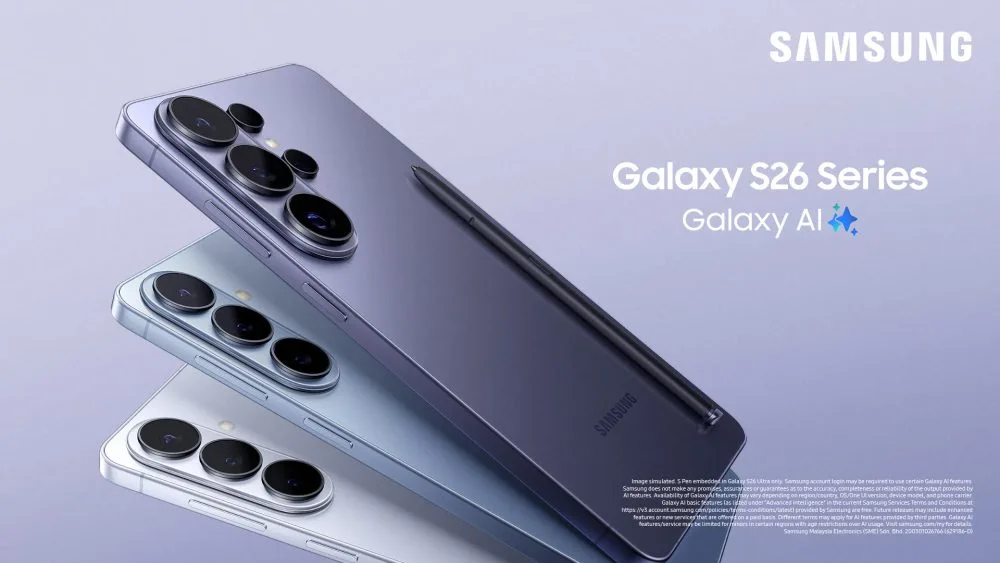
Samsung has officially rolled out its Galaxy S26 lineup, placing artificial intelligence at the center of its latest flagship strategy. The new series builds upon the company’s previous AI integrations but pushes deeper into system-wide intelligence, personalization, and security.
With the S26 family, Samsung is positioning AI not just as a feature, but as the backbone of the smartphone experience. From photography enhancements to real-time language tools and device optimization, the company is doubling down on smarter, more adaptive mobile software.
New Privacy Shield Mode Takes Center Stage
One of the most talked-about additions to the Galaxy S26 series is the introduction of “Privacy Shield” mode — a new layer of user-focused security designed to provide stronger data protection and clearer transparency.
Privacy Shield allows users to control how apps access sensitive data, including location, microphone, camera, and personal files. The feature reportedly includes real-time monitoring alerts, enhanced encryption protocols, and temporary permission controls that automatically reset after use.
Samsung says the goal is to give users greater control without sacrificing convenience. The feature works alongside Samsung Knox, the company’s long-standing security platform, adding what it describes as an extra barrier against unauthorized data access.
AI-Powered Photography Gets Smarter
The Galaxy S26 lineup also introduces more advanced AI photography tools. The updated camera system leverages machine learning to optimize lighting, skin tones, motion capture, and background depth in real time.
New AI editing capabilities allow users to remove objects, enhance clarity, adjust expressions, and refine details directly within the gallery app. The system reportedly processes many of these tasks on-device, reducing the need for cloud-based processing and improving privacy.
Samsung has also integrated smarter night photography and AI-driven video stabilization, aimed at content creators and mobile photographers.
On-Device AI for Productivity and Communication
Samsung is expanding AI beyond imaging. The Galaxy S26 series features upgraded live translation tools for calls and messaging, AI-powered writing assistance, and contextual suggestions across apps.
The device can summarize long documents, suggest email replies, generate message drafts, and provide voice-to-text enhancements. Much of this processing is handled directly on the device, which Samsung says improves speed and reduces dependency on external servers.
The company is also focusing on cross-device AI integration, allowing Galaxy tablets, watches, and laptops to share contextual intelligence more seamlessly.
Performance and Efficiency Enhancements
Under the hood, the Galaxy S26 lineup is expected to feature next-generation processors optimized for AI workloads. These chips are designed to handle neural processing more efficiently, enabling smoother multitasking and lower power consumption.
Samsung claims that the improved AI engine contributes to better battery management by learning user habits and adjusting background activity accordingly.
Samsung’s AI-First Strategy
The Galaxy S26 launch reflects Samsung’s broader strategy to compete aggressively in the AI-driven smartphone market. As rivals invest heavily in generative AI and smart assistants, Samsung is focusing on combining personalization with privacy.
By introducing Privacy Shield mode alongside expanded AI capabilities, the company appears to be addressing growing concerns around data security while continuing to innovate in artificial intelligence.
The Galaxy S26 lineup positions Samsung at the forefront of the next phase of smartphone evolution — where intelligence, personalization, and privacy operate together rather than in conflict.