
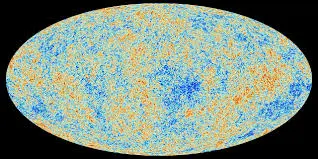
A team of international astronomers has successfully measured the temperature of the Universe as it existed around 7 billion years ago, offering one of the most precise glimpses yet into the cosmic past. Using advanced radio telescopes and a rare astronomical alignment, the researchers determined that the Universe back then was roughly twice as hot as it is today.
Cosmic Microwave Background as a Time Capsule
The breakthrough centers on studying the Cosmic Microwave Background (CMB) — the faint afterglow left from the Big Bang nearly 13.8 billion years ago. As the Universe expands, this background radiation cools down, providing scientists with a cosmic thermometer to trace its thermal history. By observing the CMB's interaction with gas clouds billions of light-years away, researchers can infer the temperature of the Universe at different epochs.
A Rare Cosmic Alignment Helped Unlock the Measurement
This discovery was made possible thanks to a chance alignment between a distant quasar (an extremely bright galaxy powered by a supermassive black hole) and a galaxy filled with cold molecular gas. The quasar’s light passed through the galaxy’s gas, allowing scientists to detect how the CMB influenced the energy levels of specific molecules, such as carbon monoxide (CO). This unique cosmic setup enabled a precise measurement of the background temperature from 7 billion years ago.
Findings Match Einstein’s Predictions
According to the study, the Universe’s temperature 7 billion years ago was about 9.5 Kelvin (-263.65°C) — exactly consistent with the predictions made by the standard cosmological model based on Einstein’s theory of general relativity and the Big Bang expansion. Today, the CMB temperature is about 2.7 Kelvin, confirming that the Universe has cooled steadily as it expands.
Why This Matters for Cosmology
The result not only reinforces our understanding of cosmic evolution but also helps test alternative theories that suggest variations in the expansion rate or the presence of exotic energy fields. By comparing CMB temperatures across billions of years, astronomers can verify if the Universe’s expansion follows the expected linear cooling curve — a crucial benchmark for testing modern cosmology.
Future Observations Aim Even Deeper in Time
Scientists now hope to extend this technique to probe even older epochs — potentially 10 to 11 billion years back in time. With next-generation observatories such as the Square Kilometre Array (SKA) and the James Webb Space Telescope (JWST), astronomers expect to map the Universe’s temperature evolution with unprecedented precision, unlocking more secrets about dark matter, dark energy, and the early structure of galaxies.