
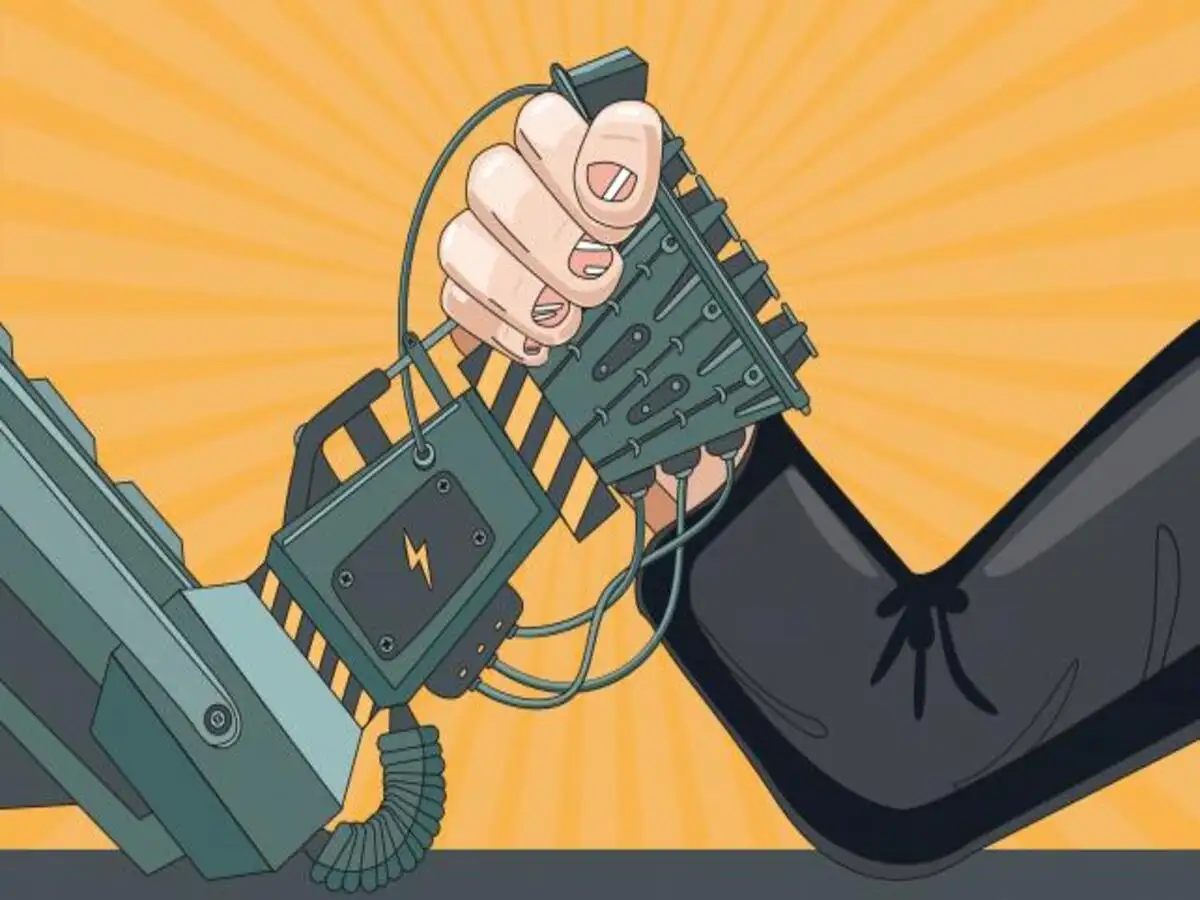
Silicon Valley, long known for aggressive hiring and talent wars, is undergoing a noticeable shift. Instead of expanding teams, several tech firms are now questioning whether new roles should be filled by humans at all. The trigger is clear: rapid advancements in artificial intelligence, particularly generative AI systems capable of writing code, generating content, and automating complex workflows.
While no major company has officially adopted a blanket “no hiring” policy, industry insiders and hiring managers suggest a growing hesitation. In many cases, open roles are being delayed, reduced, or redefined around AI-assisted productivity rather than traditional headcount growth.
AI as a Force Multiplier, Not Just a Tool
The core argument driving this shift is efficiency. Modern AI models can significantly amplify the output of existing employees. Tasks that once required entire teams—such as basic coding, customer support, data analysis, or content generation—can now be handled by smaller groups equipped with advanced AI tools.
Executives across the tech ecosystem increasingly describe AI as a “force multiplier.” A single engineer using AI-assisted coding tools, for example, can deliver output comparable to multiple developers from just a few years ago. This raises a fundamental question: if productivity per employee increases dramatically, does hiring need to continue at the same pace?
Early Signs of a Structural Shift
Data from recent quarters suggests a cooling in hiring across major tech firms, even as revenues stabilize or grow. Instead of large-scale layoffs dominating headlines—as seen in 2023 and 2024—the current phase is more subtle: fewer job postings, slower replacement hiring, and tighter workforce planning.
Startups, in particular, are embracing “lean by default” models. Founders are increasingly building companies with smaller teams, relying heavily on AI to scale operations. In some cases, early-stage startups are reaching milestones that previously required dozens of employees—with teams of fewer than ten.
The Psychological Impact: Fear and Uncertainty
For workers, the shift is creating a new kind of anxiety. Unlike previous automation waves that primarily affected manual or repetitive jobs, today’s AI systems are targeting knowledge work—software engineering, marketing, legal research, and more.
This has led to a growing perception that no role is entirely safe. Online discussions, internal company forums, and industry events reflect a rising concern: not just about layoffs, but about long-term career relevance.
However, experts caution against framing the situation as a simple replacement narrative. Historically, technological revolutions have created new categories of jobs even as they eliminate others.
What Companies Are Actually Saying
Publicly, most tech companies maintain that AI is intended to augment—not replace—human workers. Many emphasize reskilling, internal mobility, and AI integration as key strategies.
Yet, hiring patterns often tell a more nuanced story. Roles focused on routine or repeatable tasks are declining, while demand is increasing for positions involving AI oversight, system design, and strategic decision-making. In other words, the nature of hiring is changing, even if hiring itself is not disappearing entirely.
Economic and Strategic Drivers Behind the Shift
Several factors are accelerating this trend:
- Cost Optimization: AI reduces the marginal cost of production, making it attractive during uncertain economic conditions.
- Competitive Pressure: Companies adopting AI faster gain efficiency advantages, pushing others to follow.
- Investor Expectations: There is growing pressure to demonstrate AI-driven productivity gains rather than workforce expansion.
- Technological Maturity: Improvements in large language models and automation tools have made real-world deployment viable at scale.
Is “Stop Hiring Humans” an Overreaction?
Despite the dramatic framing, most analysts believe the current panic may be overstated. AI still has limitations—accuracy issues, lack of contextual understanding, and dependence on human oversight remain significant constraints.
Rather than eliminating jobs outright, AI is more likely to reshape them. Roles will evolve to focus on higher-level thinking, creativity, and decision-making—areas where humans retain a strong advantage.
The Road Ahead: Adaptation Over Alarm
The emerging consensus is that the workforce is entering a transition phase, not a collapse. Professionals who adapt—by learning to work alongside AI, understanding its capabilities, and leveraging it effectively—are likely to remain in demand.
For companies, the challenge will be balancing efficiency with responsibility, ensuring that productivity gains do not come at the cost of long-term workforce stability.
Final Takeaway
Silicon Valley’s hiring hesitation is less about abandoning human workers and more about redefining their role. The real shift is not “AI versus humans,” but “humans with AI versus humans without it.”