
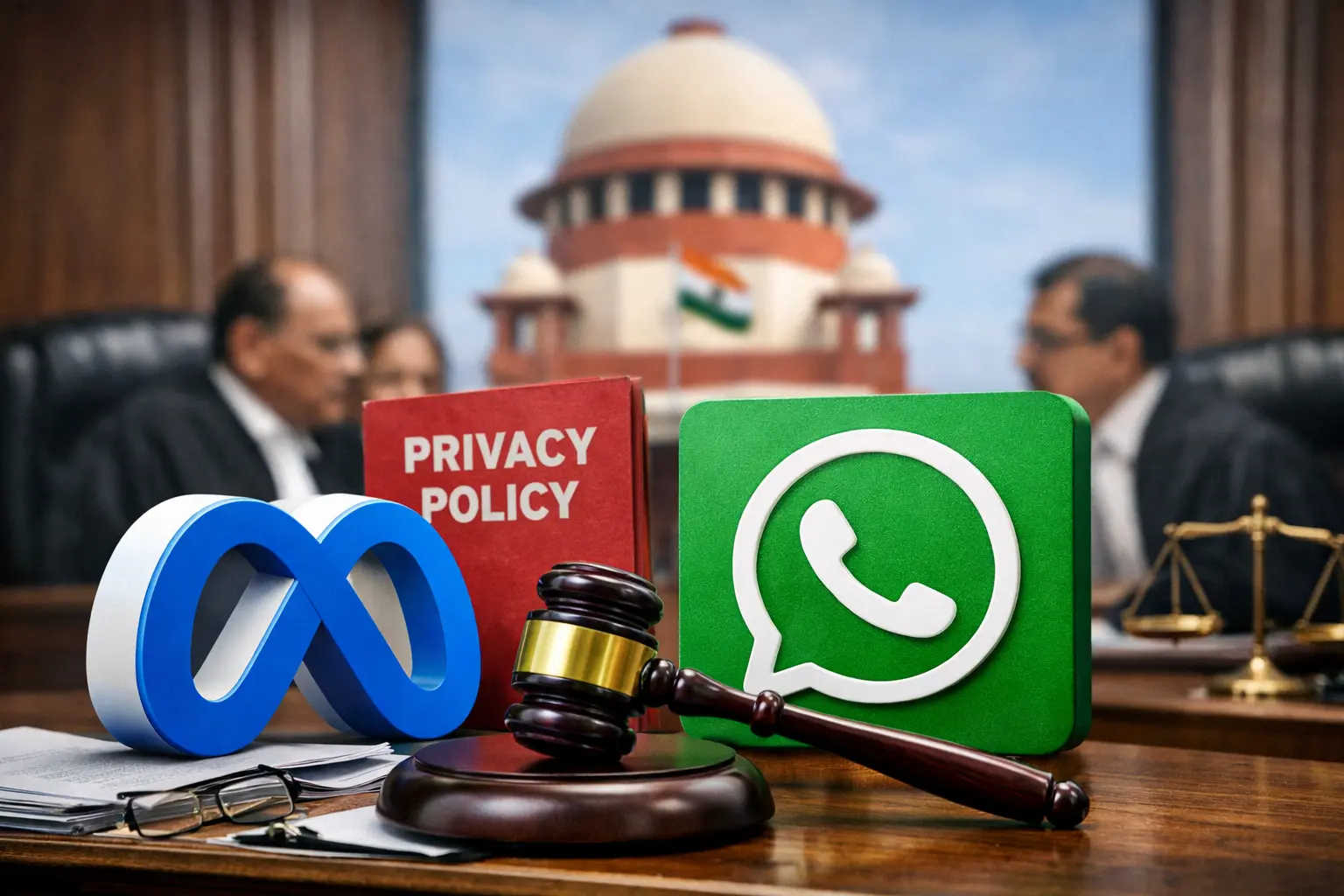
Meta Platforms and its messaging giant WhatsApp are under intense judicial scrutiny in India after the Supreme Court sharply questioned the legality of WhatsApp’s controversial privacy policy. The policy, which mandates data sharing with parent company Meta, has triggered concerns over user consent, market dominance, and digital rights.
The ‘Take It or Leave It’ Controversy
At the heart of the case is WhatsApp’s updated privacy policy that requires users to either accept expanded data sharing with Meta or stop using the service. Indian courts have repeatedly flagged this as coercive, arguing that users are denied meaningful choice—especially in a country where WhatsApp is deeply embedded in daily communication.
Supreme Court’s Strong Observations
The Supreme Court has issued a firm warning to Meta and WhatsApp, indicating it may pass an interim order unless the companies justify their data practices. The bench questioned whether a private company can impose conditions that effectively force users to surrender personal data in exchange for essential digital services.
Concerns Over Data Exploitation and Market Power
Judges also raised alarms over Meta’s access to vast amounts of user metadata, warning that such aggregation could distort competition and enable profiling at an unprecedented scale. With WhatsApp holding a dominant position in India’s messaging ecosystem, the court signaled that market power comes with higher responsibility.
Regulatory and Antitrust Implications
The case intersects with ongoing investigations by the Competition Commission of India (CCI), which is examining whether WhatsApp’s policy violates antitrust laws. If found guilty, Meta could face heavy penalties, forced policy changes, or operational restrictions in India.
Why India Is a Critical Battleground
India is WhatsApp’s largest market globally, with hundreds of millions of users. Any adverse ruling could set a global precedent, influencing how Big Tech firms structure privacy policies in other jurisdictions.
What Happens Next
The Supreme Court is expected to issue an interim order that could temporarily block data sharing between WhatsApp and Meta or mandate clearer opt-out options. Legal experts say the outcome could reshape India’s digital privacy landscape and redefine corporate accountability in the tech sector.