
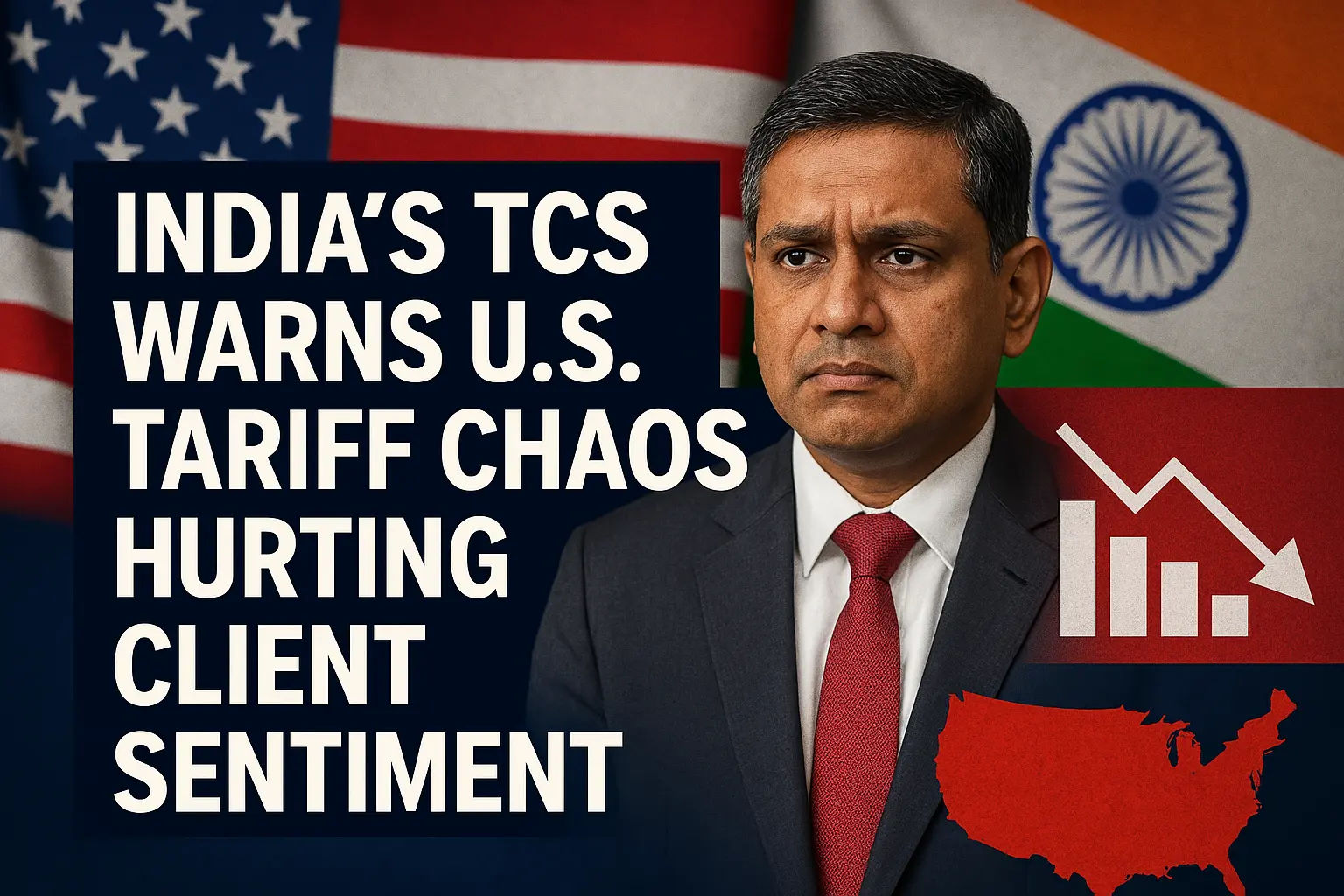
Tata Consultancy Services (TCS), India’s largest IT services firm, has expressed growing concern over the impact of escalating U.S. tariff uncertainty on client sentiment, particularly among its North American clientele, which constitutes its largest revenue base.
In a recent post-earnings call, TCS executives pointed to increasing unease among clients navigating geopolitical and trade-related disruptions. At the center of the issue is a wave of shifting U.S. tariff policies, trade tensions with China, and supply chain adjustments—factors that are prompting some customers to delay or scale back their IT spending.
Tariff Tensions Ripple Through the Tech Sector
“We’re seeing caution creep into client decision-making, especially in sectors exposed to U.S. trade policy changes,” said K. Krithivasan, CEO and Managing Director of TCS. “It’s not that demand has disappeared, but clients are more deliberate and slower in signing off on large digital transformation initiatives.”
While TCS did not cite specific industries, analysts note that sectors like manufacturing, automotive, and retail—which are heavily reliant on international supply chains—are among the most sensitive to tariff volatility.
The Biden administration has signaled potential revisions to trade relationships and tariff frameworks in the face of ongoing tensions with China and a renewed push for domestic manufacturing. These developments, while aimed at economic resilience, are contributing to market uncertainty for global firms, including TCS’s U.S.-based customers.
Impact on Growth and Forecasts
TCS reported modest revenue growth in its latest quarterly results, with year-over-year increases tempered by what it called a “hesitant demand environment.” Although the company continues to see strong interest in generative AI, cloud modernization, and cybersecurity services, executive leadership noted that the sales cycle is lengthening across key accounts.
North America remains TCS’s most lucrative market, accounting for over 50% of its total revenue. As such, any turbulence in client confidence on the continent poses a significant headwind.
“The conversations are still active,” said CFO Samir Seksaria. “But the pipeline is moving a little slower due to macroeconomic and policy overhangs.”
Navigating Uncertainty Through Diversification
TCS reiterated its long-term strategy of diversification—both geographically and across industry verticals—to cushion against regional volatility. The company continues to expand its presence in Europe, Asia-Pacific, and the Middle East, and is also deepening service offerings in emerging technologies like generative AI and sustainability-focused IT solutions.
Despite the near-term headwinds, TCS remains optimistic about its resilience. “We’ve been through many such cycles before,” said Krithivasan. “While there’s turbulence, our strong relationships and broad-based portfolio give us the flexibility to adapt.”
Industry-Wide Concerns
TCS is not alone in voicing concern. Other Indian IT majors such as Infosys and Wipro have also cited geopolitical tensions and protectionist policies as challenges to growth. The combination of economic unpredictability, regulatory shifts, and evolving client priorities is prompting the industry to remain agile and cautious in its projections.
As global economic trends continue to evolve, tech service providers like TCS are walking a fine line between innovation and risk mitigation. For now, the message from India’s IT bellwether is clear: tariff chaos may be a policy debate in Washington, but its ripple effects are being felt in boardrooms around the world.