
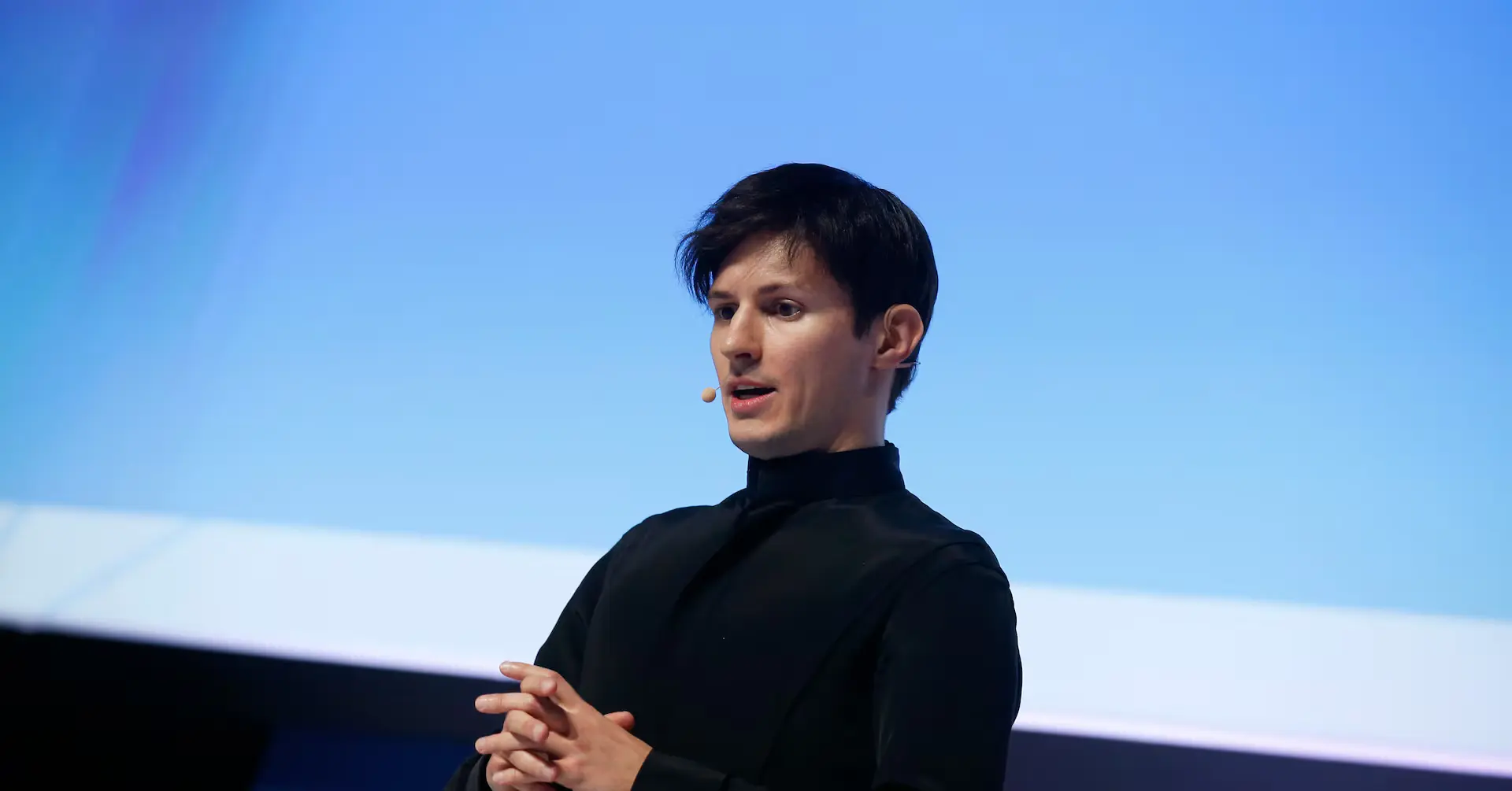
Pavel Durov, founder and CEO of the messaging platform Telegram, has claimed that a senior French intelligence official pressured the company to ban several conservative Romanian voices from the app, sparking debate about censorship, free speech, and political influence on tech platforms.
Speaking in a recent interview, Durov detailed an incident in which a French intelligence chief—whose name he did not disclose—allegedly asked Telegram to remove or restrict certain Romanian users identified as holding conservative viewpoints. According to Durov, the request was framed as a national security concern, though he contends the underlying motive appeared to be politically driven.
“It was not about terrorism or extremism in the traditional sense,” Durov said. “These were individuals with conservative perspectives, some critical of the European Union or mainstream narratives. We were surprised to see such a request coming from a democratic government.”
Durov has long positioned Telegram as a platform committed to privacy and freedom of expression. His statement comes amid increasing scrutiny over how governments across Europe are pressuring tech platforms to moderate content—especially as the continent prepares for upcoming elections.
Backlash and Support
The allegation has prompted swift reactions from both political and civil society actors.
Romanian politicians aligned with conservative movements condemned the alleged request as a violation of democratic principles.
“It is unacceptable for a foreign government to try to silence Romanian citizens simply because they hold different views,” said Ionuț Alexandrescu, a prominent Romanian MP from the nationalist AUR party. “This is not cooperation against terrorism; it is ideological interference.”
On the other hand, some French officials defended the intelligence community’s vigilance. A government spokesperson, without confirming the incident, said France remains committed to combating online misinformation and hate speech, especially when it threatens social harmony.
“We are working within the bounds of the law to ensure public safety,” the spokesperson said. “Platforms must not be used to spread disinformation that undermines democratic processes.”
Telegram’s Tightrope Walk
Telegram has often found itself at the center of global content moderation disputes. With its user base exceeding 900 million, the platform has attracted activists, political dissidents, and—critics argue—fringe elements and conspiracy theorists. Durov’s approach has largely been to resist government requests for censorship unless they involve clearly illegal content such as terrorism or child exploitation.
This latest claim by Durov follows a pattern of resistance to government pressure. Previously, he has rebuffed similar requests from Russia, Iran, and even the United States.
European Context
The timing of Durov’s revelation is significant. The European Union is ramping up its enforcement of the Digital Services Act (DSA), a sweeping regulation that obliges platforms to quickly remove illegal content or face heavy fines. While the DSA is meant to tackle abuse, it has raised concerns about overreach and the potential suppression of dissenting voices.
Civil liberties organizations like European Digital Rights (EDRi) have called for transparency in government-platform interactions.
“If true, this is deeply troubling,” said Marta Lanza, a policy analyst at EDRi. “Governments should not be allowed to arbitrarily target political voices under vague justifications.”
Looking Ahead
Telegram has not confirmed whether it complied with the French request or provided any details on the accounts involved. However, Durov's public stance appears to reinforce his commitment to maintaining Telegram’s independence.
“We are not here to serve political agendas,” Durov said. “Our role is to provide secure, private communication—not to be an arm of any government.”
As the controversy unfolds, it highlights the growing tension between national security imperatives and freedom of expression in the digital age—an issue likely to dominate tech and political discourse in the months to come.