
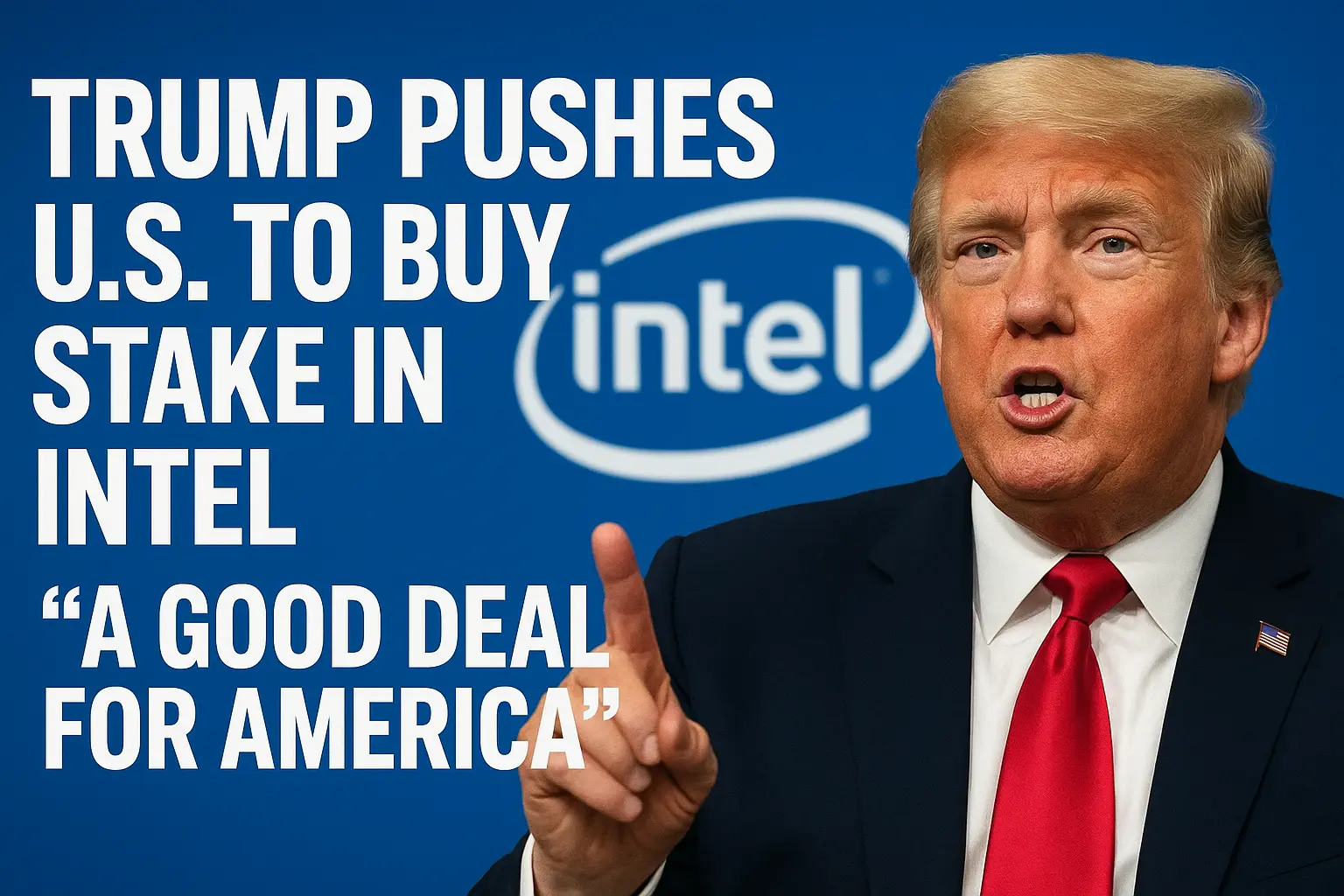
Former U.S. President Donald Trump has suggested that Washington should consider acquiring an ownership stake in Intel, one of America’s largest semiconductor manufacturers. Calling it a "good deal" for the country, Trump emphasized that securing a foothold in the chip industry is critical for national security and economic competitiveness, particularly as the global race for semiconductor dominance heats up.
Rising Concerns Over Chip Supply Chain
The idea comes amid growing concerns about supply chain vulnerabilities and heavy reliance on Taiwan and South Korea for advanced chip production. With China ramping up efforts to achieve self-reliance in semiconductors, U.S. policymakers are increasingly seeking ways to safeguard domestic manufacturing capabilities and reduce foreign dependence.
Government Funding Already Flowing to Intel
The discussion follows reports that the Biden administration is considering tying federal funding from the CHIPS and Science Act to an equity stake in Intel. The Act earmarks billions of dollars in subsidies to strengthen U.S. chip production, but some lawmakers believe taxpayer money should also translate into partial ownership, ensuring long-term national and financial returns.
Trump’s Take on Public-Private Partnership
While Trump did not provide specific details on how such a deal would be structured, he argued that direct government participation in Intel could be a safeguard against foreign takeovers and a way to secure the future of America’s high-tech industry. He framed the move not only as an economic play but as a matter of national security, given semiconductors’ role in defense, AI, and emerging technologies.
Market and Industry Reaction
The proposal has sparked debate among analysts and industry leaders. Supporters see it as a bold step to cement U.S. leadership in semiconductor manufacturing, while critics warn it could raise concerns about government overreach in private business. Intel, which is already receiving billions in subsidies, has yet to comment on Trump’s remarks.
What’s Next?
As the semiconductor battle intensifies globally, Trump’s suggestion adds fuel to a broader conversation about how far Washington should go in protecting and investing in critical technologies. Whether this translates into concrete policy remains uncertain, but the idea of government equity in Intel is gaining traction in political and business circles.