
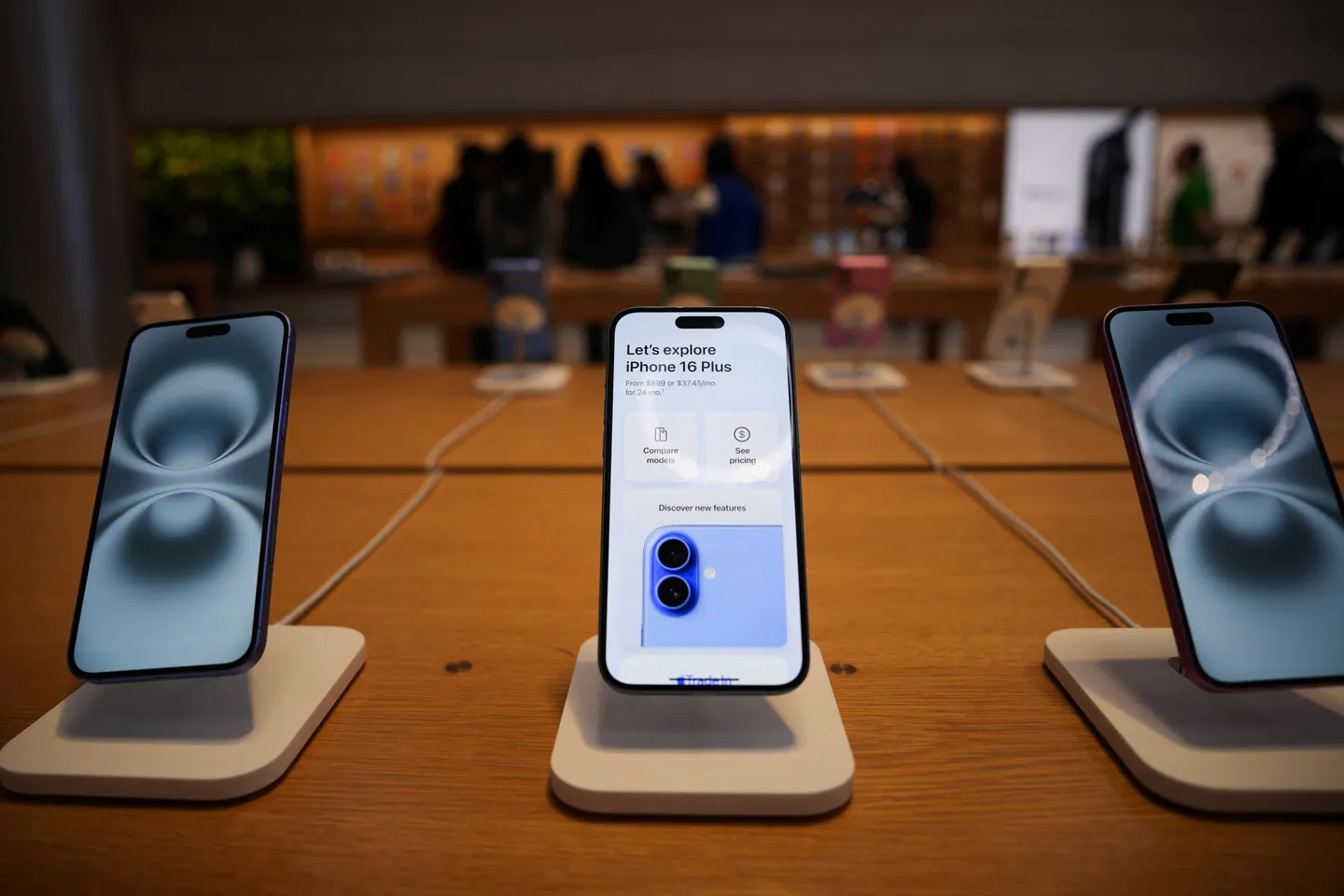
Former President Donald Trump, currently the leading Republican candidate in the 2024 U.S. presidential race, issued a strong warning to tech giant Apple Inc. this week, threatening to impose a 25% tariff on all iPhones and other Apple products manufactured abroad if the company does not bring its assembly operations back to the United States.
Speaking during a campaign rally in Pennsylvania, Trump sharply criticized Apple for continuing to assemble its flagship products in China and other Asian countries. “If Apple doesn’t move its production back to America, they will face a 25% tariff on every iPhone that’s imported,” Trump declared to a cheering crowd. “We’re not going to let our jobs be stolen anymore. It’s time Apple invests in American workers.”
This announcement comes amid Trump’s broader economic platform focused on reshoring manufacturing and reducing U.S. dependence on China. During his presidency from 2017 to 2021, Trump frequently clashed with Apple over trade, tariffs, and privacy issues. The latest remarks appear to signal that similar confrontations may lie ahead if he returns to office.
Impact on Apple and the Tech Industry
Apple has not yet responded publicly to the threat, but analysts say such a tariff could have major implications not just for the company, but for global supply chains. Apple currently manufactures most of its iPhones in China through long-standing partnerships with companies like Foxconn and Pegatron. A sudden shift of operations to the U.S. would require massive investment and take years to fully implement.
Dan Ives, a tech analyst at Wedbush Securities, said a 25% tariff would be “an earthquake for Apple’s margins and supply chain” and could lead to a noticeable price hike for U.S. consumers. “Apple would either have to absorb the costs or pass them on, meaning we could see iPhones that cost hundreds more,” Ives warned.
Tech industry leaders and trade groups are also raising alarms. “This kind of threat undermines the stability of the global tech sector,” said Sarah Goldstein, policy director at the Technology Industry Council. “Tariffs don’t build factories; they raise prices and hurt consumers.”
Political and Economic Implications
Trump’s comments reflect a renewed push for economic nationalism, a theme central to his “America First” platform. Advocates argue that such policies could help revitalize U.S. manufacturing, particularly in high-tech industries. Critics, however, warn that punitive tariffs often lead to retaliatory measures and can disrupt international trade.
The Biden administration has not yet commented on Trump’s statements, but current officials have also promoted efforts to diversify supply chains and invest in domestic semiconductor production—albeit through incentives and legislation like the CHIPS Act rather than tariffs.
With Apple being one of the most valuable companies in the world and a major player in the U.S. economy, Trump’s ultimatum is likely to spark a fierce debate about trade, globalization, and the future of American industry as the 2024 election approaches.