
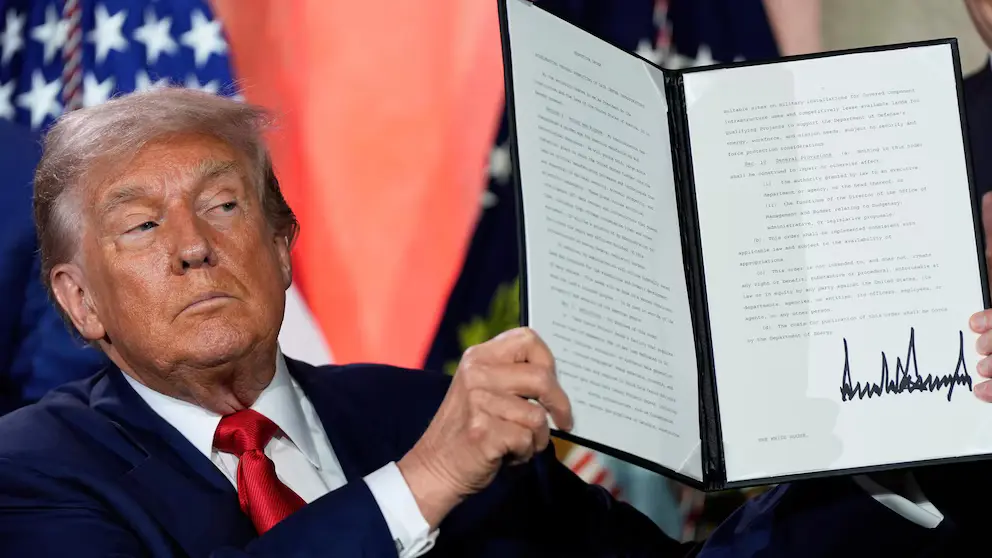
In a striking political move, former President Donald Trump has signed an executive order that explicitly bans the use of “woke” artificial intelligence tools in U.S. government systems. The directive, issued amid Trump’s re-election campaign momentum, mandates all federal agencies to audit and remove AI technologies that reflect progressive ideologies or prioritize diversity, equity, and inclusion (DEI) language.
According to the order, any AI system perceived to be “biased toward leftist or woke narratives” will be disallowed from use in decision-making processes, data analysis, or federal communications. The language used in the order appears to reflect longstanding conservative grievances about Big Tech’s political leanings.
Tech Firms Respond with Internal Policy Revisions
Major AI developers—including OpenAI, Google, and Anthropic—are reportedly reassessing their chatbot outputs and moderation systems in anticipation of broader regulatory shifts. Some companies have begun internally flagging politically charged content or modifying AI-generated responses to avoid conflict with the order.
Insiders say this has led to an internal push to neutralize AI outputs, even in commercial products, as firms aim to prevent government backlash or future lawsuits. While some industry leaders call it a precautionary compliance measure, critics are calling it an overcorrection that edges dangerously close to censorship.
AI Experts Warn of Overreach and Suppression of Free Expression
Several civil liberties groups and AI researchers have condemned the order, warning that labeling AI as “woke” is vague, politically charged, and technically unsupported. Experts argue that forcing ideological conformity on machine learning models could result in systems that misrepresent facts, omit crucial historical context, or reinforce stereotypes.
“AI models trained to avoid ‘wokeness’ risk eliminating essential perspectives on race, gender, and social justice,” said Dr. Alicia Kim, an AI ethics professor at Stanford University. “This move could stifle innovation and encourage AI to reflect only one political viewpoint.”
Political Strategy or Ethical Intervention?
While Trump supporters hail the move as a necessary correction against tech overreach, critics say it's a political maneuver designed to energize the conservative base ahead of the 2024 elections. By framing AI as another front in the culture wars, Trump appears to be drawing attention to broader concerns about perceived liberal bias in academia, media, and now, technology.
The implications are far-reaching. If the order influences how AI companies train their models, it could shape the tone, scope, and accessibility of AI tools used by millions across sectors—from education to healthcare to law enforcement.
Looking Ahead: The Future of Politically Neutral AI
This development adds a new layer of complexity to ongoing global debates about AI regulation, transparency, and ethics. While there is broad consensus that AI should be free of harmful bias, defining what counts as “bias” is a politically charged endeavor. Trump’s order accelerates that debate, potentially forcing AI companies to choose between free expression and regulatory compliance.
Whether other countries follow suit with similar regulations or reject such politically motivated AI controls remains to be seen. But for now, the U.S. tech industry is watching—and adjusting—closely.